
Sign Up

Join TheConstructor to ask questions, answer questions, write articles, and connect with other people. When you join you get additional benefits.

Have an account? Sign In


Have an account? Sign In Now

Sign In

Log in to TheConstructor to ask questions, answer people’s questions, write articles & connect with other people. When you join you get additional benefits.

Sign Up Here

Join for free or log in to continue reading...


Forgot Password?

Don't have account, Sign Up Here

Forgot Password

Lost your password? Please enter your email address. You will receive a link and will create a new password via email.

Have an account? Sign In Now

Sorry, you do not have a permission to ask a question, You must login to ask question. Get the paid membership

Join for free or log in to continue reading...


Forgot Password?

Don't have account, Sign Up Here
Get the paid membership
theconstructor.org Logo theconstructor.org Logo
Log inJoin

theconstructor.org

theconstructor.org Navigation

  • Articles
    • Recent Articles
    • Popular Articles
    • Write for us
  • Community
  • Categories
    • How To Guide
      • Material Testing Guide
    • Concrete
    • Building
      • Brick Masonry
      • Building Materials
      • Building Tips
    • Construction
      • Equipments
      • Management
    • Digital Construction
    • Geotechnical
      • Foundation
  • Case Studies
Search
Ask A Question

Mobile menu

Close
Ask a Question
  • Questions
  • Ask Questions
  • Write for us
  • Artificial Intelligence
  • Sustainability
  • Building
    • Brick Masonry
    • Building Materials
    • Building Tips
    • Formwork/Shuttering
  • Concrete
    • Concrete Admixtures
    • Cement
    • Concrete Cracks
    • Concrete Properties
  • Construction
    • Construction Equipments
    • Construction Management
    • Construction Project
    • Estimating & Costing
  • How To Guide
    • Material Estimation
    • Repair/Protection Guide
    • Material Testing Guide
    • Mix Design Guide
    • Rate Analysis
  • Geotechnical
    • Foundation Engineering
    • Ground Improvement
  • Structural Engineering
    • Strengthening of Structure
    • Structual Inspection
    • Structural Detailing
  • Surveying
  • Tips

Questions

Home/Questions/Page 18

Do you need to remove the ads? Get the paid membership

Discy Latest Questions

Asked: September 19, 2020In: Concrete

Photocatalytic Concrete Admixture?

Justin R
Justin R

Justin R

  • 1 Question
  • 0 Answers
  • 0 Best Answers
  • 25 Points
View Profile
Justin R User

I am looking for expert advice with regard to the use of photocatalytic concrete and the admixture TiO2.  I have never used this material, my design/build team has never used it, and most tilt-up subs that we speak with laugh ...

  1. AdityaBhandakkar

    AdityaBhandakkar

    • 12 Questions
    • 250 Answers
    • 2 Best Answers
    • 0 Points
    View Profile
    AdityaBhandakkar User
    Added an answer on September 24, 2020 at 9:39 pm

    Hi Justin R. I am researcher  in field of Nanotechnology, so I am a eligible person for answering your question. The photocatalytic activity is tested in air purification after NOx removal. Also the self cleaning properties are tested during dye removal. TiO2 effects the hydrated Cement: It is a staRead more

    Hi Justin R.

    I am researcher  in field of Nanotechnology, so I am a eligible person for answering your question.

    The photocatalytic activity is tested in air purification after NOx removal. Also the self cleaning properties are tested during dye removal.

    TiO2 effects the hydrated Cement: It is a stable , during hydrated process.

    TiO2 makes C-S-H bond more compact , which increase the compressive strength.


    See less
    • 44
    • Share
      Share
      • Share on Facebook
      • Share on Twitter
      • Share on LinkedIn
      • Share on WhatsApp
  • 1
  • 1 1 Answer
  • 1,635 Views
  • 0 Followers
Asked: September 19, 2020In: Construction

how to find soil upward pressure,if SBC 250KN

GOLDENHOMES
GOLDENHOMES

GOLDENHOMES

  • 1 Question
  • 0 Answers
  • 0 Best Answers
  • 5 Points
View Profile
GOLDENHOMES User

Definition of Upward Soil Pressure _ Chegg.com

  1. Omprakash Dhawale

    Omprakash Dhawale

    • 0 Questions
    • 15 Answers
    • 0 Best Answers
    • 383 Points
    View Profile
    Omprakash Dhawale Beginner
    Added an answer on October 3, 2020 at 11:24 am

    Sir, We can simply define upward soil pressure. The addition of all overburden pressure from soil weight which is present above the footing as well as self-weight of the structure. One more interesting thing is that it is also called as the 'Allowable Bearing Capacity' of soil. Allowable Bearing CapRead more

    Sir,

    We can simply define upward soil pressure. The addition of all overburden pressure from soil weight which is present above the footing as well as self-weight of the structure.

    One more interesting thing is that it is also called as the ‘Allowable Bearing Capacity’ of soil.

    Allowable Bearing Capacity=(Density of soil x Depth of foundation) + Self weight of foundation.

    One more important note is that the distribution of allowable bearing capacity for non-cohesive soil is greater than in the middle portion.

    See less
    • 0
    • Share
      Share
      • Share on Facebook
      • Share on Twitter
      • Share on LinkedIn
      • Share on WhatsApp
  • 1
  • 2 2 Answers
  • 3,264 Views
  • 0 Followers
Asked: September 19, 2020In: Construction

How to calculate strength of concrete in rebound hammer test

Revansidda B Hagargi

Revansidda B Hagargi

  • 1 Question
  • 0 Answers
  • 0 Best Answers
  • 5 Points
View Profile
Revansidda B Hagargi User


  1. aviratdhodare

    aviratdhodare

    • 37 Questions
    • 252 Answers
    • 0 Best Answers
    • 480 Points
    View Profile
    aviratdhodare
    Added an answer on September 22, 2020 at 1:50 pm

    The rebound hammer test is a non-destructive test for the strength of concrete for field testing of concrete. As per the Indian code IS: 13311(2)-1992, the rebound hammer test has the following objectives: To determine the compressive strength of the concrete by relating the rebound index and the coRead more

    The rebound hammer test is a non-destructive test for the strength of concrete for field testing of concrete.

    As per the Indian code IS: 13311(2)-1992, the rebound hammer test has the following objectives:

    1. To determine the compressive strength of the concrete by relating the rebound index and the compressive strength
    2. To assess the uniformity of the concrete
    3. To assess the quality of the concrete based on the standard specifications
    4. To relate one concrete element with other in terms of quality

    The instrument can be used on both horizontal and vertical surfaces. The main point to be noted is that the graph had to be read appropriately. These days, the hammer is equipped with a digital scale to make life easier.

    The IS: 13311(2)-1992 elaborates the procedure in a more detailed manner, making it easier for even beginners to understand the concept.

    The point of impact should be at least 20 mm away from any edge or shape discontinuity. For taking a measurement, the rebound hammer should be held at right angles to the surface of the concrete member.

    The apparatus is placed on the spot where the test is desired. The hammer is allowed to drop freely. After it strikes the concrete surface it rebounds back. The raise of the rebound is recorded. This test is repeated at different locations and the rebound value is recorded.

    The compressive value of concrete is obtained by doing a cube test of the test cube of the batch of concrete on which the rebound test is conducted. The value of rebound and compressive strength of concrete is compared and the value of compression is adjudged from the values of compression test and rebound values.

    Around each point of observation, six readings of rebound indices are taken 2nd average of these readings after deleting outliers as per IS 8900: 1978 becomes the rebound index for the point of observation. ( This outlaying is a calculation based method, can be discussed on one’s interest).

    Now, we will calculate comp. Strength from rebound number. There are three positions of taking reading

    1. Vertical Downward:- Weight of Hammer is increasing stress on spring of hammer
    2. Vertical Upward:- Weight of hammer is decreasing the stress on spring of hammer
    3. Horizontally :- Weight of hammer have no effect on spring.

    This is why, there are three graphs in Rebound Number-Compressive Strength graph of Rebound Hammer.

    You will have to calculate the strength from the graph as per position of Rebound Hammer.

    For Example,

    For Vertical Upward position of Hammer

    If 15 Rebound number readings are

    48,42,43,43,44,44,45,45,45,45,46,47,48,50

    , as per IS:8900, Clause 5.1.1(TESTS FOR TWO OR MORE OUTLIERS , AT LEAST ONE OUTLIER AT EACH END), 42 and 50 are Outlaying values.

    Removing those, Average Rebound number is 45.27

    From the graph( fro Vertical Upward) , Compressive Strength Will be 40.54 Mpa

    See less
    • 38
    • Share
      Share
      • Share on Facebook
      • Share on Twitter
      • Share on LinkedIn
      • Share on WhatsApp
  • 0
  • 1 1 Answer
  • 23,162 Views
  • 0 Followers
Asked: September 19, 2020In: Construction

Jacking pit installation

seniordesigner
seniordesigner

seniordesigner

  • 1 Question
  • 0 Answers
  • 0 Best Answers
  • 5 Points
View Profile
seniordesigner User

To whom it may concern What is the method of correcting deviations from line and grade? Thanks  

  • 0
  • 0 0 Answers
  • 357 Views
  • 0 Followers
Asked: September 19, 2020In: Geotechnical Engineering

drained and undarined shear strength

mukh159
mukh159

mukh159

  • 1 Question
  • 0 Answers
  • 0 Best Answers
  • 5 Points
View Profile
mukh159 User

what are the difference between drained and undrained shear strength? under what condition drained or undrained shear strength should be used

  1. aviratdhodare

    aviratdhodare

    • 37 Questions
    • 252 Answers
    • 0 Best Answers
    • 480 Points
    View Profile
    aviratdhodare
    Added an answer on October 18, 2020 at 10:37 am

    One very imp decision on the selection of soil strength for design is whether the soil is behaving under drained or undrained loading conditions. Why, bcoz each gives diff strength values and the selection of the wrong trength could lead to disaster. Any soil can experience either condition dependinRead more

    One very imp decision on the selection of soil strength for design is whether the soil is behaving under drained or undrained loading conditions. Why, bcoz each gives diff strength values and the selection of the wrong trength could lead to disaster. Any soil can experience either condition depending on the rate of loading and the permeability of the soil.

    In general, we normally treat coarse-grained soils such as sands and gravels as drained materials bcoz their permeability is high and therefore water can flow freely through the large and continuous void spaces. Fine-grained soils such as silts and clay’s however have much smaller void spaces and often these aren’t continuous so there is no direct route for water to flow freely. You can consider water flow in fine-grained soils is a little like a game of snakes and ladders whether water advances to a certain pt but then as to backtrack as the void spaces come to an abrupt end.

    Thus, the porous nature of soil has a direct influence on soil strength. We can illustrate this by again calling on Mohr circle for 2D stress as many practical problems can be treated by analysis in 2D. Imagine we have a submerged coarse grain material, this means the soil void space is saturated and that we’re going to construct a raft foundation at ground level. Consider a representative element within the bulb of soil influenced by the rafts floating. Before the raft is constructed, the soil element will experience the following vertical & horizontal normal stresses. The Mohr circle for these stresses looks like so,

    Mohr circle diagram with the Mohr-Coulomb-Griffith failure-criterion... |  Download Scientific Diagram

    Diag not exact, only for reference

    notice that the circle is well away from the failure line and this is known as the K0 are at rest condition

    K0 = σ3 / σ1

    If the raft is now constructed, we see that the Mohr circle shifts to the right & increases in diameter. This is bcoz the raft loading increases both the horizontal and vertical normal stresses.

    These increases take place in unison as the load is transferred directly into greater intergranular stresses. Any tendency for the pore water pressure to increase doesn’t materialize as the permeability of the soil permits the water to flow rapidly out of the void space. So the grain settled into a denser & stronger configuration & this is ∴ referred to as the drained or eff stress condition. The eff vertical stress on the soil element changes from the at-rest condn to the follow’g

    σ1 = γsat . z – γw . z

    σ1‘= (γsat . z + ∆σ) – γw . z
    Note again that the Mohr circle at the end of construction remains well away from the line defining failure. Its dist away being a measure of the foundations FOS.

    Now let’s take the exact same scenario but this time for a fine-grained soil. The K0 or in-situ stresses remain essentially the same as before. This time however that the foundation load is applied, the Mohr circle will again shift to the right but its dia remains constant. This occurs bcoz water is incompressible & it takes the additional load from the raft as the low permeability soil prevents the water in the void space from escaping quickly enough. Hence the soil grains are prevented from reconfiguring into a denser stronger structure. The consequence of such behavior can be seen if we test three specimens that are fully saturated have the same moisture content & a similar soil structure. Then the application of an increasing confining pressure in each test will simply mean that the pore water pressure in each specimen is increased by the same amount. No change in eff stress occurs as the pore water carries the additional load & the shear strength measured Cu will be the same irrespective of the confining pressure this gives a ϕu = 0° failure line. Also note that the characteristics of all three specimens in terms of eff stress is represented by the same circle. This is a consequence of the pore water pressure and failure then -‘ed from the initial confining stress for each test.

    This is an imp concept to understand. It’s not that the soil has changed in any way but rather, the loading conditions are such that in the short term. The soil is not free draining & hence its strength is limited by its initial eff stress. In the long term of course, the elevated pore water pressures will dissipate & the stress once carried by the pore water will be transferred into the soil skeleton.

    The lesson here is under undrained loading, saturated fine-grained soils will have a strength limited by their eff stress prior to loading. But in time, assuming the soil has not failed under the loading its strength will increase with transfer of load from the pore water to the soil grains.

    In temperate climates throughout the world. Soils are essentially saturated at foundation level so engineers practicing in such regions would do well to remember this jekyll-and-hyde behavior of fine grained soils. Finally we mentioned earlier that as soil is loaded the strength increases as its grains move into a denser tighter configuration. The price we pay for this closing of void space is settlement or the movement of foundations.

    See less
    • 11
    • Share
      Share
      • Share on Facebook
      • Share on Twitter
      • Share on LinkedIn
      • Share on WhatsApp
  • 0
  • 5 5 Answers
  • 16,216 Views
  • 0 Followers
Asked: September 19, 2020In: Construction

Which equipment can measure the PSI of ready concrete mix during pouring on Construction Site?

Umair Diwan
Umair Diwan

Umair Diwan

  • 1 Question
  • 0 Answers
  • 0 Best Answers
  • 5 Points
View Profile
Umair Diwan User

Basically I want to know if there is a machine or equipment that can be used to test concrete mix during construction or during poring as we are making a high rise building. We want to that’s a concrete next ...

  1. Kuldeep Singh

    Kuldeep Singh

    • 1 Question
    • 110 Answers
    • 10 Best Answers
    • 652 Points
    View Profile
    Kuldeep Singh Learner
    Added an answer on September 26, 2020 at 1:10 pm

    The concrete pressure on formwork can be calculated without measurement. However, I can see that you'd like to be sure about it with experimental verification. The device used for this kind of an experiment is called a dilatometer. It is more common in the geotechnical field but is also used for conRead more

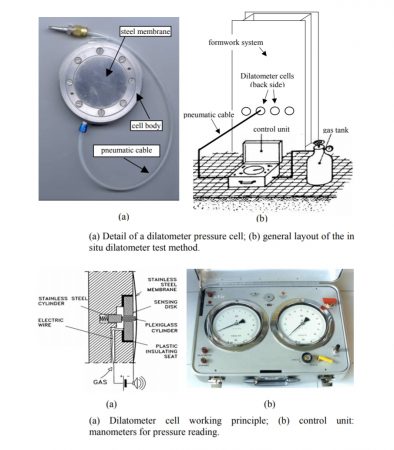
    The concrete pressure on formwork can be calculated without measurement. However, I can see that you’d like to be sure about it with experimental verification.

    The device used for this kind of an experiment is called a dilatometer. It is more common in the geotechnical field but is also used for concrete pressure calculation.

    See less
    • 0
    • Share
      Share
      • Share on Facebook
      • Share on Twitter
      • Share on LinkedIn
      • Share on WhatsApp
  • 1
  • 1 1 Answer
  • 1,010 Views
  • 0 Followers
Asked: September 19, 2020In: Laboratory Tests

What is the type of Nozzle used for pelton wheel model

Charan Deep
Charan Deep

Charan Deep

  • 1 Question
  • 0 Answers
  • 0 Best Answers
  • 5 Points
View Profile
Charan Deep User

What is the Type of penstock and nozzle used for Pelton turbine model 

  1. AdityaBhandakkar

    AdityaBhandakkar

    • 12 Questions
    • 250 Answers
    • 2 Best Answers
    • 0 Points
    View Profile
    AdityaBhandakkar User
    Added an answer on October 3, 2020 at 11:27 am
    What is the type of Nozzle used for pelton wheel model

    Hi, During selecting a penstock, it's a crucial choice of the pipe diameter and the pressure permissible with the material. the material should be selected according to the pressure and the condition of the run also with local circumstances. HDPE- high-density polyethene pipes are a popular choice aRead more

    Hi,

    During selecting a penstock, it’s a crucial choice of the pipe diameter and the pressure permissible with the material. the material should be selected according to the pressure and the condition of the run also with local circumstances. HDPE- high-density polyethene pipes are a popular choice as a material for penstock. By using this material determine gives efficiency by up to 70%.

    Nozzles must be designed in a way that the laws of pressure are as much as small as possible so that the coefficient of nozzle increases. To avoid the friction nozzle should be constructed with a possible largest radius.

    See less
    • 32
    • Share
      Share
      • Share on Facebook
      • Share on Twitter
      • Share on LinkedIn
      • Share on WhatsApp
  • 1
  • 1 1 Answer
  • 749 Views
  • 0 Followers
Asked: September 19, 2020In: Miscellaneous

how to calculate the rate of spray of prime coat in road construction.

aviratdhodare
aviratdhodare

aviratdhodare

  • 37 Questions
  • 252 Answers
  • 0 Best Answers
  • 480 Points
View Profile
aviratdhodare

 how to calculate the rate of spray of prime coat in road construction. 

  1. aviratdhodare

    aviratdhodare

    • 37 Questions
    • 252 Answers
    • 0 Best Answers
    • 480 Points
    View Profile
    aviratdhodare
    Added an answer on September 25, 2020 at 4:08 pm

    Tray Test is used to calculate the rate of spread of prime or tack coat. The test uses a 20cm X 20 cm X 3 cm tray placed on the surface to be primed at some intervals in the path of the sprayer/emulsion distributor. They are placed between the wheel's path/tracks. 5 samples are collected for a testRead more

    Tray Test is used to calculate the rate of spread of prime or tack coat. The test uses a 20cm X 20 cm X 3 cm tray placed on the surface to be primed at some intervals in the path of the sprayer/emulsion distributor. They are placed between the wheel’s path/tracks.

    5 samples are collected for a test and a minimum of 3 tests are conducted for a day of work.

    Weight of the emulsion on the tray is calculated by finding the difference in the final and the initial weight of the tray. Weight per unit sq.m or weight per 10 sq.m is obtained and checked with specified limits mentioned in MORT&H Table 500–3 (prime coat) and 500–5 (Tack coat) or other relevant IRC specifications.

    Initially before the start of the priming work, a demonstration trial is done based on the following parameters:

    1. Equipment type for spraying operation
    2. Size of nozzle
    3. Pressure at spray bar
    4. Speed of forward movement of sprayer equipment.

    Above values are ascertained and calibrated for a required rate of spray as per the specification by using tray test prior to the start of actual work.

    See less
    • 33
    • Share
      Share
      • Share on Facebook
      • Share on Twitter
      • Share on LinkedIn
      • Share on WhatsApp
  • 33
  • 2 2 Answers
  • 26,274 Views
  • 0 Followers
Load More Questions

Sidebar

Explore

  • Questions
  • Ask Questions
  • Write for us
  • Artificial Intelligence
  • Sustainability
  • Building
    • Brick Masonry
    • Building Materials
    • Building Tips
    • Formwork/Shuttering
  • Concrete
    • Concrete Admixtures
    • Cement
    • Concrete Cracks
    • Concrete Properties
  • Construction
    • Construction Equipments
    • Construction Management
    • Construction Project
    • Estimating & Costing
  • How To Guide
    • Material Estimation
    • Repair/Protection Guide
    • Material Testing Guide
    • Mix Design Guide
    • Rate Analysis
  • Geotechnical
    • Foundation Engineering
    • Ground Improvement
  • Structural Engineering
    • Strengthening of Structure
    • Structual Inspection
    • Structural Detailing
  • Surveying
  • Tips

Footer

  • Ask Questions
  • Write for us
  • Popular Questions
  • Facebook
  • Instagram
  • Twitter
  • Telegram

© 2009-2021 The Constructor. All Rights Reserved.