
Sign Up

Join TheConstructor to ask questions, answer questions, write articles, and connect with other people. When you join you get additional benefits.

Have an account? Sign In


Have an account? Sign In Now

Sign In

Log in to TheConstructor to ask questions, answer people’s questions, write articles & connect with other people. When you join you get additional benefits.

Sign Up Here

Join for free or log in to continue reading...


Forgot Password?

Don't have account, Sign Up Here

Forgot Password

Lost your password? Please enter your email address. You will receive a link and will create a new password via email.

Have an account? Sign In Now

Sorry, you do not have a permission to ask a question, You must login to ask question. Get the paid membership

Join for free or log in to continue reading...


Forgot Password?

Don't have account, Sign Up Here
Get the paid membership
theconstructor.org Logo theconstructor.org Logo
Log inJoin

theconstructor.org

theconstructor.org Navigation

  • Articles
    • Recent Articles
    • Popular Articles
    • Write for us
  • Community
  • Categories
    • How To Guide
      • Material Testing Guide
    • Concrete
    • Building
      • Brick Masonry
      • Building Materials
      • Building Tips
    • Construction
      • Equipments
      • Management
    • Digital Construction
    • Geotechnical
      • Foundation
  • Case Studies
Search
Ask A Question

Mobile menu

Close
Ask a Question
  • Questions
  • Ask Questions
  • Write for us
  • Artificial Intelligence
  • Sustainability
  • Building
    • Brick Masonry
    • Building Materials
    • Building Tips
    • Formwork/Shuttering
  • Concrete
    • Concrete Admixtures
    • Cement
    • Concrete Cracks
    • Concrete Properties
  • Construction
    • Construction Equipments
    • Construction Management
    • Construction Project
    • Estimating & Costing
  • How To Guide
    • Material Estimation
    • Repair/Protection Guide
    • Material Testing Guide
    • Mix Design Guide
    • Rate Analysis
  • Geotechnical
    • Foundation Engineering
    • Ground Improvement
  • Structural Engineering
    • Strengthening of Structure
    • Structual Inspection
    • Structural Detailing
  • Surveying
  • Tips

Popular Questions

Home/Popular Questions/Page 41

Do you need to remove the ads? Get the paid membership

Discy Latest Questions

Asked: August 9, 2020In: Construction Site Related

How to Check the Strength of the Brick at Site?

aviratdhodare
aviratdhodare

aviratdhodare

  • 37 Questions
  • 252 Answers
  • 0 Best Answers
  • 480 Points
View Profile
aviratdhodare

How to Check the Strength of the Brick at Site?
  1. AdityaBhandakkar

    AdityaBhandakkar

    • 12 Questions
    • 250 Answers
    • 2 Best Answers
    • 0 Points
    View Profile
    Best Answer
    AdityaBhandakkar User
    Added an answer on August 10, 2020 at 8:50 pm

    This is a common building construction material. Nowadays concrete bricks are taking the place of traditional bricks. Traditional bricks are used for two types of walls. The testing of brick is the same for its uses in any type of wall. Partition wall Load-bearing wall Following are the site tests tRead more

    This is a common building construction material. Nowadays concrete bricks are taking the place of traditional bricks.

    Traditional bricks are used for two types of walls. The testing of brick is the same for its uses in any type of wall.

    1. Partition wall
    2. Load-bearing wall

    Following are the site tests to check the good quality of bricks:

    1. Edges of bricks should be sharp and the surface should be scratch resistant.
    2. All the bricks are of the same size
    3. Bricks must have a size of standard brick i.e 19 cm X 9 CM x 9 CM. To check the length breadth and height take randomly 20 bricks and observe its edges.
    4. A good brick should have a bright and uniform color.
    5. soundness test on brick: select 2 random bricks and stuck with each other so that the clear and ringing bell sound must be produced. It indicates a good and strong brick.
    6. Structure and material of bricks: select any randomly break and crack it from the middle then observe the inner portion. It must be free from any type of lumps and materials compacted homogeneously.
    7. Efflorescence test: Bricks must be free from any types of salts. Take a brick and placed it in water for 24 hours. Take the brick out and dry it in a shade. After some time of drying if any white substance produced on the brick it indicates the amount of salt present inside bricks. This type of bricks must be avoided for construction
    See less
    • 40
    • Share
      Share
      • Share on Facebook
      • Share on Twitter
      • Share on LinkedIn
      • Share on WhatsApp
  • 31
  • 3 3 Answers
  • 1,518 Views
  • 0 Followers
Asked: September 22, 2020In: Environmental Engineering

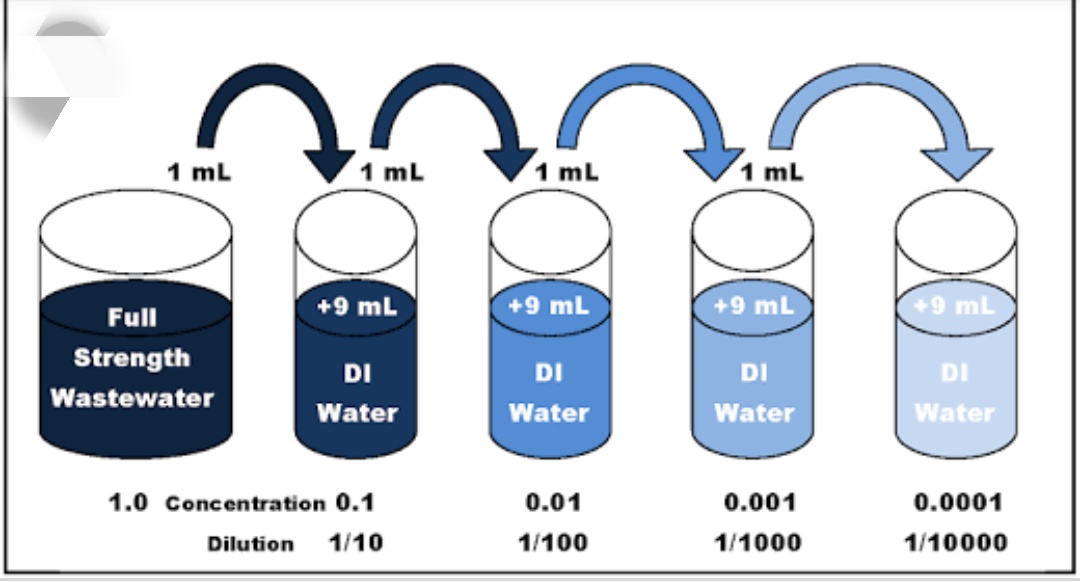
Give a brief explanation about BOD method.

nikeetasharma
nikeetasharma

nikeetasharma

  • 23 Questions
  • 303 Answers
  • 0 Best Answers
  • 2,680 Points
View Profile
nikeetasharma Guru

explain the process of conducting BOD test in laboratory.

  1. Komal Bhandakkar

    Komal Bhandakkar

    • 49 Questions
    • 255 Answers
    • 0 Best Answers
    • 2,050 Points
    View Profile
    Komal Bhandakkar AUTHOR
    Added an answer on October 19, 2020 at 10:06 pm
    This answer was edited.
    Give a brief explanation about BOD method.

    Biological oxygen demand(BOD): Biological oxygen demand is one of the clinical procedures which is used to determine the amount of dissolved oxygen which is needed by aerobic biological organisms in a body of water to director organic material is present in given water samples and certain temperaturRead more

    Biological oxygen demand(BOD):

    Biological oxygen demand is one of the clinical procedures which is used to determine the amount of dissolved oxygen which is needed by aerobic biological organisms in a body of water to director organic material is present in given water samples and certain temperature for a specific period.


    Biological oxygen demand and chemical oxygen demand are different processes.


    To assess the quantity of surface water for the biological oxygen demand test and other purposes then it is important to understand the characteristics of dissolved oxygen content in water and wastewater.


    Thank you

    See less

    • 20
    • Share
      Share
      • Share on Facebook
      • Share on Twitter
      • Share on LinkedIn
      • Share on WhatsApp
  • 32
  • 3 3 Answers
  • 1,595 Views
  • 0 Followers
Asked: September 29, 2020In: Construction Site Related

What is Reinforced Soil?

nikeetasharma
nikeetasharma

nikeetasharma

  • 23 Questions
  • 303 Answers
  • 0 Best Answers
  • 2,680 Points
View Profile
nikeetasharma Guru

What is Reinforced Soil? State it’s advantages and disadvantages?

  1. Komal Bhandakkar

    Komal Bhandakkar

    • 49 Questions
    • 255 Answers
    • 0 Best Answers
    • 2,050 Points
    View Profile
    Komal Bhandakkar AUTHOR
    Added an answer on November 17, 2020 at 5:52 pm
    This answer was edited.

    Reinforced soil: Meaning of Reinforced soil: Reinforced soil is simply a combination of compacted earth fill with the tensile reinforcement for creating an earth structure.  Advantages of reinforced soil: Less quantity of earth fill is required. The construction can be directly done on the soft grouRead more

    Reinforced soil:

    Meaning of Reinforced soil: Reinforced soil is simply a combination of compacted earth fill with the tensile reinforcement for creating an earth structure. 


    Advantages of reinforced soil:

    1. Less quantity of earth fill is required.

    2. The construction can be directly done on the soft ground.

    3. The structures can be quickly built as compared to any other conventional methods.

     Limitations of reinforced soil:

    • One of the biggest doubts about reinforcing soil is its durability.

    Thank You.

    See less
    • 2
    • Share
      Share
      • Share on Facebook
      • Share on Twitter
      • Share on LinkedIn
      • Share on WhatsApp
  • 34
  • 3 3 Answers
  • 3,374 Views
  • 0 Followers
Asked: June 29, 2020In: Geotechnical Engineering

What is Tacheometry?

RaghavArora
RaghavArora

RaghavArora

  • 4 Questions
  • 5 Answers
  • 1 Best Answer
  • 847 Points
View Profile
RaghavArora Learner

What is a tachometry? What is it’s used in civil engineering projects?

  1. Soumyadeep Halder

    Soumyadeep Halder

    • 0 Questions
    • 29 Answers
    • 2 Best Answers
    • 57 Points
    View Profile
    Best Answer
    Soumyadeep Halder User
    Added an answer on June 30, 2020 at 6:46 pm

    ans- defination Tacheometric is a branch of surveying in which horizontal and vertical distances are determined by taking angular observation with an instrument known as a tachometer. Tacheometric surveying is adopted in rough in rough and difficult terrain where direct levelling and chaining are eiRead more

    ans- defination

    Tacheometric is a branch of surveying in which horizontal and vertical distances are
    determined by taking angular observation with an instrument known as a tachometer.
    Tacheometric surveying is adopted in rough in rough and difficult terrain where direct levelling
    and chaining are either not possible or very tedious.
    Tacheometric survey also can be used for Railways, Roadways, and reservoirs etc.
    Tacheometric surveying is very rapid, and a reasonable contour map can be prepared for
    investigation works within a short time on the basis of such survey.
    An ordinary transits theodolite fitted with a stadia diaphragm is generally used for tacheometric
    surveying.

    Uses of Tachometry in civil engineering
    Tachometry is used for preparation of topographic map where both horizontal and vertical
    distances are required to be measured; survey work in difficult terrain where direct methods of
    measurements are inconvenient; reconnaissance survey for highways and railways etc.;
    Establishment of secondary control points.

    See less
    • 4
    • Share
      Share
      • Share on Facebook
      • Share on Twitter
      • Share on LinkedIn
      • Share on WhatsApp
  • 2
  • 3 3 Answers
  • 5,379 Views
  • 1 Follower
Asked: July 7, 2020In: Construction

Which are the materials used for making scaffolding?

Wellcaffolding
Wellcaffolding

Wellcaffolding

  • 1 Question
  • 0 Answers
  • 0 Best Answers
  • 10 Points
View Profile
Wellcaffolding User

Which are the materials used for making scaffolding? and which one is better?

  1. aviratdhodare

    aviratdhodare

    • 37 Questions
    • 252 Answers
    • 0 Best Answers
    • 480 Points
    View Profile
    aviratdhodare
    Added an answer on September 10, 2020 at 11:59 pm

    Plywood with wooden Doca H beams. Steel plates Aluform which uses aluminium frames and various nut assemblies For underground works, PECAFORM. For various assemblies like U Jack, tie rod, tie nuts, scaffoldings, stair tower aluminium and steel is used depending on requirement. Where strength is mainRead more

    1. Plywood with wooden Doca H beams.
    2. Steel plates
    3. Aluform which uses aluminium frames and various nut assemblies
    4. For underground works, PECAFORM.
    5. For various assemblies like U Jack, tie rod, tie nuts, scaffoldings, stair tower aluminium and steel is used depending on requirement. Where strength is main priority steel is used and in case of lightweight assembly like scaffoldings for work platforms, aluminium can be used.

    Generally,

    1. Wooden Planks And Plates.
    2. Playboards
    3. Steel Sheets, Make sure it is mild
    4. GI or corrugated sheets
    5. Require Scaffolding of wooden ballies
    6. Scaffolding of Metal Frames
    7. Scaffolding of Bamboos
    See less
    • 32
    • Share
      Share
      • Share on Facebook
      • Share on Twitter
      • Share on LinkedIn
      • Share on WhatsApp
  • 0
  • 3 3 Answers
  • 4,475 Views
  • 0 Followers
Asked: July 16, 2020In: Environmental Engineering

What is Pickup Weir Structure?

vivek gami
vivek gami

vivek gami

  • 54 Questions
  • 16 Answers
  • 5 Best Answers
  • 93 Points
View Profile
vivek gami User

What is Pickup Weir Structure? Why its call pickup? Where it is use?

  1. nikeetasharma

    nikeetasharma

    • 23 Questions
    • 303 Answers
    • 0 Best Answers
    • 2,680 Points
    View Profile
    nikeetasharma Guru
    Added an answer on December 21, 2020 at 3:00 pm

    Weirs are fixed barriers across a river or stream that force water to flow over their tops, where the height of the water above the weir can be used to calculate flow.

    Weirs are fixed barriers across a river or stream that force water to flow over their tops, where the height of the water above the weir can be used to calculate flow.

    See less
    • 0
    • Share
      Share
      • Share on Facebook
      • Share on Twitter
      • Share on LinkedIn
      • Share on WhatsApp
  • 3
  • 3 3 Answers
  • 4,877 Views
  • 0 Followers
Asked: September 22, 2020In: Concrete

Difference between OPC 53 &OPC 43 grade of cement according to the initial and final setting time of cement.

Komal Bhandakkar
Komal Bhandakkar

Komal Bhandakkar

  • 49 Questions
  • 255 Answers
  • 0 Best Answers
  • 2,050 Points
View Profile
Komal Bhandakkar AUTHOR

Difference between OPC 53 &OPC 43 grade of cement according to the initial and final setting time of cement.

  1. nikeetasharma

    nikeetasharma

    • 23 Questions
    • 303 Answers
    • 0 Best Answers
    • 2,680 Points
    View Profile
    nikeetasharma Guru
    Added an answer on November 28, 2020 at 1:15 pm

    OPC 43 :- The 43 grade OPC is the most popular general-purpose cement in the country today. The production of 43 grade OPC is nearly 50% of the total production of cement in the country. This OPC43 continues to gain strength after 28 days. OPC 53 :- The 53 grade OPC is higher strength cement to meetRead more

    OPC 43 :- The 43 grade OPC is the most popular general-purpose cement in the country today. The production of 43 grade OPC is nearly 50% of the total production of cement in the country. This OPC43 continues to gain strength after 28 days.

    OPC 53 :- The 53 grade OPC is higher strength cement to meet the needs of the consumer for higher strength concrete. As per BIS requirements the minimum 28 days compressive strength of 53 grade OPC should not be less than 53 Mpa. Therefore, there is a vast difference in setting time of these cements. It sets very quicker and has low initial setting time. These types of cement can be used where rapid hardening is not needed.

    See less
    • -3
    • Share
      Share
      • Share on Facebook
      • Share on Twitter
      • Share on LinkedIn
      • Share on WhatsApp
  • 34
  • 3 3 Answers
  • 36,116 Views
  • 0 Followers
Asked: September 23, 2020In: Concrete

What is the range of density of Carbon Fibre in Conductive Concrete?

Komal Bhandakkar
Komal Bhandakkar

Komal Bhandakkar

  • 49 Questions
  • 255 Answers
  • 0 Best Answers
  • 2,050 Points
View Profile
Komal Bhandakkar AUTHOR

What is the range of density of Carbon Fibre in Conductive Concrete?

  1. Komal Bhandakkar

    Komal Bhandakkar

    • 49 Questions
    • 255 Answers
    • 0 Best Answers
    • 2,050 Points
    View Profile
    Komal Bhandakkar AUTHOR
    Added an answer on September 28, 2020 at 11:25 pm
    What is the range of density of Carbon Fibre in Conductive Concrete?

    Conductive carbon fiber reinforced concrete is a self-heating material specially used for prevention against ice formation. Following are the specification of Carbon fibre used in conductive concrete; Density-1.81 g/cm 3 Diameter- 7.2 micron Carbon Content-95% Tensile Strength-3800MPa Elastic ModuluRead more

    Conductive carbon fiber reinforced concrete is a self-heating material specially used for prevention against ice formation.


    Following are the specification of Carbon fibre used in conductive concrete;

    1. Density-1.81 g/cm 3
    2. Diameter- 7.2 micron
    3. Carbon Content-95%
    4. Tensile Strength-3800MPa
    5. Elastic Modulus-242GPa
    6. Resistivity-1.52 x 10^3

    See less
    • 35
    • Share
      Share
      • Share on Facebook
      • Share on Twitter
      • Share on LinkedIn
      • Share on WhatsApp
  • 33
  • 3 3 Answers
  • 2,677 Views
  • 0 Followers
Load More Questions

Sidebar

Explore

  • Questions
  • Ask Questions
  • Write for us
  • Artificial Intelligence
  • Sustainability
  • Building
    • Brick Masonry
    • Building Materials
    • Building Tips
    • Formwork/Shuttering
  • Concrete
    • Concrete Admixtures
    • Cement
    • Concrete Cracks
    • Concrete Properties
  • Construction
    • Construction Equipments
    • Construction Management
    • Construction Project
    • Estimating & Costing
  • How To Guide
    • Material Estimation
    • Repair/Protection Guide
    • Material Testing Guide
    • Mix Design Guide
    • Rate Analysis
  • Geotechnical
    • Foundation Engineering
    • Ground Improvement
  • Structural Engineering
    • Strengthening of Structure
    • Structual Inspection
    • Structural Detailing
  • Surveying
  • Tips

Footer

  • Ask Questions
  • Write for us
  • Popular Questions
  • Facebook
  • Instagram
  • Twitter
  • Telegram

© 2009-2021 The Constructor. All Rights Reserved.