Sign Up

Join TheConstructor to ask questions, answer questions, write articles, and connect with other people. When you join you get additional benefits.

Have an account? Sign In


Have an account? Sign In Now

Sign In

Log in to TheConstructor to ask questions, answer people’s questions, write articles & connect with other people. When you join you get additional benefits.

Sign Up Here

Join for free or log in to continue reading...


Forgot Password?

Don't have account, Sign Up Here

Forgot Password

Lost your password? Please enter your email address. You will receive a link and will create a new password via email.

Have an account? Sign In Now

Sorry, you do not have a permission to ask a question, You must login to ask question. Get the paid membership

Join for free or log in to continue reading...


Forgot Password?

Don't have account, Sign Up Here
Get the paid membership
theconstructor.org Logo theconstructor.org Logo
Log inJoin

theconstructor.org

theconstructor.org Navigation

  • Articles
    • Recent Articles
    • Popular Articles
    • Write for us
  • Community
  • Categories
    • How To Guide
      • Material Testing Guide
    • Concrete
    • Building
      • Brick Masonry
      • Building Materials
      • Building Tips
    • Construction
      • Equipments
      • Management
    • Digital Construction
    • Geotechnical
      • Foundation
  • Case Studies
Search
Ask A Question

Mobile menu

Close
Ask a Question
  • Questions
  • Ask Questions
  • Write for us
  • Artificial Intelligence
  • Sustainability
  • Building
    • Brick Masonry
    • Building Materials
    • Building Tips
    • Formwork/Shuttering
  • Concrete
    • Concrete Admixtures
    • Cement
    • Concrete Cracks
    • Concrete Properties
  • Construction
    • Construction Equipments
    • Construction Management
    • Construction Project
    • Estimating & Costing
  • How To Guide
    • Material Estimation
    • Repair/Protection Guide
    • Material Testing Guide
    • Mix Design Guide
    • Rate Analysis
  • Geotechnical
    • Foundation Engineering
    • Ground Improvement
  • Structural Engineering
    • Strengthening of Structure
    • Structual Inspection
    • Structural Detailing
  • Surveying
  • Tips

Trending Questions

Home/Trending Questions/Page 9

Do you need to remove the ads? Get the paid membership

Discy Latest Questions

Asked: September 9, 2020In: Construction

Why are Chrome Corundum Bricks Red in Color?

aviratdhodare
aviratdhodare

aviratdhodare

  • 37 Questions
  • 252 Answers
  • 0 Best Answers
  • 480 Points
View Profile
aviratdhodare

Why are Chrome Corundum Bricks Red?

  1. AdityaBhandakkar

    AdityaBhandakkar

    • 12 Questions
    • 250 Answers
    • 2 Best Answers
    • 0 Points
    View Profile
    AdityaBhandakkar User
    Added an answer on September 22, 2020 at 1:43 pm
    Why are Chrome Corundum Bricks Red in Color?

    Hi, I added some technical points about Chrome corundum bricks It is a new excellent grade refractory materials with a very high-temperature performance with strong corrosion resistance and high strength which is made up of chromium oxide and for corundum as a raw material which is mixed with some oRead more

    Hi,

    I added some technical points about Chrome corundum bricks

    • It is a new excellent grade refractory materials with a very high-temperature performance with strong corrosion resistance and high strength which is made up of chromium oxide and for corundum as a raw material which is mixed with some other additives.

    Chemical composition:

    Al2O3 —.   >92

    CaO.        <1.2

    SiO.          <1.0

    Fe2O3.     <0.3

    Cr2O7.     >3

    ZrO2.        >3

    Properties:

    Cold crushing strength >180 MPa

    porosity.        >15%

    Bulk density. > 3.25 g/cm^3

    Modulus of rupture. > 9.5 MPa

    Applications:

    1. It is fire-resistant properties
    2. Strength in the range between 70 to 100 MPa.
    3. High resistance against thermal shocks
    4. Resistance against slag erosion
    See less
    • 45
    • Share
      Share
      • Share on Facebook
      • Share on Twitter
      • Share on LinkedIn
      • Share on WhatsApp
  • 31
  • 8 8 Answers
  • 1,664 Views
  • 0 Followers
Asked: September 22, 2020In: Concrete

The problems faced by a civil engineer during construction?

Komal Bhandakkar
Komal Bhandakkar

Komal Bhandakkar

  • 49 Questions
  • 255 Answers
  • 0 Best Answers
  • 2,050 Points
View Profile
Komal Bhandakkar AUTHOR

The problems faced by a civil engineer during construction?

  1. nikeetasharma

    nikeetasharma

    • 23 Questions
    • 303 Answers
    • 0 Best Answers
    • 2,680 Points
    View Profile
    nikeetasharma Guru
    Added an answer on December 17, 2020 at 3:54 pm

    There are many types of problems which are faced by civil engineers during construction, they are:- 1. Environmental problem 2. Climatic condition 3. Geographical topography 4. Health problem 5. Safety problem 6. Manpower problem

    There are many types of problems which are faced by civil engineers during construction, they are:-

    1. Environmental problem
    2. Climatic condition
    3. Geographical topography
    4. Health problem
    5. Safety problem
    6. Manpower problem

    See less
    • 0
    • Share
      Share
      • Share on Facebook
      • Share on Twitter
      • Share on LinkedIn
      • Share on WhatsApp
  • 31
  • 1 1 Answer
  • 597 Views
  • 0 Followers
Asked: September 2, 2020In: Miscellaneous

What is the most suitable volume of concrete batching plant for a transmission interconnection project?

aviratdhodare
aviratdhodare

aviratdhodare

  • 37 Questions
  • 252 Answers
  • 0 Best Answers
  • 480 Points
View Profile
aviratdhodare

What is the most suitable volume of concrete batching plant for a transmission interconnection project?

  1. AdityaBhandakkar

    AdityaBhandakkar

    • 12 Questions
    • 250 Answers
    • 2 Best Answers
    • 0 Points
    View Profile
    AdityaBhandakkar User
    Added an answer on September 8, 2020 at 11:11 pm
    What is the most suitable volume of concrete batching plant for a transmission interconnection project?

    As a civil engineering point of view for accurate measurement of any material weight batching is preferred over volume batching for large constructions. Refer IS 4925(2004) 40 tales of concrete batching plants and their volumes The volume of transit mixer is around the 6.1-metre cube. The volume ofRead more

    As a civil engineering point of view for accurate measurement of any material weight batching is preferred over volume batching for large constructions.

    Refer IS 4925(2004) 40 tales of concrete batching plants and their volumes

    • The volume of transit mixer is around the 6.1-metre cube.
    • The volume of the batching plant is based upon the size and quantity of manufacturing capacity. So it may vary from plant to plant according to requirement.
    • Also, you can prefer a mix design of concrete to get an idea about transit mixer and batching plants in brief.
    See less
    • 45
    • Share
      Share
      • Share on Facebook
      • Share on Twitter
      • Share on LinkedIn
      • Share on WhatsApp
  • 31
  • 1 1 Answer
  • 1,147 Views
  • 0 Followers
Asked: August 3, 2020In: Miscellaneous

What are the inspections carried out by local authorities while construction?

aviratdhodare
aviratdhodare

aviratdhodare

  • 37 Questions
  • 252 Answers
  • 0 Best Answers
  • 480 Points
View Profile
aviratdhodare

What are the inspections carried out by local authorities while construction?

  1. nikeetasharma

    nikeetasharma

    • 23 Questions
    • 303 Answers
    • 0 Best Answers
    • 2,680 Points
    View Profile
    nikeetasharma Guru
    Added an answer on October 15, 2020 at 8:32 pm

    The inspections carried out by local authorities while construction are as follows :- Quality and progress :- 1. Condition surveys of neighbouring structures prior to commencement of the works. 2. Regular valuation inspections to assess progress of the works in order to value interim payments. 3. InRead more

    The inspections carried out by local authorities while construction are as follows :-

    Quality and progress :-

    1. Condition surveys of neighbouring structures prior to commencement of the works.
    2. Regular valuation inspections to assess progress of the works in order to value interim payments.
    3. Inspecting mock ups and samples and witnessing tests.
    4. Witnessing commissioning.
    5.Inspection prior to certification of practical completion.
    6. Inspection after handover of the site to the client on certification of practical completion.
    7. Inspection at the end of the defects liability period to prepare a schedule of defects.
    8. Inspection on completion of the rectification of defects set out on the schedule of defects.

    Health and safety :-

    1. Prevention of falls and personal fall protection systems.
    2. Work at height.
    3. Work platforms such as scaffold and mobile platforms.
    4. Ladders and stepladders.
    5. Personal protection equipment, including head protection.
    6. Plant, vehicles and other equipment.
    7. Storage.
    8. Electrical systems.
    9. Asbestos risk.
    10. Provision of welfare facilities such as toilets and handwashing facilities.
    11. Site conditions and order.
    12. Avoidance of obstructions.
    13. Management of respiratory risks.
    14. Structural stability.
    15. Prevention of unauthorised access to the site.

    Building control :-

    1. Excavations, before filling.
    2. Foundations before covering up.
    3. Damp proof course.
    4. New drains before covering up.
    5. Ground beams and steelwork.
    6. Insulation.
    7. Roof construction.
    8. Completion.

    See less
    • 25
    • Share
      Share
      • Share on Facebook
      • Share on Twitter
      • Share on LinkedIn
      • Share on WhatsApp
  • 30
  • 5 5 Answers
  • 2,105 Views
  • 0 Followers
Asked: September 19, 2020In: Structural Engineering

What happens when the thrust line coincides with the bottom Vern axis of beam? (Prestressed concrete)

aviratdhodare
aviratdhodare

aviratdhodare

  • 37 Questions
  • 252 Answers
  • 0 Best Answers
  • 480 Points
View Profile
aviratdhodare

What happens when the thrust line coincides with the bottom Vern axis of beam? (Prestressed concrete)

  1. nikeetasharma

    nikeetasharma

    • 23 Questions
    • 303 Answers
    • 0 Best Answers
    • 2,680 Points
    View Profile
    nikeetasharma Guru
    Added an answer on November 26, 2020 at 1:24 pm
    This answer was edited.

    Basically, shear force is the combination of flexural compression which result as C and tends to form an inclined thrust line known as arch. For example consider a simple strut and tie model. Here it may be technically expected that the shear force is supported by the longitudinal resultant.   NαVcoRead more

    Basically, shear force is the combination of flexural compression which result as C and tends to form an inclined thrust line known as arch. For example consider a simple strut and tie model. Here it may be technically expected that the shear force is supported by the longitudinal resultant.  

    NαVcotθNa=αVcotθ

    Shear force is the product of shear stress and area. Thrust line can also affect the stability. 

    See less
    • 0
    • Share
      Share
      • Share on Facebook
      • Share on Twitter
      • Share on LinkedIn
      • Share on WhatsApp
  • 30
  • 3 3 Answers
  • 905 Views
  • 0 Followers
Asked: September 19, 2020In: Geotechnical Engineering

Is it possible to obtain some data on factors on which seepage in dams depends?

aviratdhodare
aviratdhodare

aviratdhodare

  • 37 Questions
  • 252 Answers
  • 0 Best Answers
  • 480 Points
View Profile
aviratdhodare

Is it possible to obtain some data on factors on which seepage in dams depends?          

  1. AdityaBhandakkar

    AdityaBhandakkar

    • 12 Questions
    • 250 Answers
    • 2 Best Answers
    • 0 Points
    View Profile
    AdityaBhandakkar User
    Added an answer on October 3, 2020 at 11:27 am

    Absolutely Yes, factors of seepage are very important to determine before the construction of a dam or even after the construction of the dam for maintenance work. Electrical resistivity method is used to determine the amount of seepage and depth of seepage. As a civil engineer, it's our responsibilRead more

    Absolutely Yes, factors of seepage are very important to determine before the construction of a dam or even after the construction of the dam for maintenance work.

    Electrical resistivity method is used to determine the amount of seepage and depth of seepage.

    As a civil engineer, it’s our responsibility to provide higher safety.

    Seepage under the embankment is very much dangerous as compared to concrete dams because embankments are built on a very soft material which is easily scoured and it is very vulnerable for the influence of water.

    On other side concrete dam, is built on hard strata and even the defective dam which not the endangered by passing of water from the underside.

    Following are the methods for controlling  seepage

    1. Providing drainage
    2. By reducing the seepage with some proper methods.
    3. Largely use of filters for preventing the piping and heave
    See less
    • 32
    • Share
      Share
      • Share on Facebook
      • Share on Twitter
      • Share on LinkedIn
      • Share on WhatsApp
  • 30
  • 2 2 Answers
  • 552 Views
  • 0 Followers
Asked: September 22, 2020In: Construction

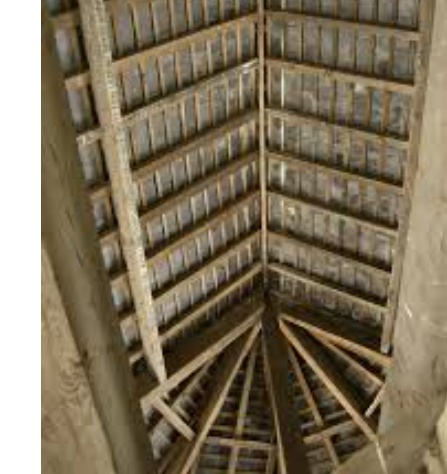
Where rafters are used? What is the purpose of it?

Komal Bhandakkar
Komal Bhandakkar

Komal Bhandakkar

  • 49 Questions
  • 255 Answers
  • 0 Best Answers
  • 2,050 Points
View Profile
Komal Bhandakkar AUTHOR

Where rafters are used? What is the purpose of it?

  1. Komal Bhandakkar

    Komal Bhandakkar

    • 49 Questions
    • 255 Answers
    • 0 Best Answers
    • 2,050 Points
    View Profile
    Komal Bhandakkar AUTHOR
    Added an answer on October 3, 2020 at 11:27 am
    Where rafters are used? What is the purpose of it?

    Rafter: Meaning: Rafter is one simple sloped structural member which is generally made up of wood. Purpose: It provides better ease in construction It distributes roof loads We can use rafter where the span is limited. It highly contributes to the economy.  

    Rafter:

    Meaning:

    Rafter is one simple sloped structural member which is generally made up of wood.

    Purpose:

    • It provides better ease in construction
    • It distributes roof loads
    • We can use rafter where the span is limited.
    • It highly contributes to the economy.


    See less
    • 31
    • Share
      Share
      • Share on Facebook
      • Share on Twitter
      • Share on LinkedIn
      • Share on WhatsApp
  • 30
  • 2 2 Answers
  • 2,129 Views
  • 0 Followers
Asked: September 12, 2020In: Concrete

What are the major differences between IS 10262: 2009 & IS 10262: 2019 in concrete mix design?

Komal Bhandakkar
Komal Bhandakkar

Komal Bhandakkar

  • 49 Questions
  • 255 Answers
  • 0 Best Answers
  • 2,050 Points
View Profile
Komal Bhandakkar AUTHOR

What are the major differences between IS 10262: 2009 & IS 10262: 2019 in concrete mix design?

  1. aviratdhodare

    aviratdhodare

    • 37 Questions
    • 252 Answers
    • 0 Best Answers
    • 480 Points
    View Profile
    aviratdhodare
    Added an answer on September 16, 2020 at 3:40 pm

    IS 10262: 2009 and IS: 10262: 2019 in concrete mix design: This IS provides guidelines for proportioning concrete mixes as per requirements using the concrete materials and the supplementary materials. IS 10262: 2019 is the second revision of the first edition IS 10262: 2009 in concrete mix design iRead more

    IS 10262: 2009 and IS: 10262: 2019 in concrete mix design:

    This IS provides guidelines for proportioning concrete mixes as per requirements using the concrete materials and the supplementary materials. IS 10262: 2019 is the second revision of the first edition IS 10262: 2009 in concrete mix design in which the following major changes have been made(As per the description of the code):

    • The standard was divided into five sections as General, Ordinary and standard grades of concrete, high strength grades of concrete, Self-compacting concrete and Mass concrete.
    • A new section for Mix proportioning procedure for High strength concrete for M65 and above(up to target strength of M 100) was included.
    • The formula for the target mean strength for mix proportioning for refined by including a new factor based on the grade of the concrete. It was done to ensure a min margin been the characteristic compressive strength and the target mean strength.
    • A graph of W/C vs. 28 days strength of concrete introduced for different grades and types of cements for an alternative to initial water-cement ratio assumption.
    • In the design of normal concrete mix proportion, the consideration of air content was reintroduced.
    See less
    • 45
    • Share
      Share
      • Share on Facebook
      • Share on Twitter
      • Share on LinkedIn
      • Share on WhatsApp
  • 30
  • 1 1 Answer
  • 5,082 Views
  • 0 Followers
Load More Questions

Sidebar

Explore

  • Questions
  • Ask Questions
  • Write for us
  • Artificial Intelligence
  • Sustainability
  • Building
    • Brick Masonry
    • Building Materials
    • Building Tips
    • Formwork/Shuttering
  • Concrete
    • Concrete Admixtures
    • Cement
    • Concrete Cracks
    • Concrete Properties
  • Construction
    • Construction Equipments
    • Construction Management
    • Construction Project
    • Estimating & Costing
  • How To Guide
    • Material Estimation
    • Repair/Protection Guide
    • Material Testing Guide
    • Mix Design Guide
    • Rate Analysis
  • Geotechnical
    • Foundation Engineering
    • Ground Improvement
  • Structural Engineering
    • Strengthening of Structure
    • Structual Inspection
    • Structural Detailing
  • Surveying
  • Tips

Footer

  • Ask Questions
  • Write for us
  • Popular Questions
  • Facebook
  • Instagram
  • Twitter
  • Telegram

© 2009-2021 The Constructor. All Rights Reserved.