Sign Up

Join TheConstructor to ask questions, answer questions, write articles, and connect with other people. When you join you get additional benefits.

Have an account? Sign In


Have an account? Sign In Now

Sign In

Log in to TheConstructor to ask questions, answer people’s questions, write articles & connect with other people. When you join you get additional benefits.

Sign Up Here

Join for free or log in to continue reading...


Forgot Password?

Don't have account, Sign Up Here

Forgot Password

Lost your password? Please enter your email address. You will receive a link and will create a new password via email.

Have an account? Sign In Now

Sorry, you do not have a permission to ask a question, You must login to ask question. Get the paid membership

Join for free or log in to continue reading...


Forgot Password?

Don't have account, Sign Up Here
Get the paid membership
theconstructor.org Logo theconstructor.org Logo
Log inJoin

theconstructor.org

theconstructor.org Navigation

  • Articles
    • Recent Articles
    • Popular Articles
    • Write for us
  • Community
  • Categories
    • How To Guide
      • Material Testing Guide
    • Concrete
    • Building
      • Brick Masonry
      • Building Materials
      • Building Tips
    • Construction
      • Equipments
      • Management
    • Digital Construction
    • Geotechnical
      • Foundation
  • Case Studies
Search
Ask A Question

Mobile menu

Close
Ask a Question
  • Questions
  • Ask Questions
  • Write for us
  • Artificial Intelligence
  • Sustainability
  • Building
    • Brick Masonry
    • Building Materials
    • Building Tips
    • Formwork/Shuttering
  • Concrete
    • Concrete Admixtures
    • Cement
    • Concrete Cracks
    • Concrete Properties
  • Construction
    • Construction Equipments
    • Construction Management
    • Construction Project
    • Estimating & Costing
  • How To Guide
    • Material Estimation
    • Repair/Protection Guide
    • Material Testing Guide
    • Mix Design Guide
    • Rate Analysis
  • Geotechnical
    • Foundation Engineering
    • Ground Improvement
  • Structural Engineering
    • Strengthening of Structure
    • Structual Inspection
    • Structural Detailing
  • Surveying
  • Tips

Popular Questions

Home/Popular Questions/Page 20

Do you need to remove the ads? Get the paid membership

Discy Latest Questions

Asked: September 22, 2020In: Concrete

Tell me the properties of nano-concrete?

Komal Bhandakkar
Komal Bhandakkar

Komal Bhandakkar

  • 49 Questions
  • 255 Answers
  • 0 Best Answers
  • 2,050 Points
View Profile
Komal Bhandakkar AUTHOR

Tell me the properties of nano-concrete? What is mean by nano-concrete?

  1. AdityaBhandakkar

    AdityaBhandakkar

    • 12 Questions
    • 250 Answers
    • 2 Best Answers
    • 0 Points
    View Profile
    AdityaBhandakkar User
    Added an answer on October 16, 2020 at 12:23 pm
    This answer was edited.

    Hi, I am a researcher in nanotechnology and its uses in construction fields. In simple words," The technology which works with nanoscale is called nanotechnology". In Civil engineering, if we can work on nanoscale, i.e. 0 to 10 nanometer, and able to change the molecular properties of cement, then tRead more

    Hi,

    I am a researcher in nanotechnology and its uses in construction fields. In simple words,” The technology which works with nanoscale is called nanotechnology”. In Civil engineering, if we can work on nanoscale, i.e. 0 to 10 nanometer, and able to change the molecular properties of cement, then that modified cement concrete is called nano-engineered cement concrete.  Nowadays, it is possible to alter the cement properties according to our use.

    1. i.e. increasing workability without increasing water content.
    2. Increasing setting time without adding any admixtures.
    3. Increasing strength without and additives. etc


    See less
    • 33
    • Share
      Share
      • Share on Facebook
      • Share on Twitter
      • Share on LinkedIn
      • Share on WhatsApp
  • 31
  • 4 4 Answers
  • 1,714 Views
  • 0 Followers
Asked: October 13, 2020In: Civil Engineering Jobs

Which are the highest paying jobs in the civil engineering field?

Komal Bhandakkar
Komal Bhandakkar

Komal Bhandakkar

  • 49 Questions
  • 255 Answers
  • 0 Best Answers
  • 2,050 Points
View Profile
Komal Bhandakkar AUTHOR

Which are the highest paying jobs in the civil engineering field?

  1. Preet Chovatiya

    Preet Chovatiya

    • 11 Questions
    • 81 Answers
    • 5 Best Answers
    • 858 Points
    View Profile
    Preet Chovatiya Learner
    Added an answer on October 28, 2020 at 11:12 pm

    The below 7 jobs are the highest paying civil engineer field jobs that are: Structure Engineering (Average salary up to $100000) Geotechnical Engineering (Average salary up to $50000-$80000) Construction Engineering (Average salary up to $150000) Transportation Engineering (Average salary up to $850Read more

    The below 7 jobs are the highest paying civil engineer field jobs that are:

    1. Structure Engineering (Average salary up to $100000)
    2. Geotechnical Engineering (Average salary up to $50000-$80000)
    3. Construction Engineering (Average salary up to $150000)
    4. Transportation Engineering (Average salary up to $85000)
    5. Water Resource Engineering (Average salary up to $88000)
    6. Environment Engineering (Average salary up to $88500)
    7. Design Engineering (Average salary up to $73000)
    See less
    • 2
    • Share
      Share
      • Share on Facebook
      • Share on Twitter
      • Share on LinkedIn
      • Share on WhatsApp
  • 10
  • 4 4 Answers
  • 11,678 Views
  • 0 Followers
Asked: July 16, 2020In: Geotechnical Engineering

What is a triaxial test?

Vivek Patel
Vivek Patel

Vivek Patel

  • 39 Questions
  • 80 Answers
  • 1 Best Answer
  • 6 Points
View Profile
Vivek Patel User

What is a triaxial test? Why it is significant to know soil property? and which type of property?

  1. nikeetasharma

    nikeetasharma

    • 23 Questions
    • 303 Answers
    • 0 Best Answers
    • 2,680 Points
    View Profile
    nikeetasharma Guru
    Added an answer on September 8, 2020 at 2:20 pm

    Triaxial test ; The triaxial test is one of the most versatile and widely performed tests in the geotechnical laboratory. It allows shear strength and stiffness of soil and rock to be determined for use in geotechnical design. - Procedure of triaxial test :- The triaxial test typically involves subjRead more

    Triaxial test ;

    The triaxial test is one of the most versatile and widely performed tests in the geotechnical laboratory. It allows shear strength and stiffness of soil and rock to be determined for use in geotechnical design.

    – Procedure of triaxial test :-

    The triaxial test typically involves subjecting a cylindrical specimen of soil, whose diameter ranges from 38mm to 100mm, into a cell that can be pressurized. Most of the specimens have an approximate 2:1 height to dia ratio and are sealed with a rubber membrane. The specimen preparation generally depends upon the type of soil. Cohesive soil samples are prepared directly from saturated compacted samples, either undisturbed or remolded. The specimen for cohesion-less soil is prepared with the help of the mold that maintains the required shape of the specimen.

    And then the specimen is vertically covered with a thin rubber membrane and placed between two rigid ends inside a pressure chamber. The upper plate can move vertically and apply vertical stresses to the specimen. The axial stress/strain of the sample is controlled by the movement of this vertical axis. The water pressure surrounding the sample in the pressure chamber controls the confining pressure. Also, the volume change of the sample is controlled by measuring the exact volume of moving water.


    There are three primary triaxial test carried out in a laboratory, depending upon the combination of loading and drainage condition ;

    • Consolidated – Drained (CD)
    • Consolidated – Undrained (CU)
    • Unconsolidated – Undrained (UU)

    Triaxial test is significant to know soil property because it determines the ability of soil to resist shear stress and strain. Different combination of confining and axial stresses can be applied. Drained and undrained test can be carried out. The types of properties of soil which can be known by triaxial test are followed ;

    1. Shear strength and stiffness of soil
    2. Stress/Strain behavior
    3. Pore water pressure of soil
    See less
    • 32
    • Share
      Share
      • Share on Facebook
      • Share on Twitter
      • Share on LinkedIn
      • Share on WhatsApp
  • 4
  • 4 4 Answers
  • 2,113 Views
  • 0 Followers
Asked: September 22, 2020In: Concrete

What is the use of plastic optical fibre in concrete?

Komal Bhandakkar
Komal Bhandakkar

Komal Bhandakkar

  • 49 Questions
  • 255 Answers
  • 0 Best Answers
  • 2,050 Points
View Profile
Komal Bhandakkar AUTHOR

What is the use of plastic optical fibre in concrete?

  1. nikeetasharma

    nikeetasharma

    • 23 Questions
    • 303 Answers
    • 0 Best Answers
    • 2,680 Points
    View Profile
    nikeetasharma Guru
    Added an answer on November 29, 2020 at 3:28 pm

    The experimental results show that an optical fiber can be easily combined with concrete and that the POF could provide a steady light transmitting ratio. Moreover, the FBG can be used as a sensing element for strain and temperature.

    The experimental results show that an optical fiber can be easily combined with concrete and that the POF could provide a steady light transmitting ratio. Moreover, the FBG can be used as a sensing element for strain and temperature.

    See less
    • 0
    • Share
      Share
      • Share on Facebook
      • Share on Twitter
      • Share on LinkedIn
      • Share on WhatsApp
  • 30
  • 4 4 Answers
  • 2,312 Views
  • 0 Followers
Asked: July 24, 2020In: Structural Engineering

How will Poison’s Ratio of a material affect its Strength?

Tips_and_tricks
Tips_and_tricks

Tips_and_tricks

  • 13 Questions
  • 15 Answers
  • 1 Best Answer
  • 685 Points
View Profile
Tips_and_tricks Learner

How will Poison’s Ratio of a material Affect its Strength?

  1. nikeetasharma

    nikeetasharma

    • 23 Questions
    • 303 Answers
    • 0 Best Answers
    • 2,680 Points
    View Profile
    nikeetasharma Guru
    Added an answer on November 26, 2020 at 1:10 pm

    Poisson's ratio is defined as the ratio of the change in the width per unit width of a material, to the change in its length per unit length as a result of strain. Poisson ratio measures the deformation in the material in a direction perpendicular to the direction of the applied force. MathematicallRead more

    Poisson’s ratio is defined as the ratio of the change in the width per unit width of a material, to the change in its length per unit length as a result of strain. Poisson ratio measures the deformation in the material in a direction perpendicular to the direction of the applied force.
    Mathematically, poissons ratio is equal to the negative of the ratio of lateral strain and longitudinal strain. Therefore, if the poisson’s ratio is greater than the strength is greater.

    See less
    • -1
    • Share
      Share
      • Share on Facebook
      • Share on Twitter
      • Share on LinkedIn
      • Share on WhatsApp
  • 3
  • 4 4 Answers
  • 1,687 Views
  • 0 Followers
Asked: August 15, 2020In: Structural Engineering

What is the maximum width of stair case for public buildings?

AdityaBhandakkar
AdityaBhandakkar

AdityaBhandakkar

  • 12 Questions
  • 250 Answers
  • 2 Best Answers
  • 0 Points
View Profile
AdityaBhandakkar User

What is the maximum width of stair case for public buildings?

  1. nikeetasharma

    nikeetasharma

    • 23 Questions
    • 303 Answers
    • 0 Best Answers
    • 2,680 Points
    View Profile
    nikeetasharma Guru
    Added an answer on November 26, 2020 at 12:56 pm

    For reduced use staircases such as accesses to lofts, attics and terraces, the minimum width shall be 600mm. The minimum tread shall be 250mm excluding nosing and the maximum riser will be 175mm for all buildings except for internal staircases of apartments, which can be permitted upto 190mm.

    For reduced use staircases such as accesses to lofts, attics and terraces, the minimum width shall be 600mm. The minimum tread shall be 250mm excluding nosing and the maximum riser will be 175mm for all buildings except for internal staircases of apartments, which can be permitted upto 190mm.

    See less
    • 0
    • Share
      Share
      • Share on Facebook
      • Share on Twitter
      • Share on LinkedIn
      • Share on WhatsApp
  • 13
  • 4 4 Answers
  • 34,563 Views
  • 0 Followers
Asked: October 5, 2020In: Construction Site Related

Can we place a Column over Beam mid-span?

Deepak Subba
Deepak Subba

Deepak Subba

  • 1 Question
  • 1 Answer
  • 0 Best Answers
  • 30 Points
View Profile
Deepak Subba User

Sir, Can we place column in the clear span of a beam without mid column support as shown in ...

  1. aviratdhodare

    aviratdhodare

    • 37 Questions
    • 252 Answers
    • 0 Best Answers
    • 480 Points
    View Profile
    aviratdhodare
    Added an answer on October 17, 2020 at 5:17 pm

    Yes, you can do that. These are called hung columns. These are columns, having no foundation/ footing, rest over beams, or slabs. These are also termed as hanging columns/ floating column. They can not transfer load directly to the foundation or footing. Load from these columns is the point load onRead more

    1. Yes, you can do that. These are called hung columns. These are columns, having no foundation/ footing, rest over beams, or slabs. These are also termed as hanging columns/ floating column.
    2. They can not transfer load directly to the foundation or footing. Load from these columns is the point load on the beam over which it rests.These beams are generally deep beam need high percentage of reinforcement, also termed as transfer beam. Load is transferred through the transfer beam to the supporting columns, ultimately to the foundation.
    3. These columns are designed to take vertical load , considering it a compression member.
    4. These are abundantly provided to get more space in the ground floor to keep provisions for parking, conference hall, architectural requirement , banquet hall in hotels, commercial building etc.These are also provided in intermediate floor for the similar purpose.
    5. These columns are designed for vertical load only. In earthquake prone areas these may prove unsafe. If at all provided, they will not take lateral forces, all seismic forces shall be taken by the main columns supporting the transfer beam.
    6. Reinforcement detailing is an important issue in the design of column- beam junction.
    See less
    • 7
    • Share
      Share
      • Share on Facebook
      • Share on Twitter
      • Share on LinkedIn
      • Share on WhatsApp
  • 2
  • 4 4 Answers
  • 8,151 Views
  • 0 Followers
Asked: May 28, 2020In: Concrete

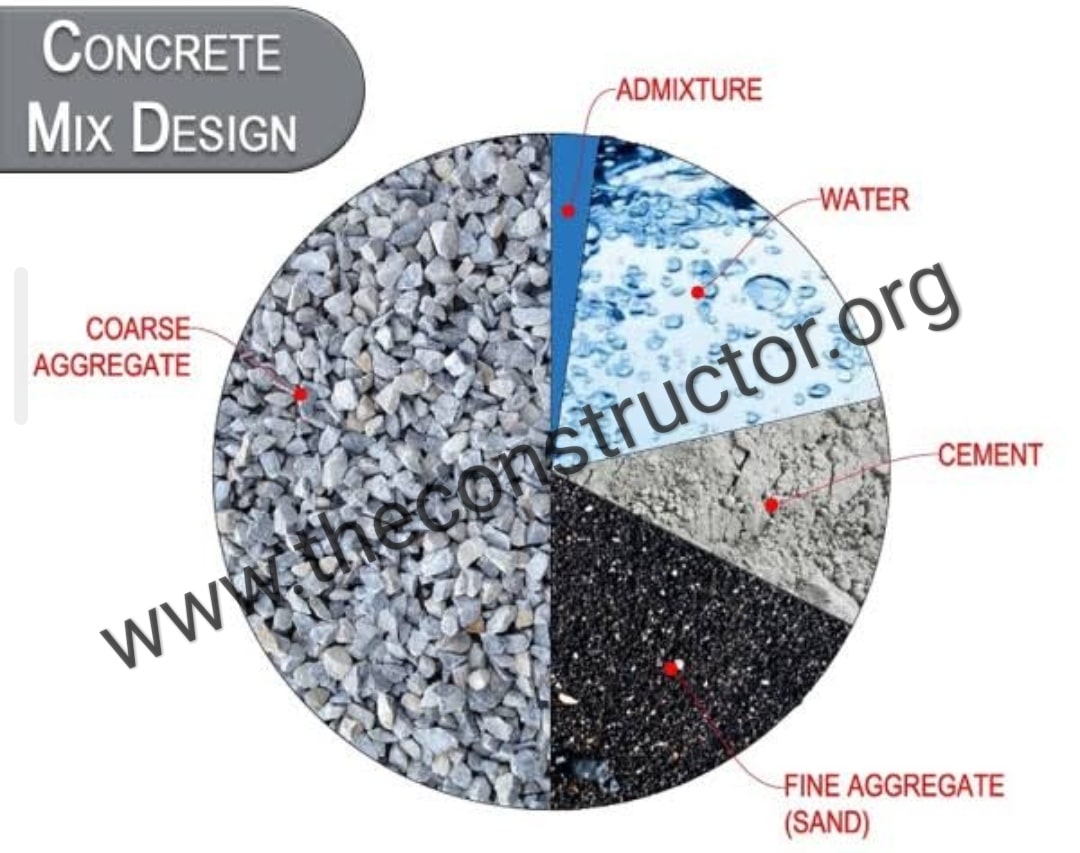
Explain the step by step process for Concrete Mix Design?

[Deleted User]
[Deleted User]

Explain the step by step process for concrete mix design?

  1. AdityaBhandakkar

    AdityaBhandakkar

    • 12 Questions
    • 250 Answers
    • 2 Best Answers
    • 0 Points
    View Profile
    AdityaBhandakkar User
    Added an answer on September 18, 2020 at 6:35 pm
    Explain the step by step process for Concrete Mix Design?

    Hi Kamesh Varan, For a step-by-step process of the mix, design refer IS 10262:2009. Also refer ACI 211.1, for details of mix design and the calculation of quantity. You may also refer IS 456: 2000 for curing and other properties of it also gives the idea of durability and strength of structures.

    Hi Kamesh Varan,

    For a step-by-step process of the mix, design refer IS 10262:2009.

    Also refer ACI 211.1, for details of mix design and the calculation of quantity.

    You may also refer IS 456: 2000 for curing and other properties of it also gives the idea of durability and strength of structures.

    See less
    • 45
    • Share
      Share
      • Share on Facebook
      • Share on Twitter
      • Share on LinkedIn
      • Share on WhatsApp
  • 0
  • 4 4 Answers
  • 7,268 Views
  • 0 Followers
Load More Questions

Sidebar

Explore

  • Questions
  • Ask Questions
  • Write for us
  • Artificial Intelligence
  • Sustainability
  • Building
    • Brick Masonry
    • Building Materials
    • Building Tips
    • Formwork/Shuttering
  • Concrete
    • Concrete Admixtures
    • Cement
    • Concrete Cracks
    • Concrete Properties
  • Construction
    • Construction Equipments
    • Construction Management
    • Construction Project
    • Estimating & Costing
  • How To Guide
    • Material Estimation
    • Repair/Protection Guide
    • Material Testing Guide
    • Mix Design Guide
    • Rate Analysis
  • Geotechnical
    • Foundation Engineering
    • Ground Improvement
  • Structural Engineering
    • Strengthening of Structure
    • Structual Inspection
    • Structural Detailing
  • Surveying
  • Tips

Footer

  • Ask Questions
  • Write for us
  • Popular Questions
  • Facebook
  • Instagram
  • Twitter
  • Telegram

© 2009-2021 The Constructor. All Rights Reserved.