Sign Up

Join TheConstructor to ask questions, answer questions, write articles, and connect with other people. When you join you get additional benefits.

Have an account? Sign In


Have an account? Sign In Now

Sign In

Log in to TheConstructor to ask questions, answer people’s questions, write articles & connect with other people. When you join you get additional benefits.

Sign Up Here

Join for free or log in to continue reading...


Forgot Password?

Don't have account, Sign Up Here

Forgot Password

Lost your password? Please enter your email address. You will receive a link and will create a new password via email.

Have an account? Sign In Now

Sorry, you do not have a permission to ask a question, You must login to ask question. Get the paid membership

Join for free or log in to continue reading...


Forgot Password?

Don't have account, Sign Up Here
Get the paid membership
theconstructor.org Logo theconstructor.org Logo
Log inJoin

theconstructor.org

theconstructor.org Navigation

  • Articles
    • Recent Articles
    • Popular Articles
    • Write for us
  • Community
  • Categories
    • How To Guide
      • Material Testing Guide
    • Concrete
    • Building
      • Brick Masonry
      • Building Materials
      • Building Tips
    • Construction
      • Equipments
      • Management
    • Digital Construction
    • Geotechnical
      • Foundation
  • Case Studies
Search
Ask A Question

Mobile menu

Close
Ask a Question
  • Questions
  • Ask Questions
  • Write for us
  • Artificial Intelligence
  • Sustainability
  • Building
    • Brick Masonry
    • Building Materials
    • Building Tips
    • Formwork/Shuttering
  • Concrete
    • Concrete Admixtures
    • Cement
    • Concrete Cracks
    • Concrete Properties
  • Construction
    • Construction Equipments
    • Construction Management
    • Construction Project
    • Estimating & Costing
  • How To Guide
    • Material Estimation
    • Repair/Protection Guide
    • Material Testing Guide
    • Mix Design Guide
    • Rate Analysis
  • Geotechnical
    • Foundation Engineering
    • Ground Improvement
  • Structural Engineering
    • Strengthening of Structure
    • Structual Inspection
    • Structural Detailing
  • Surveying
  • Tips

Interview Questions

Home/Interview Questions/Page 2

Do you need to remove the ads? Get the paid membership

  • Recent Questions
  • Most Answered
  • Answers
  • No Answers
  • Most Visited
  • Most Voted
  • Random

Discy Latest Questions

Asked: July 17, 2020In: Interview Questions

What is the difference between ductile and malleable property of material?

Himanshu joshi
Himanshu joshi

Himanshu joshi

  • 11 Questions
  • 27 Answers
  • 0 Best Answers
  • 767 Points
View Profile
Himanshu joshi Learner

What is the difference between ductile and malleable property of material?

  1. nikeetasharma

    nikeetasharma

    • 23 Questions
    • 303 Answers
    • 0 Best Answers
    • 2,680 Points
    View Profile
    nikeetasharma Guru
    Added an answer on December 17, 2020 at 1:20 pm

    If we talk about malleability and ductility both are connected or related. A malleable material is one in which a thin sheet can be easily formed by hammering or rolling. In other words, the material has the ability to deform under compressive stress. And here ductility is the ability of the solid mRead more

    If we talk about malleability and ductility both are connected or related. A malleable material is one in which a thin sheet can be easily formed by hammering or rolling. In other words, the material has the ability to deform under compressive stress. And here ductility is the ability of the solid material to deform under tensile stress. Practically, a ductile material is a material that can easily be stretched into a wire when pulled.

    See less
    • 0
    • Share
      Share
      • Share on Facebook
      • Share on Twitter
      • Share on LinkedIn
      • Share on WhatsApp
  • 2
  • 3 3 Answers
  • 1,651 Views
  • 0 Followers
Asked: September 22, 2020In: Interview Questions

Difference between Civil Engineering and Bachelor of Architecture

Komal Bhandakkar
Komal Bhandakkar

Komal Bhandakkar

  • 49 Questions
  • 255 Answers
  • 0 Best Answers
  • 2,050 Points
View Profile
Komal Bhandakkar AUTHOR

Difference between Civil Engineering and Bachelor of Architecture ?

  1. Komal Bhandakkar

    Komal Bhandakkar

    • 49 Questions
    • 255 Answers
    • 0 Best Answers
    • 2,050 Points
    View Profile
    Komal Bhandakkar AUTHOR
    Added an answer on September 28, 2020 at 11:20 pm
    Difference between Civil Engineering and Bachelor of Architecture

    Difference between architecture and civil engineering:  Here I am discussing major differences between architecture and civil engineering, they are as follows: 1) When we talk about duration of course, then Civil engineering- 4 years Architecture- 5 years 2) Responsibility:  civil engineer: construcRead more

    Difference between architecture and civil engineering:

     Here I am discussing major differences between architecture and civil engineering, they are as follows:

    1) When we talk about duration of course, then

    • Civil engineering- 4 years
    • Architecture- 5 years

    2) Responsibility:

    •  civil engineer: construction of road bridges and tunnels buildings Railway’s airport’s underpasses, etc.
    • Architect: design buildings, monuments, bridges with a more aesthetical view.

    3) Most important parameter:

    • Civil engineer: the strength of the structure is a more important aspect for civil engineer
    • Architect: an architect give more importance to an aesthetical appearance of the structure

    4) Eligibility criteria:

    • Civil engineering: HSC (physics, chemistry and maths subject) with at least 50% marks and IIT, AIEEE and other university level entrance examinations are conducted each year for the admission of civil engineering course.
    • Architecture: HSC( physics, chemistry, math) with at least 50% marks and NATA, AIEEE and other university level entrance examinations are conducted for admission to architecture course.

    5) Focused Area:

    • Civil engineering- civil engineering field is mainly dealing with the mathematical and scientific aspects of the structure. construction and design, parameters are included in civil engineering
    • Architecture- architecture deals with the down look and artistic aspect of designing a building

    See less
    • 35
    • Share
      Share
      • Share on Facebook
      • Share on Twitter
      • Share on LinkedIn
      • Share on WhatsApp
  • 30
  • 3 3 Answers
  • 1,544 Views
  • 0 Followers
Asked: July 17, 2020In: Interview Questions

Explain Arch Dam and Buttress Dam?

Himanshu joshi
Himanshu joshi

Himanshu joshi

  • 11 Questions
  • 27 Answers
  • 0 Best Answers
  • 767 Points
View Profile
Himanshu joshi Learner

What’s the key difference between arch dam and buttress dam?

  1. nikeetasharma

    nikeetasharma

    • 23 Questions
    • 303 Answers
    • 0 Best Answers
    • 2,680 Points
    View Profile
    nikeetasharma Guru
    Added an answer on September 13, 2020 at 9:23 pm

    Arch Dam ; Arch dam can be defined as a solid wall, curved in plan, standing across the entire width of the river valley in a single span. The body of arch dam is generally made of cement concrete. Thus, arch dam is just a curved beam, the ends of which are restrained and the way in which the loadsRead more

    Arch Dam ;

    Arch dam can be defined as a solid wall, curved in plan, standing across the entire width of the river valley in a single span. The body of arch dam is generally made of cement concrete. Thus, arch dam is just a curved beam, the ends of which are restrained and the way in which the loads are resisted is termed a arch action.


    Buttress Dam ;

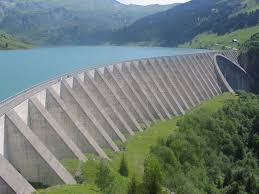
    A buttress dam or hollow dam with a solid, water-tight upstream side that is supported at intervals on the downstream side by a series of buttresses or supports. A buttress dam envisages to reduce the total volume of concrete by constricting the material where the stresses are higher and other undesirable features of gravity dam but has higher cement content per cubic metre of concrete than a gravity dam.


    See less
    • 33
    • Share
      Share
      • Share on Facebook
      • Share on Twitter
      • Share on LinkedIn
      • Share on WhatsApp
  • 3
  • 3 3 Answers
  • 3,447 Views
  • 0 Followers
Asked: September 22, 2020In: Interview Questions

How can we predict the height of a building without using the equipment?

Komal Bhandakkar
Komal Bhandakkar

Komal Bhandakkar

  • 49 Questions
  • 255 Answers
  • 0 Best Answers
  • 2,050 Points
View Profile
Komal Bhandakkar AUTHOR

How can we predict the height of a building without using the equipment?

  1. nikeetasharma

    nikeetasharma

    • 23 Questions
    • 303 Answers
    • 0 Best Answers
    • 2,680 Points
    View Profile
    nikeetasharma Guru
    Added an answer on November 27, 2020 at 2:33 pm

    Trigonometry is the best method which can be used to predict the height of the building without using equipment. But if possible than you can also ask to see the builders plan.

    Trigonometry is the best method which can be used to predict the height of the building without using equipment. But if possible than you can also ask to see the builders plan.

    See less
    • 2
    • Share
      Share
      • Share on Facebook
      • Share on Twitter
      • Share on LinkedIn
      • Share on WhatsApp
  • 32
  • 3 3 Answers
  • 4,959 Views
  • 0 Followers
Asked: September 22, 2020In: Interview Questions

What is mean by sheroid triangle in the survey?

Komal Bhandakkar
Komal Bhandakkar

Komal Bhandakkar

  • 49 Questions
  • 255 Answers
  • 0 Best Answers
  • 2,050 Points
View Profile
Komal Bhandakkar AUTHOR

What is mean by sheroid triangle in the survey?

  1. nikeetasharma

    nikeetasharma

    • 23 Questions
    • 303 Answers
    • 0 Best Answers
    • 2,680 Points
    View Profile
    nikeetasharma Guru
    Added an answer on November 23, 2020 at 12:15 pm

    The triangle which is formed on the earth by three geodesic lines joining three points on a spheroid while performing geodetic survey is known as spheroid triangle. Thank you.

    The triangle which is formed on the earth by three geodesic lines joining three points on a spheroid while performing geodetic survey is known as spheroid triangle.

    Thank you.

    See less
    • 0
    • Share
      Share
      • Share on Facebook
      • Share on Twitter
      • Share on LinkedIn
      • Share on WhatsApp
  • 32
  • 3 3 Answers
  • 708 Views
  • 0 Followers
Asked: September 23, 2020In: Interview Questions

Why cubes are tested at 3, 7 and 28 days for the Compressive Test?

Komal Bhandakkar
Komal Bhandakkar

Komal Bhandakkar

  • 49 Questions
  • 255 Answers
  • 0 Best Answers
  • 2,050 Points
View Profile
Komal Bhandakkar AUTHOR

Why cubes are tested at 3, 7 and 28 days for the Compressive Test?

  1. nikeetasharma

    nikeetasharma

    • 23 Questions
    • 303 Answers
    • 0 Best Answers
    • 2,680 Points
    View Profile
    nikeetasharma Guru
    Added an answer on December 18, 2020 at 8:07 pm

    Cubes are tested at 3 , 7 and 28 days for the compressive test to gain more strength.

    Cubes are tested at 3 , 7 and 28 days for the compressive test to gain more strength.

    See less
    • 1
    • Share
      Share
      • Share on Facebook
      • Share on Twitter
      • Share on LinkedIn
      • Share on WhatsApp
  • 32
  • 3 3 Answers
  • 15,963 Views
  • 0 Followers
Asked: July 31, 2020In: Interview Questions

What is importance of MB in public works of government undertaking?

Himanshu joshi
Himanshu joshi

Himanshu joshi

  • 11 Questions
  • 27 Answers
  • 0 Best Answers
  • 767 Points
View Profile
Himanshu joshi Learner

What is importance of MB in public works of government undertaking?

  1. nikeetasharma

    nikeetasharma

    • 23 Questions
    • 303 Answers
    • 0 Best Answers
    • 2,680 Points
    View Profile
    nikeetasharma Guru
    Added an answer on December 15, 2020 at 7:18 pm

    MB (measurement book) is the book of measurement in which government authorities or organizations can take the actual measurement of work completed by the contractors. MB is the main heart of the government. The measurement written in MB book is 100% correct.

    MB (measurement book) is the book of measurement in which government authorities or organizations can take the actual measurement of work completed by the contractors. MB is the main heart of the government. The measurement written in MB book is 100% correct.

    See less
    • 0
    • Share
      Share
      • Share on Facebook
      • Share on Twitter
      • Share on LinkedIn
      • Share on WhatsApp
  • 0
  • 3 3 Answers
  • 3,617 Views
  • 0 Followers
Asked: September 22, 2020In: Interview Questions

Difference between jamb and corbel.

Komal Bhandakkar
Komal Bhandakkar

Komal Bhandakkar

  • 49 Questions
  • 255 Answers
  • 0 Best Answers
  • 2,050 Points
View Profile
Komal Bhandakkar AUTHOR

Difference between jamb and corbel ?

  1. Komal Bhandakkar

    Komal Bhandakkar

    • 49 Questions
    • 255 Answers
    • 0 Best Answers
    • 2,050 Points
    View Profile
    Komal Bhandakkar AUTHOR
    Added an answer on September 28, 2020 at 11:18 pm
    Difference between jamb and corbel.

    Jamb and corbel are two different technical terms used in masonry. The difference in between jam and corbel are discussed below; 1) Definition: Jamb- A finished vertical sides of the opening of Window or door is called as a jamb. corbel- A supporting a stone projecting outside from the wall is calleRead more

    Jamb and corbel are two different technical terms used in masonry.


    The difference in between jam and corbel are discussed below;

    1) Definition:

    • Jamb– A finished vertical sides of the opening of Window or door is called as a jamb.
    • corbel- A supporting a stone projecting outside from the wall is called a corbel.

    2) Function:

    • Jamb– jamb is provided at the recess to receive the frames of doors and frames of Windows
    • Corbel– corbel is provided to give support to joist, truss and weather shed.

    • Jamb has two types:
    1. Plane jamb
    2. Splayed jamb

    • Mostly Corbel is moulded to give ornamental treatment to the structure.
    • The corbel should be extended at least two-thirds of their length into the wall hence they can’t overturn out of the wall.

    See less
    Attachment

    • 35
    • Share
      Share
      • Share on Facebook
      • Share on Twitter
      • Share on LinkedIn
      • Share on WhatsApp
  • 30
  • 2 2 Answers
  • 1,977 Views
  • 0 Followers
Load More Questions

Sidebar

Explore

  • Questions
  • Ask Questions
  • Write for us
  • Artificial Intelligence
  • Sustainability
  • Building
    • Brick Masonry
    • Building Materials
    • Building Tips
    • Formwork/Shuttering
  • Concrete
    • Concrete Admixtures
    • Cement
    • Concrete Cracks
    • Concrete Properties
  • Construction
    • Construction Equipments
    • Construction Management
    • Construction Project
    • Estimating & Costing
  • How To Guide
    • Material Estimation
    • Repair/Protection Guide
    • Material Testing Guide
    • Mix Design Guide
    • Rate Analysis
  • Geotechnical
    • Foundation Engineering
    • Ground Improvement
  • Structural Engineering
    • Strengthening of Structure
    • Structual Inspection
    • Structural Detailing
  • Surveying
  • Tips

Footer

  • Ask Questions
  • Write for us
  • Popular Questions
  • Facebook
  • Instagram
  • Twitter
  • Telegram

© 2009-2021 The Constructor. All Rights Reserved.