Sign Up

Join TheConstructor to ask questions, answer questions, write articles, and connect with other people. When you join you get additional benefits.

Have an account? Sign In


Have an account? Sign In Now

Sign In

Log in to TheConstructor to ask questions, answer people’s questions, write articles & connect with other people. When you join you get additional benefits.

Sign Up Here

Join for free or log in to continue reading...


Forgot Password?

Don't have account, Sign Up Here

Forgot Password

Lost your password? Please enter your email address. You will receive a link and will create a new password via email.

Have an account? Sign In Now

Sorry, you do not have a permission to ask a question, You must login to ask question. Get the paid membership

Join for free or log in to continue reading...


Forgot Password?

Don't have account, Sign Up Here
Get the paid membership
theconstructor.org Logo theconstructor.org Logo
Log inJoin

theconstructor.org

theconstructor.org Navigation

  • Articles
    • Recent Articles
    • Popular Articles
    • Write for us
  • Community
  • Categories
    • How To Guide
      • Material Testing Guide
    • Concrete
    • Building
      • Brick Masonry
      • Building Materials
      • Building Tips
    • Construction
      • Equipments
      • Management
    • Digital Construction
    • Geotechnical
      • Foundation
  • Case Studies
Search
Ask A Question

Mobile menu

Close
Ask a Question
  • Questions
  • Ask Questions
  • Write for us
  • Artificial Intelligence
  • Sustainability
  • Building
    • Brick Masonry
    • Building Materials
    • Building Tips
    • Formwork/Shuttering
  • Concrete
    • Concrete Admixtures
    • Cement
    • Concrete Cracks
    • Concrete Properties
  • Construction
    • Construction Equipments
    • Construction Management
    • Construction Project
    • Estimating & Costing
  • How To Guide
    • Material Estimation
    • Repair/Protection Guide
    • Material Testing Guide
    • Mix Design Guide
    • Rate Analysis
  • Geotechnical
    • Foundation Engineering
    • Ground Improvement
  • Structural Engineering
    • Strengthening of Structure
    • Structual Inspection
    • Structural Detailing
  • Surveying
  • Tips

Questions

Home/Questions/Page 12

Do you need to remove the ads? Get the paid membership

Discy Latest Questions

Asked: September 23, 2020In: Interview Questions

Why only cylinders shape were used to test Split Tensile Strength of Concrete?

Komal Bhandakkar
Komal Bhandakkar

Komal Bhandakkar

  • 49 Questions
  • 255 Answers
  • 0 Best Answers
  • 2,050 Points
View Profile
Komal Bhandakkar AUTHOR

Why only cylinders shape were used to test Split Tensile Strength of Concrete?

  1. nikeetasharma

    nikeetasharma

    • 23 Questions
    • 303 Answers
    • 0 Best Answers
    • 2,680 Points
    View Profile
    nikeetasharma Guru
    Added an answer on December 18, 2020 at 7:41 pm

    Tensile test is done on cylinder because only cylinders can be held under pure tension by applying a compressive load. That will only happen if it was under pure tension. If we take any other prismatic shape such as square cross section cylinder, the failure will be via compression but not tension.

    Tensile test is done on cylinder because only cylinders can be held under pure tension by applying a compressive load. That will only happen if it was under pure tension. If we take any other prismatic shape such as square cross section cylinder, the failure will be via compression but not tension.

    See less
    • 0
    • Share
      Share
      • Share on Facebook
      • Share on Twitter
      • Share on LinkedIn
      • Share on WhatsApp
  • 29
  • 2 2 Answers
  • 3,015 Views
  • 0 Followers
Asked: September 23, 2020In: Concrete

How PH value of water influence in construction?

Komal Bhandakkar
Komal Bhandakkar

Komal Bhandakkar

  • 49 Questions
  • 255 Answers
  • 0 Best Answers
  • 2,050 Points
View Profile
Komal Bhandakkar AUTHOR

How PH value of water influence in construction?

  1. aviratdhodare

    aviratdhodare

    • 37 Questions
    • 252 Answers
    • 0 Best Answers
    • 480 Points
    View Profile
    aviratdhodare
    Added an answer on September 29, 2020 at 5:08 pm

    The PH value is very important in construction activities, particularly for reinforced cement concrete as it is a composite material created with embedded steel bars. If the PH value of water is less than 7 which is the neutral value for good drinking water, then the water will be acidic. The cementRead more

    The PH value is very important in construction activities, particularly for reinforced cement concrete as it is a composite material created with embedded steel bars. If the PH value of water is less than 7 which is the neutral value for good drinking water, then the water will be acidic. The cement concrete’s PH value for fresh concrete will be 12 to 13. This indicates that the concrete is alkaline which gives passivity to protect steel bars from getting corroded. If the water having less PH value than 6, it will start neutralizing the PH value of concrete from 12, to 7 and less, the long lasting alkaline passivity of concrete is considerably reduced, triggering the corrosion chmesity for steel and destroy the steel over a period.

    See less
    • 32
    • Share
      Share
      • Share on Facebook
      • Share on Twitter
      • Share on LinkedIn
      • Share on WhatsApp
  • 31
  • 3 3 Answers
  • 10,208 Views
  • 0 Followers
Asked: September 23, 2020In: Concrete

Explain the Curing method of concrete with of addition of Hydrogel?

Komal Bhandakkar
Komal Bhandakkar

Komal Bhandakkar

  • 49 Questions
  • 255 Answers
  • 0 Best Answers
  • 2,050 Points
View Profile
Komal Bhandakkar AUTHOR

Explain the Curing method of concrete with of addition of Hydrogel?

  1. Komal Bhandakkar

    Komal Bhandakkar

    • 49 Questions
    • 255 Answers
    • 0 Best Answers
    • 2,050 Points
    View Profile
    Komal Bhandakkar AUTHOR
    Added an answer on September 28, 2020 at 11:25 pm
    Explain the Curing method of concrete with of addition of Hydrogel?

    Curing of concrete with hydrogel: Basically curing is one of the chemical processes in the field of polymer chemistry and is widely used in civil engineering to harden the cementitious material bi crosslinking of various polymer chains. Hydrogel consists of various polymeric compounds which are capaRead more

    Curing of concrete with hydrogel:

    Basically curing is one of the chemical processes in the field of polymer chemistry and is widely used in civil engineering to harden the cementitious material bi crosslinking of various polymer chains.


    Hydrogel consists of various polymeric compounds which are capable of holding water in their three-dimensional network.


    The hydrogel is a wound-healing material. Following precaution should be taken while curing,

    • Apply the curing process as soon as possible because the delay of a few hours may create a substantial difference.
    • In windy conditions, the spray-on curing membranes method is not more effective.
    • In difficult areas like columns, membrane curing is an appropriate option.
    • PFA, GGBS and CSF need better curing of long-span i.e. up to 5days.

    See less
    • 34
    • Share
      Share
      • Share on Facebook
      • Share on Twitter
      • Share on LinkedIn
      • Share on WhatsApp
  • 29
  • 2 2 Answers
  • 1,170 Views
  • 0 Followers
Asked: September 23, 2020In: Concrete

What is the range of density of Carbon Fibre in Conductive Concrete?

Komal Bhandakkar
Komal Bhandakkar

Komal Bhandakkar

  • 49 Questions
  • 255 Answers
  • 0 Best Answers
  • 2,050 Points
View Profile
Komal Bhandakkar AUTHOR

What is the range of density of Carbon Fibre in Conductive Concrete?

  1. Komal Bhandakkar

    Komal Bhandakkar

    • 49 Questions
    • 255 Answers
    • 0 Best Answers
    • 2,050 Points
    View Profile
    Komal Bhandakkar AUTHOR
    Added an answer on September 28, 2020 at 11:25 pm
    What is the range of density of Carbon Fibre in Conductive Concrete?

    Conductive carbon fiber reinforced concrete is a self-heating material specially used for prevention against ice formation. Following are the specification of Carbon fibre used in conductive concrete; Density-1.81 g/cm 3 Diameter- 7.2 micron Carbon Content-95% Tensile Strength-3800MPa Elastic ModuluRead more

    Conductive carbon fiber reinforced concrete is a self-heating material specially used for prevention against ice formation.


    Following are the specification of Carbon fibre used in conductive concrete;

    1. Density-1.81 g/cm 3
    2. Diameter- 7.2 micron
    3. Carbon Content-95%
    4. Tensile Strength-3800MPa
    5. Elastic Modulus-242GPa
    6. Resistivity-1.52 x 10^3

    See less
    • 35
    • Share
      Share
      • Share on Facebook
      • Share on Twitter
      • Share on LinkedIn
      • Share on WhatsApp
  • 33
  • 3 3 Answers
  • 2,695 Views
  • 0 Followers
Asked: September 23, 2020In: Concrete

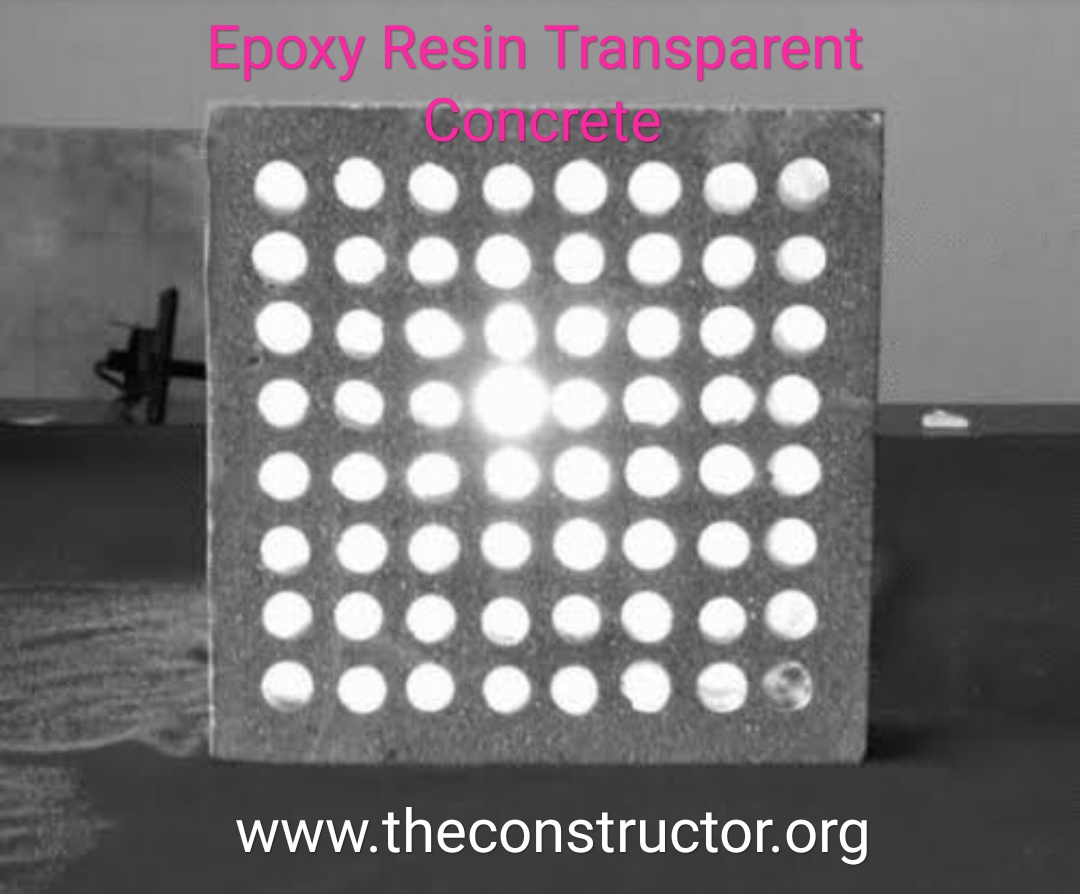
What is the Mechanism Involved in Resin Transparent Concrete?

Komal Bhandakkar
Komal Bhandakkar

Komal Bhandakkar

  • 49 Questions
  • 255 Answers
  • 0 Best Answers
  • 2,050 Points
View Profile
Komal Bhandakkar AUTHOR

What is the Mechanism Involved in Resin Transparent Concrete?

  1. Komal Bhandakkar

    Komal Bhandakkar

    • 49 Questions
    • 255 Answers
    • 0 Best Answers
    • 2,050 Points
    View Profile
    Komal Bhandakkar AUTHOR
    Added an answer on September 28, 2020 at 11:25 pm
    What is the Mechanism Involved in Resin Transparent Concrete?

    Mechanism of resin transparent concrete: Construction Materials: PO43.5R OPC (Dalian Xiaoyetian Cement Co., Ltd.) River Sand(Fineness Modulus=2.9) Grade I fly ash Polycarboxylic acid superplasticizer( powder) The light transmission rate of resin transparent concrete is 80% more than transparent concRead more

    Mechanism of resin transparent concrete:

    Construction Materials:

    • PO43.5R OPC (Dalian Xiaoyetian Cement Co., Ltd.)
    • River Sand(Fineness Modulus=2.9)
    • Grade I fly ash
    • Polycarboxylic acid superplasticizer( powder)

    The light transmission rate of resin transparent concrete is 80% more than transparent concrete using Plastic Optical Fibres.


    The number of resins is inserted within the concrete to transmit light from it’s one face to another.

    The casting process of resin transparent concrete is the same as that of our conventional concrete but we have to produce a special type of molds that has holes of appropriate spacing.


    See less
    • 34
    • Share
      Share
      • Share on Facebook
      • Share on Twitter
      • Share on LinkedIn
      • Share on WhatsApp
  • 31
  • 1 1 Answer
  • 781 Views
  • 0 Followers
Asked: September 23, 2020In: Laboratory Tests

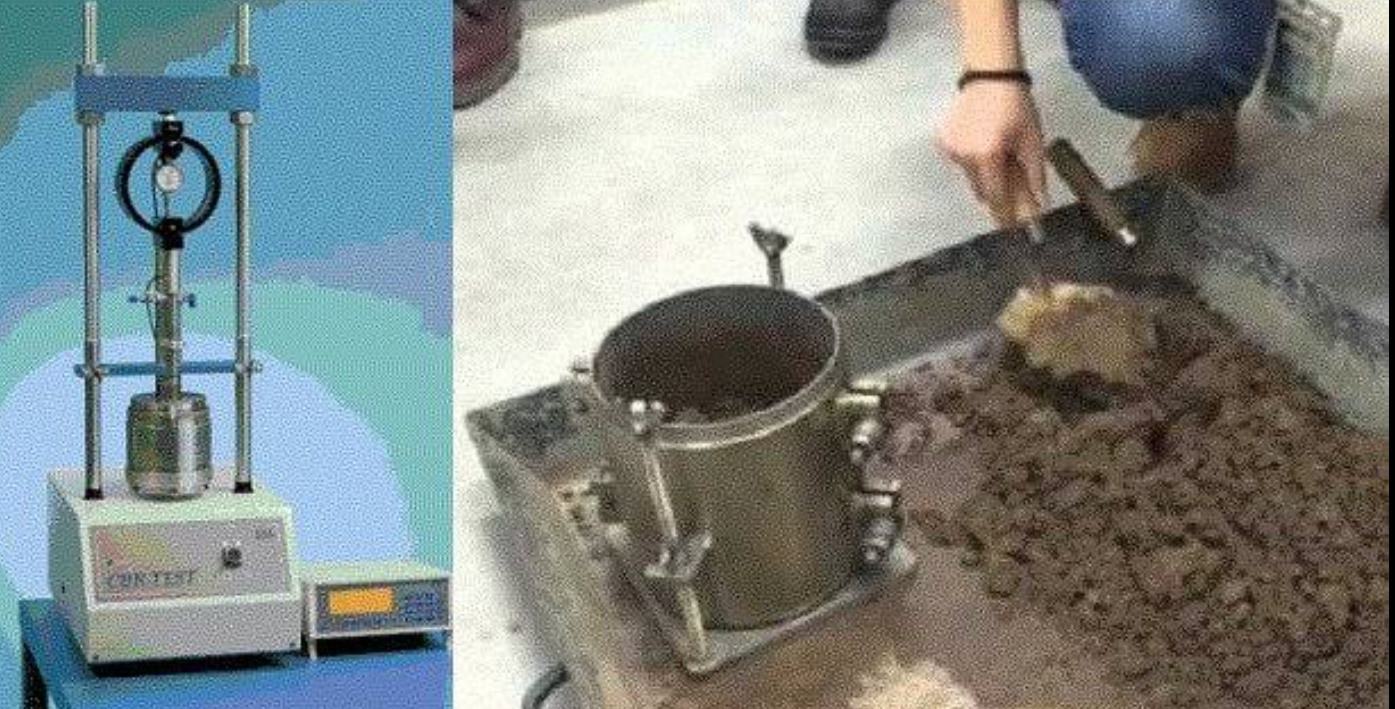
What is the purpose of doing CBR Test?

nikeetasharma
nikeetasharma

nikeetasharma

  • 23 Questions
  • 303 Answers
  • 0 Best Answers
  • 2,680 Points
View Profile
nikeetasharma Guru

What is the purpose of doing CBR Test?

  1. Komal Bhandakkar

    Komal Bhandakkar

    • 49 Questions
    • 255 Answers
    • 0 Best Answers
    • 2,050 Points
    View Profile
    Komal Bhandakkar AUTHOR
    Added an answer on September 29, 2020 at 5:01 pm
    What is the purpose of doing CBR Test?

    Purpose of California bearing ratio test: The main purpose of the California bearing ratio test is the measurement of a soil resistance penetration before reaching its highest ultimate value of a shearing Basically, 2 California bearing ratio value is designed as a ratio in % of range 0 to 100. TheRead more

    Purpose of California bearing ratio test:

    1. The main purpose of the California bearing ratio test is the measurement of a soil resistance penetration before reaching its highest ultimate value of a shearing
    2. Basically, 2 California bearing ratio value is designed as a ratio in % of range 0 to 100.
    3. The important operation of conducting the California bearing ratio test are same of variations of various soil conditions and various type of construction.
    4. California bearing ratio test is used for the evaluation of subgrade strength of road and pavement
    5. California bearing ratio value used as an index of soil strength and its bearing capacity
    6. The results obtained from the CBR test are used with the Imperial curves for the determination of the thickness of pavement and various component layers of pavement.


    See less
    • 32
    • Share
      Share
      • Share on Facebook
      • Share on Twitter
      • Share on LinkedIn
      • Share on WhatsApp
  • 37
  • 3 3 Answers
  • 20,545 Views
  • 0 Followers
Asked: September 23, 2020In: Construction Site Related

What is the need of Soil Testing before Construction?

nikeetasharma
nikeetasharma

nikeetasharma

  • 23 Questions
  • 303 Answers
  • 0 Best Answers
  • 2,680 Points
View Profile
nikeetasharma Guru

What is the need of Soil Testing before Construction?

  1. aviratdhodare

    aviratdhodare

    • 37 Questions
    • 252 Answers
    • 0 Best Answers
    • 480 Points
    View Profile
    aviratdhodare
    Added an answer on September 25, 2020 at 4:09 pm

    It is necessary to check the nature of the soil before you build your dream home. The ground where you are wanting to build your dream home, it is necessary to check the soil nature of it before starting construction work. Soil testing is first done to test the bearing capacity of the soil. The physRead more

    It is necessary to check the nature of the soil before you build your dream home. The ground where you are wanting to build your dream home, it is necessary to check the soil nature of it before starting construction work.

    Soil testing is first done to test the bearing capacity of the soil. The physical and chemical configuration of the soil is checked during this process. The soil must be able to withstand the load of the structure. The nature of soil decides the bearing limit as well as guarantees to decide the structural adjustment. The nature of soil relies on different factors, for example, climate, environmental change and for as far back as years the land was sent for what reason and what was there before.

    The length and depth of the footing are decided during the foundation relying on the nature of the soil. The water level of the soil can only be resolved from soil testing. In light of the soil testing results, the nature of the material can be chosen. For instance, because of dampness the zone is lead to corrosion, at that point it is essential to pick just corrosion safe TMT Bars for the construction.

    A soil test is a very significant step in construction before it starts. If the soil testing isn’t done, at that point the structure will be presented to various failures and the final result could be lethal.

    Types of Soil Testing for Construction

    Gravity Test

    Moisture Test

    Atterberg Limits Test

    • Liquid Limit
    • Plastic Limit
    • Shrinkage Limit

    Dry Density Test

    • Core Cutter Method
    • Sand Replacement Method

    Proctor’s Compaction Test


    See less
    • 31
    • Share
      Share
      • Share on Facebook
      • Share on Twitter
      • Share on LinkedIn
      • Share on WhatsApp
  • 32
  • 1 1 Answer
  • 1,144 Views
  • 0 Followers
Asked: September 23, 2020In: Geotechnical Engineering

How can Artificial Intelligence be used in Geotechnical Engineering?

nikeetasharma
nikeetasharma

nikeetasharma

  • 23 Questions
  • 303 Answers
  • 0 Best Answers
  • 2,680 Points
View Profile
nikeetasharma Guru

How can Artificial Intelligence be used in Geotechnical Engineering?

  1. AdityaBhandakkar

    AdityaBhandakkar

    • 12 Questions
    • 250 Answers
    • 2 Best Answers
    • 0 Points
    View Profile
    AdityaBhandakkar User
    Added an answer on October 8, 2020 at 6:07 pm
    This answer was edited.

    Hi, Geotechnical engineering deals with materials (e.g., soil and rock) that, by their very nature, exhibit varied and behavior due to the physical processes associated with the formation of these materials. Modeling such materials' behavior is complicated and usually beyond the ability of most tradRead more

    Hi,

    Geotechnical engineering deals with materials (e.g., soil and rock) that, by their very nature, exhibit varied and behavior due to the physical processes associated with the formation of these materials. Modeling such materials’ behavior is complicated and usually beyond the ability of most traditional forms of physically-based engineering methods. Artificial intelligence (AI) is becoming more popular and particularly amenable to modeling most geotechnical engineering materials’ complex behavior because it has demonstrated superior predictive ability compared to traditional methods. Over the last decade, AI has been applied successfully to virtually every problem in geotechnical engineering. However, despite this success, AI techniques are still facing classical opposition due to some inherent reasons such as lack of transparency, knowledge extraction, and model uncertainty, which will discuss in detail in this chapter. Among the available AI, techniques are artificial neural networks (ANNs), genetic programming (GP), evolutionary polynomial regression (EPR), support vector machines, M5 model trees, and K-nearest neighbors (Elshorbagy et al.,2010). This chapter will focus on three AI techniques, including ANNs, GP, and EPR. 

    See less
    • 40
    • Share
      Share
      • Share on Facebook
      • Share on Twitter
      • Share on LinkedIn
      • Share on WhatsApp
  • 33
  • 2 2 Answers
  • 1,509 Views
  • 0 Followers
Load More Questions

Sidebar

Explore

  • Questions
  • Ask Questions
  • Write for us
  • Artificial Intelligence
  • Sustainability
  • Building
    • Brick Masonry
    • Building Materials
    • Building Tips
    • Formwork/Shuttering
  • Concrete
    • Concrete Admixtures
    • Cement
    • Concrete Cracks
    • Concrete Properties
  • Construction
    • Construction Equipments
    • Construction Management
    • Construction Project
    • Estimating & Costing
  • How To Guide
    • Material Estimation
    • Repair/Protection Guide
    • Material Testing Guide
    • Mix Design Guide
    • Rate Analysis
  • Geotechnical
    • Foundation Engineering
    • Ground Improvement
  • Structural Engineering
    • Strengthening of Structure
    • Structual Inspection
    • Structural Detailing
  • Surveying
  • Tips

Footer

  • Ask Questions
  • Write for us
  • Popular Questions
  • Facebook
  • Instagram
  • Twitter
  • Telegram

© 2009-2021 The Constructor. All Rights Reserved.