Sign Up

Join TheConstructor to ask questions, answer questions, write articles, and connect with other people. When you join you get additional benefits.

Have an account? Sign In


Have an account? Sign In Now

Sign In

Log in to TheConstructor to ask questions, answer people’s questions, write articles & connect with other people. When you join you get additional benefits.

Sign Up Here

Join for free or log in to continue reading...


Forgot Password?

Don't have account, Sign Up Here

Forgot Password

Lost your password? Please enter your email address. You will receive a link and will create a new password via email.

Have an account? Sign In Now

Sorry, you do not have a permission to ask a question, You must login to ask question. Get the paid membership

Join for free or log in to continue reading...


Forgot Password?

Don't have account, Sign Up Here
Get the paid membership
theconstructor.org Logo theconstructor.org Logo
Log inJoin

theconstructor.org

theconstructor.org Navigation

  • Articles
    • Recent Articles
    • Popular Articles
    • Write for us
  • Community
  • Categories
    • How To Guide
      • Material Testing Guide
    • Concrete
    • Building
      • Brick Masonry
      • Building Materials
      • Building Tips
    • Construction
      • Equipments
      • Management
    • Digital Construction
    • Geotechnical
      • Foundation
  • Case Studies
Search
Ask A Question

Mobile menu

Close
Ask a Question
  • Questions
  • Ask Questions
  • Write for us
  • Artificial Intelligence
  • Sustainability
  • Building
    • Brick Masonry
    • Building Materials
    • Building Tips
    • Formwork/Shuttering
  • Concrete
    • Concrete Admixtures
    • Cement
    • Concrete Cracks
    • Concrete Properties
  • Construction
    • Construction Equipments
    • Construction Management
    • Construction Project
    • Estimating & Costing
  • How To Guide
    • Material Estimation
    • Repair/Protection Guide
    • Material Testing Guide
    • Mix Design Guide
    • Rate Analysis
  • Geotechnical
    • Foundation Engineering
    • Ground Improvement
  • Structural Engineering
    • Strengthening of Structure
    • Structual Inspection
    • Structural Detailing
  • Surveying
  • Tips

Questions

Home/Questions/Page 13

Do you need to remove the ads? Get the paid membership

Discy Latest Questions

Asked: September 22, 2020In: Construction

Bending of longitudinal main bars in column

rickyrt
rickyrt

rickyrt

  • 1 Question
  • 0 Answers
  • 0 Best Answers
  • 25 Points
View Profile
rickyrt User

Working on a building project in the Philippines, my contractor has just bent the longitudinal bars in the column because the columns were not in alignment at the base. The building is a two storey building with 25cm rebar frame. ...

  1. Kuldeep Singh

    Kuldeep Singh

    • 1 Question
    • 110 Answers
    • 10 Best Answers
    • 652 Points
    View Profile
    Kuldeep Singh Learner
    Added an answer on September 23, 2020 at 3:07 pm

    Hi. First of all, it's a common problem. This kind of erratic workmanship often happens and there are ways to correct it although none will guarantee perfection as much as properly aligned coloumns. The site supervisor should have not allowed this to happen in the first place but now there's no choiRead more

    Hi.

    First of all, it’s a common problem. This kind of erratic workmanship often happens and there are ways to correct it although none will guarantee perfection as much as properly aligned coloumns. The site supervisor should have not allowed this to happen in the first place but now there’s no choice left to him.

    Firstly, it is bending moment development you must be worried about more than shear. If not taken care of the eccentricity would have given rise to additional bending moments especially at the critical locations adding up to bending stresses. But, don’t panic. All building codes provide a factor of safety against these things in colomn design though I don’t know the exact number in the Phillipino code. If it’s an eccentricity of a few inches or less than 5%, then you need not worry much and trust the contractor. He must be providing crank bars in the longitudinal reinforcement after bending the bars which is the most common technique. You can see it in the image below.

    It would be very costly and also time consuming to replace the entire colomn. Especially, when the floor slab has been constructed it’s nearly impossible. If the eccentricity is large enough, you should get an expert opinion from an experienced engineer by taking him to site. There are other methods apart from crank bar too.

    Also, the adjustment regarding crank bars also requires additional processes like drilling, putting additional shear reinforcement which I can’t exactly tell. You must talk to the contractor or engineers regarding that.

    Lastly, don’t go willy-nilly with my answer only. It’s there so you get an idea of what’s going on. I haven’t seen the site so I have only limited information. Best would be to have an engineer look at it at the site.

    See less
    • 0
    • Share
      Share
      • Share on Facebook
      • Share on Twitter
      • Share on LinkedIn
      • Share on WhatsApp
  • 3
  • 1 1 Answer
  • 1,884 Views
  • 0 Followers
Asked: September 22, 2020In: Foundation

Foundation appears to move up or down

hbgtbt
hbgtbt

hbgtbt

  • 1 Question
  • 0 Answers
  • 0 Best Answers
  • 26 Points
View Profile
hbgtbt User

Good afternoon Folks:  If my foundation appears to move up when we get heavy rains and then back down when we have no rain for months – other than this being an irritant ; does this generally mean there is ...

  1. Komal Bhandakkar

    Komal Bhandakkar

    • 49 Questions
    • 255 Answers
    • 0 Best Answers
    • 2,050 Points
    View Profile
    Komal Bhandakkar AUTHOR
    Added an answer on November 21, 2020 at 5:43 pm
    This answer was edited.

    The vertical movement in foundations is caused by : Either downwards movement of the wall or wall footing, when a wall footing sinks in soft soil. An up and down movement of the wall or wall footings such as when a wall is disturbed by frost in a freezing climate Expansive clay soils expand or shrinRead more

    The vertical movement in foundations is caused by :

    1. Either downwards movement of the wall or wall footing, when a wall footing sinks in soft soil.
    2. An up and down movement of the wall or wall footings such as when a wall is disturbed by frost in a freezing climate
    3. Expansive clay soils expand or shrink as their water content increases or decreases.

    Thank You.

    See less
    • 0
    • Share
      Share
      • Share on Facebook
      • Share on Twitter
      • Share on LinkedIn
      • Share on WhatsApp
  • 1
  • 2 2 Answers
  • 751 Views
  • 0 Followers
Asked: September 22, 2020In: Concrete

Acceptance criteria for cement concrete at site.

Krishna
Krishna

Krishna

  • 1 Question
  • 0 Answers
  • 0 Best Answers
  • 25 Points
View Profile
Krishna User

Kindly let me know about the acceptance criteria of cement concrete of different grades at site as per IS code.

  1. nikeetasharma

    nikeetasharma

    • 23 Questions
    • 303 Answers
    • 0 Best Answers
    • 2,680 Points
    View Profile
    nikeetasharma Guru
    Added an answer on November 27, 2020 at 2:39 pm

    For all the cases 28 days strength shall alone be the criterion for acceptance or rejection of concrete. The test result of the sample shall be the average of the strength of three specimens. The individual variation should not be more than 15% of the average.

    For all the cases 28 days strength shall alone be the criterion for acceptance or rejection of concrete. The test result of the sample shall be the average of the strength of three specimens. The individual variation should not be more than 15% of the average.

    See less
    • 0
    • Share
      Share
      • Share on Facebook
      • Share on Twitter
      • Share on LinkedIn
      • Share on WhatsApp
  • 0
  • 2 2 Answers
  • 964 Views
  • 0 Followers
Asked: September 22, 2020In: Concrete

in an experiment, the compressive strength of the concrete reduced on day 14, compared to the strength obtained on day 7. why is this so?

kaycee
kaycee

kaycee

  • 1 Question
  • 0 Answers
  • 0 Best Answers
  • 25 Points
View Profile
kaycee User

In an experiment, the compressive strength of the concrete reduced on day 14,  to 21.40 , compared to the strength obtained of 25.28N/cm2  on day 7. why is this so?

  1. aviratdhodare

    aviratdhodare

    • 37 Questions
    • 252 Answers
    • 0 Best Answers
    • 480 Points
    View Profile
    aviratdhodare
    Added an answer on September 23, 2020 at 3:17 pm

    I think you have not done curing of concrete continually for 28days! Have you stopped curing after 7days due casting? If so then the concrete will not gain its strength, as we know that the cement is very greedy for water to hydrate, but because you stopped curing after 7days then it was not able toRead more

    I think you have not done curing of concrete continually for 28days!

    Have you stopped curing after 7days due casting?

    If so then the concrete will not gain its strength, as we know that the cement is very greedy for water to hydrate, but because you stopped curing after 7days then it was not able to get the moisture and the concrete got shrinkage cracks and also due to creep the strength has been reduced!

    So its very important to cure the concrete for 28days to gain the strength!

    See less
    • 31
    • Share
      Share
      • Share on Facebook
      • Share on Twitter
      • Share on LinkedIn
      • Share on WhatsApp
  • 0
  • 1 1 Answer
  • 661 Views
  • 0 Followers
Asked: September 22, 2020In: Civil Engineering Jobs

What are the components of a unit rate in civil engineering?

Epaphras
Epaphras

Epaphras

  • 1 Question
  • 0 Answers
  • 0 Best Answers
  • 25 Points
View Profile
Epaphras User

what are the components of a unit rate in civil engineering?

  1. AdityaBhandakkar

    AdityaBhandakkar

    • 12 Questions
    • 250 Answers
    • 2 Best Answers
    • 0 Points
    View Profile
    AdityaBhandakkar User
    Added an answer on September 23, 2020 at 3:26 pm

    Hi, According to NRM(NEW RULES OF MEASUREMENT) which is published by the royal institute of chartered surveyors, ---it is a monetary rate applied to a component or element per unit of measurement. e.g cost per metre cube for a cross internal floor area, cost per functional unit etc. It is a standardRead more

    Hi,

    According to NRM(NEW RULES OF MEASUREMENT) which is published by the royal institute of chartered surveyors,

    —it is a monetary rate applied to a component or element per unit of measurement. e.g cost per metre cube for a cross internal floor area, cost per functional unit etc.

    It is a standard of measurement for planning or estimation for various construction projects.

    See less
    • 44
    • Share
      Share
      • Share on Facebook
      • Share on Twitter
      • Share on LinkedIn
      • Share on WhatsApp
  • 1
  • 1 1 Answer
  • 3,046 Views
  • 0 Followers
Asked: September 22, 2020In: Foundation

In which type of soil can we use pile foundation?

nikeetasharma
nikeetasharma

nikeetasharma

  • 23 Questions
  • 303 Answers
  • 0 Best Answers
  • 2,680 Points
View Profile
nikeetasharma Guru

explain briefly about pile foundation and in which type of soil it can be used?

  1. Komal Bhandakkar

    Komal Bhandakkar

    • 49 Questions
    • 255 Answers
    • 0 Best Answers
    • 2,050 Points
    View Profile
    Komal Bhandakkar AUTHOR
    Added an answer on November 21, 2020 at 5:48 pm
    This answer was edited.

    Pile foundations are habitually used for large structures and in certain situations where the soil at shallow depth is unsuitable to withstand excessive settlement & resist uplift. Thank You.

    Pile foundations are habitually used for large structures and in certain situations where the soil at shallow depth is unsuitable to withstand excessive settlement & resist uplift.


    Thank You.

    See less
    • 0
    • Share
      Share
      • Share on Facebook
      • Share on Twitter
      • Share on LinkedIn
      • Share on WhatsApp
  • 32
  • 2 2 Answers
  • 1,478 Views
  • 0 Followers
Asked: September 22, 2020In: Environmental Engineering

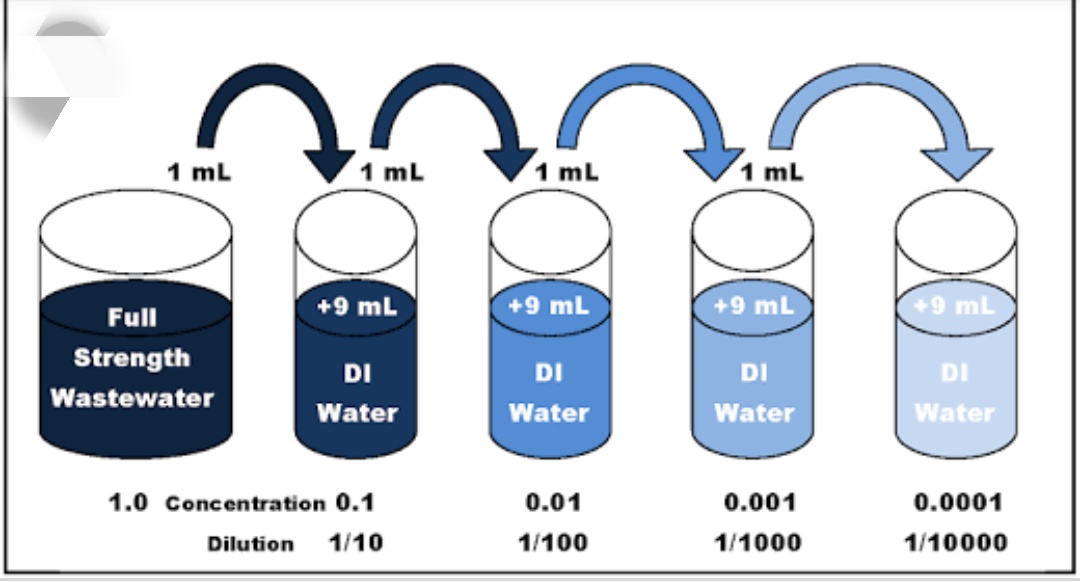
Give a brief explanation about BOD method.

nikeetasharma
nikeetasharma

nikeetasharma

  • 23 Questions
  • 303 Answers
  • 0 Best Answers
  • 2,680 Points
View Profile
nikeetasharma Guru

explain the process of conducting BOD test in laboratory.

  1. Komal Bhandakkar

    Komal Bhandakkar

    • 49 Questions
    • 255 Answers
    • 0 Best Answers
    • 2,050 Points
    View Profile
    Komal Bhandakkar AUTHOR
    Added an answer on October 19, 2020 at 10:06 pm
    This answer was edited.
    Give a brief explanation about BOD method.

    Biological oxygen demand(BOD): Biological oxygen demand is one of the clinical procedures which is used to determine the amount of dissolved oxygen which is needed by aerobic biological organisms in a body of water to director organic material is present in given water samples and certain temperaturRead more

    Biological oxygen demand(BOD):

    Biological oxygen demand is one of the clinical procedures which is used to determine the amount of dissolved oxygen which is needed by aerobic biological organisms in a body of water to director organic material is present in given water samples and certain temperature for a specific period.


    Biological oxygen demand and chemical oxygen demand are different processes.


    To assess the quantity of surface water for the biological oxygen demand test and other purposes then it is important to understand the characteristics of dissolved oxygen content in water and wastewater.


    Thank you

    See less
    • 20
    • Share
      Share
      • Share on Facebook
      • Share on Twitter
      • Share on LinkedIn
      • Share on WhatsApp
  • 32
  • 3 3 Answers
  • 1,608 Views
  • 0 Followers
Asked: September 22, 2020In: Construction

What is the effect of dewatering on the soil.

nikeetasharma
nikeetasharma

nikeetasharma

  • 23 Questions
  • 303 Answers
  • 0 Best Answers
  • 2,680 Points
View Profile
nikeetasharma Guru

what is the effect of dewatering on the soil?

  1. aviratdhodare

    aviratdhodare

    • 37 Questions
    • 252 Answers
    • 0 Best Answers
    • 480 Points
    View Profile
    aviratdhodare
    Added an answer on September 23, 2020 at 3:07 pm

    Potential Groundwater Impacts of Dewatering ·        Contamination Dewatering can cause the advancement of hydraulic gradients that are additionally fundamental for drawing out water towards wells. Dewatering close to a site with a background marked by contamination in groundwater can bring out hydrRead more

    Potential Groundwater Impacts of Dewatering

    ·        Contamination

    Dewatering can cause the advancement of hydraulic gradients that are additionally fundamental for drawing out water towards wells. Dewatering close to a site with a background marked by contamination in groundwater can bring out hydraulic gradients that can convey the dirtied groundwater towards the dewatering framework and cause contamination. By and large, polluted water requires filtration. To evade this issue, the best technique is to introduce screen dividers and vertically separate regions utilizing bentonite seals.

    ·        Geotechnical Damage

    Dewatering can make the ground lose coherence; the result leads to ground settling. If the ground settling is vast, it can harm close by building and structures. When groundwater is removed from the soil, it makes the soil pack and squeeze. It can likewise also caused by small soil & shallow grounds being removed with the groundwater through well.

    This effect can be diminished by a better plan and the utilization of good filtration and groundwater treatment that keep the particles from being separated.

    ·        Impacts on Water Features

    Things that depend on the water like rivers, lakes, and springs have a cozy relationship with groundwater and are, in this way, influenced by dewatering and groundwater control by prohibition. It is essential to keep in mind that groundwater and water-dependent things have eco-systems and fill in as territories. An unfriendly impact of these water bodies will have a huge -ve effect on the earth.

    ·        Water Resource Depletion

    When groundwater is removed for longer periods and in huge amounts for personal or commercial use, it can conceivably bring down groundwater levels and reduce yields. This exhaustion brings about a decrease in significant water assets for other people. An answer to this issue can be an artificial recharge method that infuses release from siphon water back in the ground.

    Conclusion

    It is crucial to perceive and decrease the effects of dewatering and groundwater control on the earth as dependable residents of the world. We should embrace great construction dewatering treatment system design, examination strategies, and better groundwater remediation innovation to alleviate these issues before it is past the point of no return.

    See less
    • 31
    • Share
      Share
      • Share on Facebook
      • Share on Twitter
      • Share on LinkedIn
      • Share on WhatsApp
  • 32
  • 1 1 Answer
  • 1,162 Views
  • 0 Followers
Load More Questions

Sidebar

Explore

  • Questions
  • Ask Questions
  • Write for us
  • Artificial Intelligence
  • Sustainability
  • Building
    • Brick Masonry
    • Building Materials
    • Building Tips
    • Formwork/Shuttering
  • Concrete
    • Concrete Admixtures
    • Cement
    • Concrete Cracks
    • Concrete Properties
  • Construction
    • Construction Equipments
    • Construction Management
    • Construction Project
    • Estimating & Costing
  • How To Guide
    • Material Estimation
    • Repair/Protection Guide
    • Material Testing Guide
    • Mix Design Guide
    • Rate Analysis
  • Geotechnical
    • Foundation Engineering
    • Ground Improvement
  • Structural Engineering
    • Strengthening of Structure
    • Structual Inspection
    • Structural Detailing
  • Surveying
  • Tips

Footer

  • Ask Questions
  • Write for us
  • Popular Questions
  • Facebook
  • Instagram
  • Twitter
  • Telegram

© 2009-2021 The Constructor. All Rights Reserved.