Sign Up

Join TheConstructor to ask questions, answer questions, write articles, and connect with other people. When you join you get additional benefits.

Have an account? Sign In


Have an account? Sign In Now

Sign In

Log in to TheConstructor to ask questions, answer people’s questions, write articles & connect with other people. When you join you get additional benefits.

Sign Up Here

Join for free or log in to continue reading...


Forgot Password?

Don't have account, Sign Up Here

Forgot Password

Lost your password? Please enter your email address. You will receive a link and will create a new password via email.

Have an account? Sign In Now

Sorry, you do not have a permission to ask a question, You must login to ask question. Get the paid membership

Join for free or log in to continue reading...


Forgot Password?

Don't have account, Sign Up Here
Get the paid membership
theconstructor.org Logo theconstructor.org Logo
Log inJoin

theconstructor.org

theconstructor.org Navigation

  • Articles
    • Recent Articles
    • Popular Articles
    • Write for us
  • Community
  • Categories
    • How To Guide
      • Material Testing Guide
    • Concrete
    • Building
      • Brick Masonry
      • Building Materials
      • Building Tips
    • Construction
      • Equipments
      • Management
    • Digital Construction
    • Geotechnical
      • Foundation
  • Case Studies
Search
Ask A Question

Mobile menu

Close
Ask a Question
  • Questions
  • Ask Questions
  • Write for us
  • Artificial Intelligence
  • Sustainability
  • Building
    • Brick Masonry
    • Building Materials
    • Building Tips
    • Formwork/Shuttering
  • Concrete
    • Concrete Admixtures
    • Cement
    • Concrete Cracks
    • Concrete Properties
  • Construction
    • Construction Equipments
    • Construction Management
    • Construction Project
    • Estimating & Costing
  • How To Guide
    • Material Estimation
    • Repair/Protection Guide
    • Material Testing Guide
    • Mix Design Guide
    • Rate Analysis
  • Geotechnical
    • Foundation Engineering
    • Ground Improvement
  • Structural Engineering
    • Strengthening of Structure
    • Structual Inspection
    • Structural Detailing
  • Surveying
  • Tips

Trending Questions

Home/Trending Questions/Page 2

Do you need to remove the ads? Get the paid membership

Discy Latest Questions

Asked: September 2, 2020In: Miscellaneous

Why water tanks are still designed by the working stress method?

aviratdhodare
aviratdhodare

aviratdhodare

  • 37 Questions
  • 252 Answers
  • 0 Best Answers
  • 480 Points
View Profile
aviratdhodare

Why water tanks are still designed by the working stress method?

  1. nikeetasharma

    nikeetasharma

    • 23 Questions
    • 303 Answers
    • 0 Best Answers
    • 2,680 Points
    View Profile
    nikeetasharma Guru
    Added an answer on October 15, 2020 at 10:00 am

    Here, because water tanks are more vulnerable structures and plus the tank is sometime overfilled and sometime empty, the pressure inside is so varying, It needs more safety precautions and as we all know working stress method assumes more safety factor than limit state design, which is an economicaRead more

    Here, because water tanks are more vulnerable structures and plus the tank is sometime overfilled and sometime empty, the pressure inside is so varying,

    It needs more safety precautions and as we all know working stress method assumes more safety factor than limit state design, which is an economical design, we prefer to use working stress method…

    See less
    • 30
    • Share
      Share
      • Share on Facebook
      • Share on Twitter
      • Share on LinkedIn
      • Share on WhatsApp
  • 34
  • 5 5 Answers
  • 9,117 Views
  • 0 Followers
Asked: September 25, 2020In: Foundation

What is meant by stability of slope ? How to calculate slope stability?

nikeetasharma
nikeetasharma

nikeetasharma

  • 23 Questions
  • 303 Answers
  • 0 Best Answers
  • 2,680 Points
View Profile
nikeetasharma Guru

what is stability of slope and how can we calculate it?

  1. aviratdhodare

    aviratdhodare

    • 37 Questions
    • 252 Answers
    • 0 Best Answers
    • 480 Points
    View Profile
    aviratdhodare
    Added an answer on January 3, 2021 at 7:09 pm
    This answer was edited.

    Slope stability is the process of calculating and assessing how much stress a particular slope can manage before failing. Examples of common slopes include roads for commercial use, dams, excavated slopes, and soft rock trails in reservoirs, forests, and parks. Considering the importance of slope stRead more

    Slope stability is the process of calculating and assessing how much stress a particular slope can manage before failing. Examples of common slopes include roads for commercial use, dams, excavated slopes, and soft rock trails in reservoirs, forests, and parks. Considering the importance of slope stability to their work, it’s beneficial for civil engineers to understand how to properly evaluate slope stability and leverage various techniques to achieve slope stabilization.

    Evaluating Slope Stability

    Civil engineers evaluate slope stability on the following premise: if a slope is stable enough to resist movement, then it is considered stable; whereas if the movement is too strong for a slope, then it is considered unstable. There are a number of elements that factor into determining slope stability and are analyzed through a series of tests by civil engineers. Four of the most prominent factors include:

    • Relief – height differences amongst the slope’s terrain.
    • Material Strength – the strength of the material used in creating the slope.
    • Soil Water Content – relative amount of water in the soil surrounding the slope.
    • Vegetation – plants and vegetation covering and/or surrounding the slope area.

    Another factor which civil engineers must keep in mind is whether they are interested in determining short-term stability, long-term stability, or both. In either of these cases, civil engineers will need to evaluate the soil and determine if there is potential for slippage or sliding. In analyzing for long-term stability, engineers will also need to consider a number of factors, such as evaluating the potential quality of the soil in five or ten years or potential environmental events that could rupture or alter the soil.

    Techniques for Stabilization

    There are a number of techniques that civil engineers can leverage in achieving stabilization, some of which include:

    • Anchor blocking – where blocks are strategically placed across the slope to resist the movement of sliding soil.
    • Soil nailing – stabilization is achieved through the use of steel nails, which help provide support to the slope and/or infrastructure.
    • Gabions – attempt to provide stability through the use of walls (similar to blocks) formed with the soil. These walls are capable of being temporary for stability rehabilitation or permanent.
    • Micropile slide stabilization system – uses micropiles, concrete beams, and at times anchors to achieve stabilization. With this system, civil engineers insert a concrete beam into the ground then drill micropiles into the beam at various angles. Once complete, the connected micropiles will provide enough stability to protect an infrastructure from any sliding forces it may encounter.

    One of the more recent trends in slope stability is the implementation of sustainable slopes, particularly for flood protection systems. This process has become quite complicated as a result of the numerous variables that come with introducing a new and powerful element such as water. Due to these variables, civil engineers have had to expand and tighten their assessment and calculation skills as they deal with new uncertainties, such as the exact strength and power of a given flood.

    3D slope analysis is another growing trend for achieving and maintaining slope stability. Although not always necessary, 3D slope analysis has developed into a unique component of the slope stability process as it provides civil engineers with the capability to observe and analyze the actual state of the slope, as opposed to 2D which often relies upon assumptions to simplify the process. Furthermore, 2D slope analysis can be done only once a civil engineer knows the configuration and soil framework, whereas 3D slope analysis is able to manage more complex and potentially unknown factors. Examples of when 3D slope analysis may be used include:

    • Slopes featuring complex geometry
    • Differences in the geometry of slope and slip surface
    • Locally surcharged slope

    Slope stability has become a crucial component of America’s expanding infrastructure ecosystem. By calculating slope stability, civil engineers are able to create beautiful and innovative infrastructures in regions and areas that in the past were deemed unsafe for a building. Furthermore, the insight gained by determining slope stability has given civil engineers an expanded understanding of natural laws and forces, which they can study to improve future projects, as well as progress the civil engineering industry as a whole.

    See less

    • 0
    • Share
      Share
      • Share on Facebook
      • Share on Twitter
      • Share on LinkedIn
      • Share on WhatsApp
  • 34
  • 5 5 Answers
  • 2,220 Views
  • 0 Followers
Asked: September 29, 2020In: Construction Site Related

What is Reinforced Soil?

nikeetasharma
nikeetasharma

nikeetasharma

  • 23 Questions
  • 303 Answers
  • 0 Best Answers
  • 2,680 Points
View Profile
nikeetasharma Guru

What is Reinforced Soil? State it’s advantages and disadvantages?

  1. Komal Bhandakkar

    Komal Bhandakkar

    • 49 Questions
    • 255 Answers
    • 0 Best Answers
    • 2,050 Points
    View Profile
    Komal Bhandakkar AUTHOR
    Added an answer on November 17, 2020 at 5:52 pm
    This answer was edited.

    Reinforced soil: Meaning of Reinforced soil: Reinforced soil is simply a combination of compacted earth fill with the tensile reinforcement for creating an earth structure.  Advantages of reinforced soil: Less quantity of earth fill is required. The construction can be directly done on the soft grouRead more

    Reinforced soil:

    Meaning of Reinforced soil: Reinforced soil is simply a combination of compacted earth fill with the tensile reinforcement for creating an earth structure. 


    Advantages of reinforced soil:

    1. Less quantity of earth fill is required.

    2. The construction can be directly done on the soft ground.

    3. The structures can be quickly built as compared to any other conventional methods.

     Limitations of reinforced soil:

    • One of the biggest doubts about reinforcing soil is its durability.

    Thank You.

    See less
    • 2
    • Share
      Share
      • Share on Facebook
      • Share on Twitter
      • Share on LinkedIn
      • Share on WhatsApp
  • 34
  • 3 3 Answers
  • 3,367 Views
  • 0 Followers
Asked: September 22, 2020In: Concrete

Difference between OPC 53 &OPC 43 grade of cement according to the initial and final setting time of cement.

Komal Bhandakkar
Komal Bhandakkar

Komal Bhandakkar

  • 49 Questions
  • 255 Answers
  • 0 Best Answers
  • 2,050 Points
View Profile
Komal Bhandakkar AUTHOR

Difference between OPC 53 &OPC 43 grade of cement according to the initial and final setting time of cement.

  1. nikeetasharma

    nikeetasharma

    • 23 Questions
    • 303 Answers
    • 0 Best Answers
    • 2,680 Points
    View Profile
    nikeetasharma Guru
    Added an answer on November 28, 2020 at 1:15 pm

    OPC 43 :- The 43 grade OPC is the most popular general-purpose cement in the country today. The production of 43 grade OPC is nearly 50% of the total production of cement in the country. This OPC43 continues to gain strength after 28 days. OPC 53 :- The 53 grade OPC is higher strength cement to meetRead more

    OPC 43 :- The 43 grade OPC is the most popular general-purpose cement in the country today. The production of 43 grade OPC is nearly 50% of the total production of cement in the country. This OPC43 continues to gain strength after 28 days.

    OPC 53 :- The 53 grade OPC is higher strength cement to meet the needs of the consumer for higher strength concrete. As per BIS requirements the minimum 28 days compressive strength of 53 grade OPC should not be less than 53 Mpa. Therefore, there is a vast difference in setting time of these cements. It sets very quicker and has low initial setting time. These types of cement can be used where rapid hardening is not needed.

    See less
    • -3
    • Share
      Share
      • Share on Facebook
      • Share on Twitter
      • Share on LinkedIn
      • Share on WhatsApp
  • 34
  • 3 3 Answers
  • 36,113 Views
  • 0 Followers
Asked: September 25, 2020In: Structural Engineering

How do you calculate twisting moment?

nikeetasharma
nikeetasharma

nikeetasharma

  • 23 Questions
  • 303 Answers
  • 0 Best Answers
  • 2,680 Points
View Profile
nikeetasharma Guru

how to calculate twisting moment?

  1. nikeetasharma

    nikeetasharma

    • 23 Questions
    • 303 Answers
    • 0 Best Answers
    • 2,680 Points
    View Profile
    nikeetasharma Guru
    Added an answer on October 15, 2020 at 10:10 am

    Torsion is the twisting of a beam under the action of a torque (twisting moment). It is systematically applied to screws, nuts, axles, drive shafts etc, and is also generated more randomly under service conditions in car bodies, boat hulls, aircraft fuselages, bridges, springs and many other structuRead more

    Torsion is the twisting of a beam under the action of a torque (twisting moment). It is systematically applied to screws, nuts, axles, drive shafts etc, and is also generated more randomly under service conditions in car bodies, boat hulls, aircraft fuselages, bridges, springs and many other structures and components. A torque, T , has the same units (N m) as a bending moment, M . Both are the product of a force and a distance. In the case of a torque, the force is tangential and the distance is the radial distance between this tangent and the axis of rotation.

    All torsion problems can be solved using the following formula:

    T/J = shear stress/ r = (G * angle)/ L

    where:

    T = torque or twisting moment, [N×m, lb×in]
    J = polar moment of inertia or polar second moment of area about shaft axis, [m4, in4]
    τ = shear stress at outer fibre, [Pa, psi]
    r = radius of the shaft, [m, in]
    G = modulus of rigidity (PanGlobal and Reed’s) or shear modulus (everybody else), [Pa, psi]
    θ = angle of twist, [rad]
    L = length of the shaft, [m, in]

    See less
    • 30
    • Share
      Share
      • Share on Facebook
      • Share on Twitter
      • Share on LinkedIn
      • Share on WhatsApp
  • 34
  • 3 3 Answers
  • 17,703 Views
  • 0 Followers
Asked: September 8, 2020In: Construction

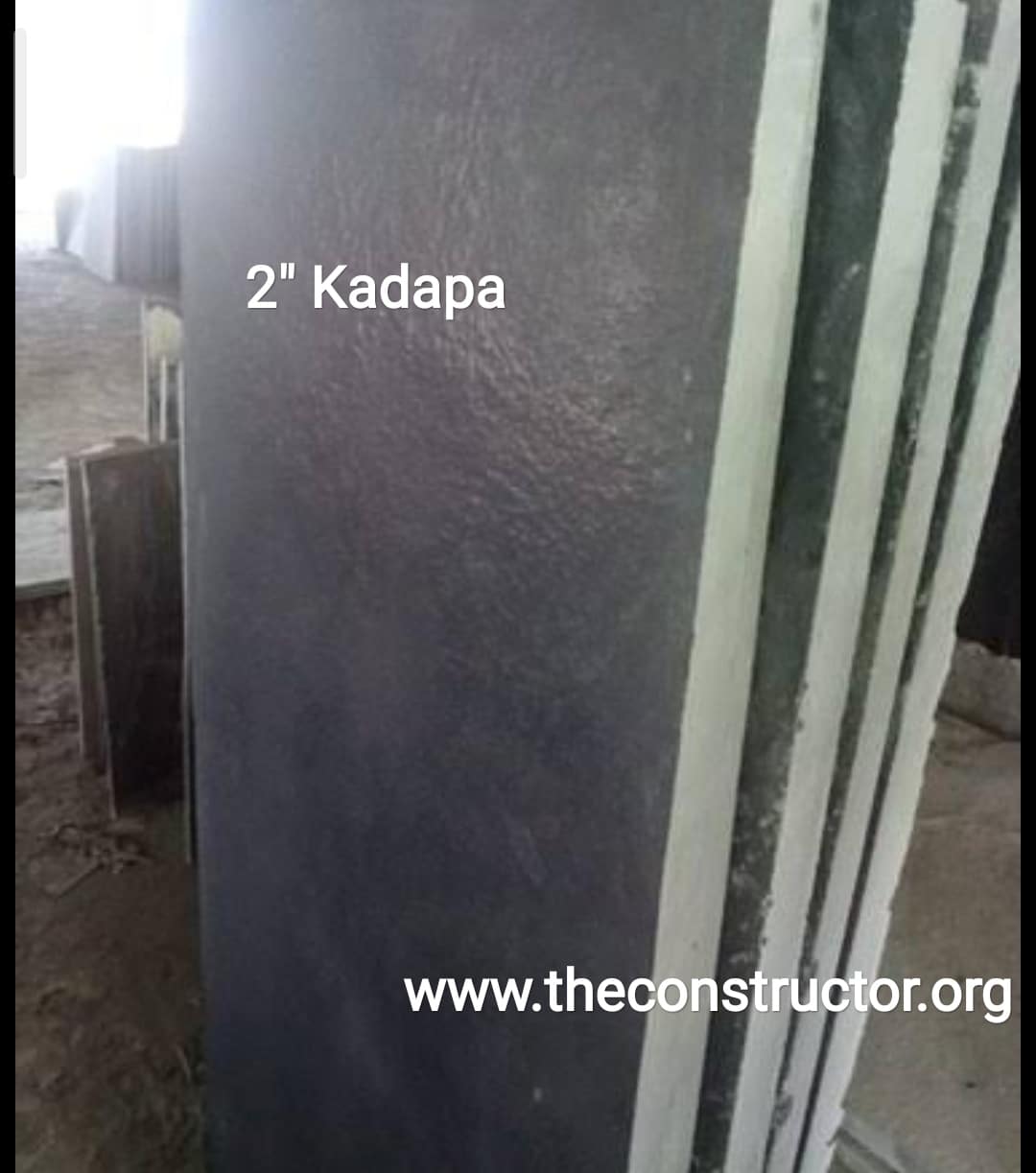
Can we place a 500 liter water tank on a 2″ Kadapa slab placed at 6 feet height supported by two solid block walls?

aviratdhodare
aviratdhodare

aviratdhodare

  • 37 Questions
  • 252 Answers
  • 0 Best Answers
  • 480 Points
View Profile
aviratdhodare

Can we place a 500-liter water tank on a 2″ Kadapa slab placed at 6 feet height supported by two solid block walls?

  1. AdityaBhandakkar

    AdityaBhandakkar

    • 12 Questions
    • 250 Answers
    • 2 Best Answers
    • 0 Points
    View Profile
    AdityaBhandakkar User
    Added an answer on September 19, 2020 at 2:24 pm
    Can we place a 500 liter water tank on a 2″ Kadapa slab placed at 6 feet height supported by two solid block walls?

    Hi, Kadappa stone of 2" ( 50.8mm ) having its density in the range of 5.0 to 5.4 kg/cm^3 with a water absorption ratio of less than 2%. After calculation, you may found that at 6-meter height, it is not able to bear the weight of a 500-liter water tank. Thus, support in the middle must be provided fRead more

    Hi,

    Kadappa stone of 2″ ( 50.8mm ) having its density in the range of 5.0 to 5.4 kg/cm^3 with a water absorption ratio of less than 2%.

    After calculation, you may found that at 6-meter height, it is not able to bear the weight of a 500-liter water tank.

    Thus, support in the middle must be provided for stability and to increase the bearing strength of kadapa so that it lasts for a long duration.

    See less
    • 49
    • Share
      Share
      • Share on Facebook
      • Share on Twitter
      • Share on LinkedIn
      • Share on WhatsApp
  • 34
  • 3 3 Answers
  • 4,304 Views
  • 0 Followers
Asked: September 22, 2020In: Construction

Mechanism of rotating tower lacated at Dubai?

Komal Bhandakkar
Komal Bhandakkar

Komal Bhandakkar

  • 49 Questions
  • 255 Answers
  • 0 Best Answers
  • 2,050 Points
View Profile
Komal Bhandakkar AUTHOR

Mechanism of rotating tower lacated at Dubai ?

  1. Komal Bhandakkar

    Komal Bhandakkar

    • 49 Questions
    • 255 Answers
    • 0 Best Answers
    • 2,050 Points
    View Profile
    Komal Bhandakkar AUTHOR
    Added an answer on September 28, 2020 at 11:19 pm
    Mechanism of rotating tower lacated at Dubai?

    Rotating Tower: Mechanism of rotating Tower: Mechanism of rotating Tower is very interesting to understand.  1)The whole steel structure is constructed with reference to Central Core and highly reinforced Foundation. 2)Driving system- every flower in the rotating Tower can be rotated around the centRead more

    Rotating Tower:

    Mechanism of rotating Tower:

    Mechanism of rotating Tower is very interesting to understand. 

    1)The whole steel structure is constructed with reference to Central Core and highly reinforced Foundation.


    2)Driving system- every flower in the rotating Tower can be rotated around the central Core which is connected by rails.


    3) Load cases: Different loads that are dead load life load wind load and earthquake loads are taken into account while designing the rotating Tower.


    4)Optimisation analysis: The stresses and deformation directly acting on the core of the rotating tower are very high.


    5)Alternative designs of the rotating tower:

    1. Alternative 1- Architects design
    2. Alternative 2- higher concrete grade
    3. Alternative 3- increased wall thickness
    4. Alternative 4- outrigger braced concrete Core
    5. Alternative 5- perimeter columns with Stiff floors

    6) Architect name:

    • RotatingTower is developed by the Italian architect David Fisher.

    7)  Shape of rotating Tower:

    • Because of the rotation of all floors can be possible independently, the building can transform into every different imaginable shape.

    8) Height of rotating Tower:

    • The original design of the rotating tower height is approximately 435 metre.

    9) Current need:

    • The current design of the stabilizing core of the rotating tower doesn’t intersect any essential need. Hence investigation of the structure according to the stiffness and strength is really very important parameter.

    10)Speciality of rotating Tower:

    • All the floors of the rotating tower can separately rotate with reference to the common axis located at the centre of the tower.
    • Rotating Tower is only one building in which it’s all floors can rotate 360-degree angle.
    • Every Apartment can spin individually in any direction

    See less
    • 35
    • Share
      Share
      • Share on Facebook
      • Share on Twitter
      • Share on LinkedIn
      • Share on WhatsApp
  • 33
  • 2 2 Answers
  • 2,619 Views
  • 0 Followers
Asked: September 23, 2020In: Geotechnical Engineering

How can Artificial Intelligence be used in Geotechnical Engineering?

nikeetasharma
nikeetasharma

nikeetasharma

  • 23 Questions
  • 303 Answers
  • 0 Best Answers
  • 2,680 Points
View Profile
nikeetasharma Guru

How can Artificial Intelligence be used in Geotechnical Engineering?

  1. AdityaBhandakkar

    AdityaBhandakkar

    • 12 Questions
    • 250 Answers
    • 2 Best Answers
    • 0 Points
    View Profile
    AdityaBhandakkar User
    Added an answer on October 8, 2020 at 6:07 pm
    This answer was edited.

    Hi, Geotechnical engineering deals with materials (e.g., soil and rock) that, by their very nature, exhibit varied and behavior due to the physical processes associated with the formation of these materials. Modeling such materials' behavior is complicated and usually beyond the ability of most tradRead more

    Hi,

    Geotechnical engineering deals with materials (e.g., soil and rock) that, by their very nature, exhibit varied and behavior due to the physical processes associated with the formation of these materials. Modeling such materials’ behavior is complicated and usually beyond the ability of most traditional forms of physically-based engineering methods. Artificial intelligence (AI) is becoming more popular and particularly amenable to modeling most geotechnical engineering materials’ complex behavior because it has demonstrated superior predictive ability compared to traditional methods. Over the last decade, AI has been applied successfully to virtually every problem in geotechnical engineering. However, despite this success, AI techniques are still facing classical opposition due to some inherent reasons such as lack of transparency, knowledge extraction, and model uncertainty, which will discuss in detail in this chapter. Among the available AI, techniques are artificial neural networks (ANNs), genetic programming (GP), evolutionary polynomial regression (EPR), support vector machines, M5 model trees, and K-nearest neighbors (Elshorbagy et al.,2010). This chapter will focus on three AI techniques, including ANNs, GP, and EPR. 

    See less
    • 40
    • Share
      Share
      • Share on Facebook
      • Share on Twitter
      • Share on LinkedIn
      • Share on WhatsApp
  • 33
  • 2 2 Answers
  • 1,498 Views
  • 0 Followers
Load More Questions

Sidebar

Explore

  • Questions
  • Ask Questions
  • Write for us
  • Artificial Intelligence
  • Sustainability
  • Building
    • Brick Masonry
    • Building Materials
    • Building Tips
    • Formwork/Shuttering
  • Concrete
    • Concrete Admixtures
    • Cement
    • Concrete Cracks
    • Concrete Properties
  • Construction
    • Construction Equipments
    • Construction Management
    • Construction Project
    • Estimating & Costing
  • How To Guide
    • Material Estimation
    • Repair/Protection Guide
    • Material Testing Guide
    • Mix Design Guide
    • Rate Analysis
  • Geotechnical
    • Foundation Engineering
    • Ground Improvement
  • Structural Engineering
    • Strengthening of Structure
    • Structual Inspection
    • Structural Detailing
  • Surveying
  • Tips

Footer

  • Ask Questions
  • Write for us
  • Popular Questions
  • Facebook
  • Instagram
  • Twitter
  • Telegram

© 2009-2021 The Constructor. All Rights Reserved.