Sign Up

Join TheConstructor to ask questions, answer questions, write articles, and connect with other people. When you join you get additional benefits.

Have an account? Sign In


Have an account? Sign In Now

Sign In

Log in to TheConstructor to ask questions, answer people’s questions, write articles & connect with other people. When you join you get additional benefits.

Sign Up Here

Join for free or log in to continue reading...


Forgot Password?

Don't have account, Sign Up Here

Forgot Password

Lost your password? Please enter your email address. You will receive a link and will create a new password via email.

Have an account? Sign In Now

Sorry, you do not have a permission to ask a question, You must login to ask question. Get the paid membership

Join for free or log in to continue reading...


Forgot Password?

Don't have account, Sign Up Here
Get the paid membership
theconstructor.org Logo theconstructor.org Logo
Log inJoin

theconstructor.org

theconstructor.org Navigation

  • Articles
    • Recent Articles
    • Popular Articles
    • Write for us
  • Community
  • Categories
    • How To Guide
      • Material Testing Guide
    • Concrete
    • Building
      • Brick Masonry
      • Building Materials
      • Building Tips
    • Construction
      • Equipments
      • Management
    • Digital Construction
    • Geotechnical
      • Foundation
  • Case Studies
Search
Ask A Question

Mobile menu

Close
Ask a Question
  • Questions
  • Ask Questions
  • Write for us
  • Artificial Intelligence
  • Sustainability
  • Building
    • Brick Masonry
    • Building Materials
    • Building Tips
    • Formwork/Shuttering
  • Concrete
    • Concrete Admixtures
    • Cement
    • Concrete Cracks
    • Concrete Properties
  • Construction
    • Construction Equipments
    • Construction Management
    • Construction Project
    • Estimating & Costing
  • How To Guide
    • Material Estimation
    • Repair/Protection Guide
    • Material Testing Guide
    • Mix Design Guide
    • Rate Analysis
  • Geotechnical
    • Foundation Engineering
    • Ground Improvement
  • Structural Engineering
    • Strengthening of Structure
    • Structual Inspection
    • Structural Detailing
  • Surveying
  • Tips

Construction

Home/Construction/Page 7

Do you need to remove the ads? Get the paid membership

  • Recent Questions
  • Most Answered
  • Answers
  • No Answers
  • Most Visited
  • Most Voted
  • Random

Discy Latest Questions

Asked: July 3, 2020In: Construction

What are the alternate building blocks which can used in place of ordinary building stones and bricks?

Ancy Joby
Ancy Joby

Ancy Joby

  • 20 Questions
  • 11 Answers
  • 1 Best Answer
  • 580 Points
View Profile
Ancy Joby Learner

What are the alternate building blocks which can used in place of ordinary building stones and bricks?

  1. nikeetasharma

    nikeetasharma

    • 23 Questions
    • 303 Answers
    • 0 Best Answers
    • 2,680 Points
    View Profile
    nikeetasharma Guru
    Added an answer on November 28, 2020 at 7:45 pm

    Fly ash bricks can be used in place of ordinary building stones and bricks which is a good one but the main defect is that fly ash bricks are regional.

    Fly ash bricks can be used in place of ordinary building stones and bricks which is a good one but the main defect is that fly ash bricks are regional.

    See less
    • 0
    • Share
      Share
      • Share on Facebook
      • Share on Twitter
      • Share on LinkedIn
      • Share on WhatsApp
  • 1
  • 5 5 Answers
  • 6,921 Views
  • 0 Followers
Asked: July 24, 2020In: Construction

What is a Floor Area Ratio (FAR)?

DevilAVRT
DevilAVRT

DevilAVRT

  • 27 Questions
  • 49 Answers
  • 3 Best Answers
  • 207 Points
View Profile
DevilAVRT Beginner

What is a Floor Area Ratio (FAR)?

  1. aviratdhodare

    aviratdhodare

    • 37 Questions
    • 252 Answers
    • 0 Best Answers
    • 480 Points
    View Profile
    aviratdhodare
    Added an answer on October 10, 2020 at 3:05 pm

    What does FLOOR AREA RATIO mean: FAR is a technical term used in Urban Planning that determines the total built-up space of the building on a plot of land. Generally, the FAR of the City or the Area is fixed by the government, based on various parameters like infrastructure, population or populationRead more

    What does FLOOR AREA RATIO mean:

    FAR is a technical term used in Urban Planning that determines the total built-up space of the building on a plot of land. Generally, the FAR of the City or the Area is fixed by the government, based on various parameters like infrastructure, population or population growth. These you will understand once you are going through this issue.

    So by Definition FLOOR AREA RATIO (FAR) is the ratio of BUILDING’S TOTAL COVERED AREA to THE SIZE OF THE PLOT on which it is built.

    BUILDING’S TOTAL COVERED AREA is the Gross Floor Area.

    Formula for FAR

    FAR = TOTAL COVERED AREA (ALL FLOORS)/ AREA OF PLOT.

    For e.f. If there are 4 Floors and each Floor is of 5000 Sq feet, then the Total Covered Area of all the Floors is 20000 Sq Feet and the size of the plot is 10000 Sq Feet, then FAR = 20000/10000 = 2. In some areas it is mentioned as % i,e, 200% or somewhere it is mentioned simply 200. So if it is 200 then it means the FAR of the City or Area is 2, meaning one is authorized to build up the covered area 2 times to that of the plot area.

    But Generally FAR is fixed by the government, for particular City or Area and the FAR can be used to calculate the Total Covered Area that is built on a plot of land.

    NOTE: There is one more term FLOOR SPACE INDEX i.e. FSI. The meaning of FAR and FSI is the same. There is a difference of only denoting these two. FAR is always mentioned in percentage. For e.g. the FAR of any City / Area is 200% then the FSI of the same City / Area will be denoted as 2.0.

    Let us understand with the help of an illustration as in the image below:

    For e.g. the total Plot Area is 10000 Sq feet

    CASE 1: If FAR of a place is 0.5, then the total area to be built up is allowed only 5000 sq feet.

    OPTION A: One can construct in 50% of the plot area, only one floor of 5000 sq feet. So FAR = 5000/10000=0.5

    OPTION B : One can construct in 25% 2 Stories of 2500 sq feet of each. So FAR = (2X2500)/10000=5000/10000 = 0.5

    What is Floor Area Ratio (FAR)? | Seattle's Land Use Code

    CASE 2: If FAR of a place is 1.0, then the total area to be built up is allowed only 10000 sq feet.

    OPTION A: One can construct in 100% of the plot area, only one floor of 10000 sq feet. So FAR = 10000/10000=1.0

    OPTION B : One can construct in 50% of the plot area ,2 Stories floor of 5000 sq feet. So FAR = (5000 X 2) /10000 = 10000/10000=1.0

    OPTION C : One can construct in 25% 4 stories of 2500 sq feet of each. So FAR = (2500 X 4) /10000=10000/10000 = 1.0

    CASE 3: If FAR of a place is 2.0, then the total area to be built up is allowed only 20000 sq feet.

    OPTION A : One can construct in 100% of the plot area ,2 Stories of 10000 sq feet each. So FAR = (10000 X 2 )/10000 = 20000/10000=2.0

    OPTION B : One can construct in 50% of the plot area ,4 Stories floor of 5000 sq feet. So FAR = (5000 X 4) /10000 = 20000/10000=2.0

    OPTION C : One can construct in 25% 8 stories of 2500 sq feet of each. So FAR = (2500 X 8) /10000=20000/10000 = 1.0

    So if you know the FAR, you can calculate the total covered area that can be built on the plot.

    How much open area you have to leave or how much area can be built up depends on the zoning and planning regulations also. For e.g. how much area to be left for:

    • Setback.
    • Parking
    • Ground Coverage or Maximum Ground Coverage.
    • Height Restrictions

    FACTORS URBAN DEVELOPMENT AUTHORITY CONSIDER WHILE DECIDING FAR:

    • The current population of the City / Area: When the population of the City / Area is high, the FAR is also high, it means the government is intending for Vertical Development as compared to the spread-out development,
    • Population Growth: If the population growth rate is high, then also the FAR of the City / Area is high
    • Infrastructure: Infrastructure also plays a key role while deciding the FAR of the City / Area. If Infrastructure is low then FAR will be kept low otherwise there will be pressure on infrastructural facilities viz, water, power supply, transport etc. If Infrastructure of the City / Area is already high and developed by the government relative to population density, then FAR can be kept at a higher level by the Authorities.

    Note: If in the City / Area, the infrastructure is low but the population is growing at a faster rate, then the government has to increase the infrastructure and FAR has to be kept higher to accommodate the high growing population.

    So when FAR increases the Population Density of the City / Area increases.

    IMPACT OF HIGH FAR:

    • Higher Population Density
    • Stress on Infrastructure
    • Better Profitability for Developers
    • High Land Value
    • Better Walkability

    IMPACT OF LOW FAR:

    • Lower Population Density.
    • Better Per Capita Infrastructure
    • Reduced Profitability for the Developers.
    • Low Land Prices.
    • Long Travel Distances
    See less
    • 15
    • Share
      Share
      • Share on Facebook
      • Share on Twitter
      • Share on LinkedIn
      • Share on WhatsApp
  • 3
  • 6 6 Answers
  • 6,843 Views
  • 0 Followers
Asked: May 19, 2020In: Construction

What are the common Roof Types?

amr soliman
amr soliman

amr soliman

  • 9 Questions
  • 4 Answers
  • 0 Best Answers
  • 146 Points
View Profile
amr soliman Beginner

What are the common roof types?

  1. nikeetasharma

    nikeetasharma

    • 23 Questions
    • 303 Answers
    • 0 Best Answers
    • 2,680 Points
    View Profile
    nikeetasharma Guru
    Added an answer on October 29, 2020 at 6:09 pm

    Roof is the most important part of the building. Thus, we can say without roof our building or house is incomplete. There are many types of roofs available which are classified on the basis of their shape and size. Hence, knowing your roof style also can help you to decide what roof material or shinRead more

    Roof is the most important part of the building. Thus, we can say without roof our building or house is incomplete. There are many types of roofs available which are classified on the basis of their shape and size. Hence, knowing your roof style also can help you to decide what roof material or shingle works is best for your home.

    Some of the common roof types are as follows ;
    1. Saltbox Roofs
    2. Mansard Roofs
    3. Gambrel Roofs
    4. Pyramid Roofs
    5. Hip Roofs
    6. Cross Gabled Roofs
    7. Flat Roofs
    8. Bonnet Roofs
    9. Skillion Roofs
    10. Sawtooth
    11. Butterfly Roofs
    12. Curved Roofs
    13. Domed Roofs

    See less
    • 17
    • Share
      Share
      • Share on Facebook
      • Share on Twitter
      • Share on LinkedIn
      • Share on WhatsApp
  • 2
  • 5 5 Answers
  • 6,648 Views
  • 0 Followers
Asked: July 19, 2020In: Construction

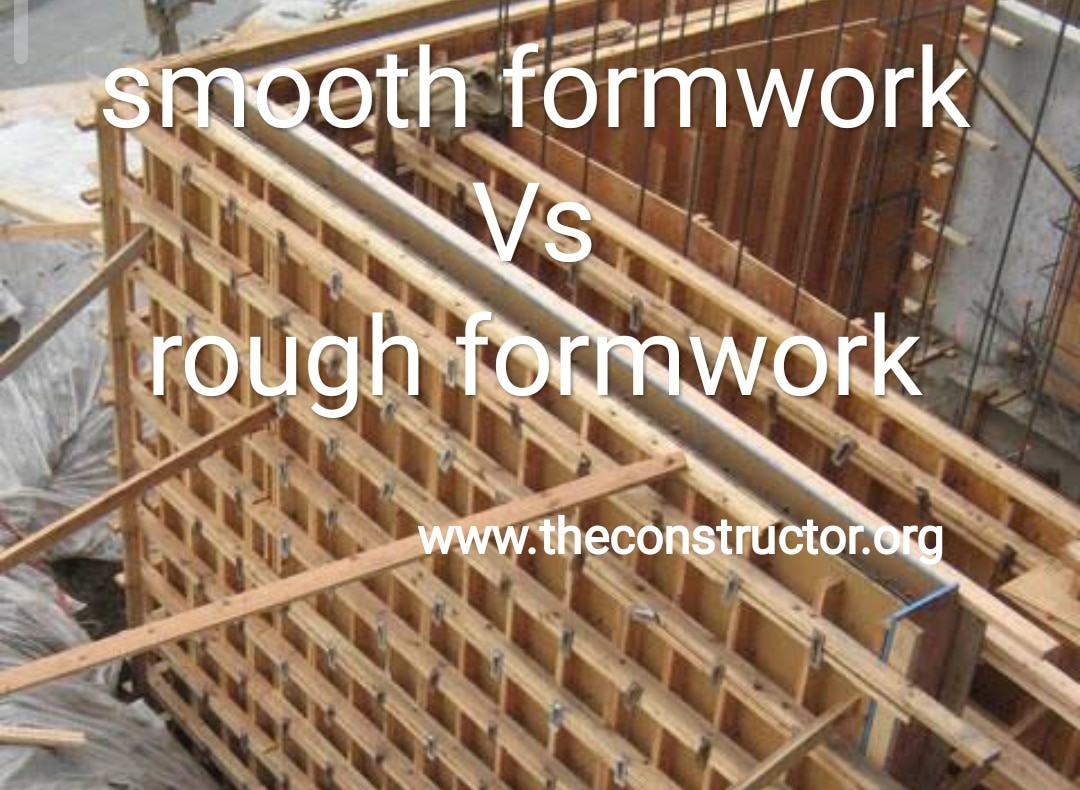
What is the different between smooth form work and rough form work?

fathima
fathima

fathima

  • 26 Questions
  • 10 Answers
  • 0 Best Answers
  • 377 Points
View Profile
fathima Beginner

What is the different between smooth form work and rough form work?

  1. AdityaBhandakkar

    AdityaBhandakkar

    • 12 Questions
    • 250 Answers
    • 2 Best Answers
    • 0 Points
    View Profile
    AdityaBhandakkar User
    Added an answer on September 11, 2020 at 12:00 am
    What is the different between smooth form work and rough form work?

    In simple words, smooth formwork makes the surface of wall smooth, while the rough formwork leaves the concrete surface as roughly cast. refer ACI 301- 96 for details about homework and their types. In general, after removing the formwork the surface needs to be smoothed with the help of plasteringRead more

    In simple words, smooth formwork makes the surface of wall smooth, while the rough formwork leaves the concrete surface as roughly cast.

    refer ACI 301- 96 for details about homework and their types.

    In general, after removing the formwork the surface needs to be smoothed with the help of plastering or sandblasting. If the thickness is exceeded 10 mm then it is a type of rough formwork.

    Hope you understood the concept.

    See less
    • 45
    • Share
      Share
      • Share on Facebook
      • Share on Twitter
      • Share on LinkedIn
      • Share on WhatsApp
  • 0
  • 3 3 Answers
  • 6,555 Views
  • 0 Followers
Asked: September 25, 2020In: Construction

What is the correct procedure of designing surplus weir in irrigation?

nikeetasharma
nikeetasharma

nikeetasharma

  • 23 Questions
  • 303 Answers
  • 0 Best Answers
  • 2,680 Points
View Profile
nikeetasharma Guru

Give the correct procedure of designing surplus weir.

  1. aviratdhodare

    aviratdhodare

    • 37 Questions
    • 252 Answers
    • 0 Best Answers
    • 480 Points
    View Profile
    aviratdhodare
    Added an answer on September 28, 2020 at 11:36 pm

    Surplus weir (waste weir): It is a concrte or masonry structure constructed to dispose off excess water from an irrigation tank. It is a safety device in the tank. Full tank level (FTL): It is the highest level up to which water could be stored in the tank. Excess water will go out through the surplRead more

    Surplus weir (waste weir): It is a concrte or masonry structure constructed to dispose off excess water from an irrigation tank. It is a safety device in the tank.

    Full tank level (FTL): It is the highest level up to which water could be stored in the tank. Excess water will go out through the surplus weir. Fixation of this level depends on the availability/demand of water.

    Max water level (MWL): It is the max level of water allowed in the tank. MWL is higher than FTL. The difference between MWL & FTL is the spillage or head on crest of surplus weir Fixation of this level depends on the submergence of land due to back water.

    Tank bund level (TBL): It is the top level of the liqd of the bund & is equal to MWL + freeboard.

    Abutment: The walls that flank the edge of a weir and which support the banks on each side of the weir. The length of the abutment is generally kept same as the base width of weir. The top level of the abutment is kept at tank bund level.

    Wing wall: A wall on a weir that ties the structure into the bank in continuation of the abutments. Wing walls are provided both on the u/s and d/s sides on both the banks to ensure smooth entry and exit of water away from the tank.

    Return wall (Return): These are provided at right angles to the abutment at the end of wing wall and extend into the banks to hold the back-fill.

    Splay: Horizontal deviation of wall. Ex: 1 in 3, 1 in 5, etc.

    Batter: Vertical deviation of wall. Ex: 1 in 8, 1 in 12, etc.

    Hydraulic gradient, Saturation gradient (or) Seepage gradient: It is the head loss
    (energy loss) per unit length in the direction of flow traveled by water particle through soil. Ex: Saturation gradient 4:1, it means to dissipate energy of 1m, water should travel a distance of 4 m in the soil

    Catchment area(watershed area, drainage area, drainage basin or basin or
    catchment): It is a portion of land which catches the rain and produces runoff through a one outlet.

    Free catchment: Entire runoff in the catchment will be passed direct to tank. It means water from catchment area is not go to other tank or channels, and it should directly goes to one tank.

    Intercepted catchment: Part of runoff will be intercepted and stored by the u/s side tank(s) within the catchment.

    Combined catchment: Entire runoff in the catchment will be shared by group of tanks or a chain of tanks which comes under the same catchment.

    D/S Apron of the surplus weir: Depending upon the foundation particulars, and the levels of U/S and D/S ground at the location of the work, any one of the following types can be adopted.

    Type A → Horizontal masonry apron – when fall height < 75 cm

    Type B → Sloping apron

    Type C → Similar to B but with rough stone sloping

    Type D → Stepped apron – when fall height ⩾ 75 cm

    Location of surplus weir: It is desirable to locate the surplus weir at or near the flank of the tank bund and connected to it, and also at a place where it is possible to drain the surplus waters below the work away from the tank bund falling into its natural watercourse. The cost of works should be minimum.

    Design a surplus weir for a minor tank forming a group of tanks with the following data:
    Combined catchment area                                                      = 25.89 km2 (35 km2)
    Intercepted catchment area                                                   = 20474 km2 (10 km2)
    Top width of the bund                                                             =2m (2m)
    Side slopes of the bund                                                           = 2:1 both sides (2:10n both sides)
    Top level of bund                                                                      = +1450 (+ 12.50)
    Maximum Water Level (MWL)                                             =+ 12.75 (+ 10.75)
    Full Tank Level (FTL)                                                              = + 12.00 (+ 10.00)
    General ground level at the site                                             =+ 11.00 (+ 9.00)
    Ground level slopes off to a level in about 6 m distance) = + 10.00 (+ 8.00 in about 6 m dist)
    The foundations are of hand gravel                                      = + 9.50 (+ 7.50)
    Saturation gradient                                          = 4:1 with 1 m clearcover (4:1 with 1m clearcover)
    Provision is to be made to store water up to MWL in-times of necessity

    Components to be designed

    (1) Estimation of flood discharge entering the tank (Q) :
    Combined catchment area (M) # 25.89 km2
    intercepted catchment area (m) = 20.71 km2
    Assuming Ryve’s coefficient(C) =9 and c = 1.5
    Flood discharge (Q) = CM2/3 – cm2/3
    Q = 9 (25.89)2/3 — 1.5 (20.71)2/3 = 78.77 — 11.32
    Q = 67.45 m3/s

    (2) Length of surplus weir (L):
    Assuming the flow over a surplus weir is identical to that of flow over a rectangular weir then discharge is given by Q = 2/3 CdL √2g h3/2
    where, Q = 67.45 m3/s, cd = 0.562 (assuming), g = 9.841 m/s2
    h = MWL – FTL = 12.75 — 12.00 = 0.75 m, L — Length of the water way
    67.45 = 2/3 x 0.562 x L √2×9.81 (0. 7s)3/2 → L=62.75 m ≈ 63.00 m (say)
    Since temporary regulating arrangements are to be made on top of weir to store water at times of necessity.
    The dam stones of size 15 x 15 x 125 cm are at 1m clear internals keeping top of the stone at M.W.L.
    The no. of openings will be = 63, The no. of dam stones required = 62
    ∴ The overall length of surplus weir between abutments = 63 + (62 x 0.15)
    = 72.30 m
    However, provide an overall length of 75 m.

    (3) Height of the weir (H):
    Crest Level = FTL = +12.00
    Top of dam stones (top of shutters) = M.W.L = + 12.75
    Ground level = + 11.00
    Hard soil at the foundation is + 9.50.
    However, taking foundations about 0.50 m deep into hard soil and fix up foundation level at + 9.00
    Assuming foundation concrete is 60 cm thick
    Top of foundation concrete = + 9.60
    Height of weir above foundations (H) = 12.00 – 9.60 = 2.4m

    (4) Crest width of weir (a):
    a = 0.55 (√H + √h) = 0.55(√2.4 + √0.75) = 1.3m

    (5) Base width of weir (b):
    The base width is determined based on moment considerations. i.e., based on the magnitude of stabilizing and destabilizing moments.
    Stabilizing moments are caused by self weight of the weir which is given by
    M = γw /12 = [{(G+15)H + 2.5S}b2 + a(GH – H – S)b – ½a2 (H +3S)]
    Where, γw = Unit weight of water = 1000 kg/m3
    G = Specific gravity of masonry = 2.25
    H = Height of the weir = 2.40 m
    a = Crest width of weir = 1.30 m
    b = Base width of the weir = ?
    S = h = height of shutter above weir crest = 12.75 – 12.00 = 0.75 m
    Destabilizing moments (M,)
    Mr = γw (H + S)3 / 6
    Equating both the moments: M,=M
    Mr = (2.4 + 0.75)3 / 6 = 1 /12 [{2.25 + 1.5)2.4 + 2.5 x 0.75} b2 + 1.3 (2.25 x 2.4 – 2.4 – 0.75)b – ½ (1.3)2 (2.4 + 3 x 0.75)]
    Solving, b = 2.4 m

    (6) Abutments, Wing walls and Returns:
    The top width of abutments, wing walls & returns will all be uniformly 0.50 m with a front batter of 1 in 8. Diag in attachment.
    Abutment (AB)
    Length of the abutment = width of bund = 2m
    The top level of the abutment is kept at TBL = + 14.50
    Bottom level of the abutment = top of foundation level = + 9.60
    Height of the abutment = 14.50 — 9.60 = 4.90 m
    Bottom width= 0.4 x height = 0.4 x 4.90 = 1.96 m = 2.00 m (say)
    Top width 2 0.5 m (assuming), Front batter = 1 in 8
    Wing walls:
    U/S Wing Wall:
    BD is called u/s wing wall
    Section at B:
    Same as the section of abutment
    Wing wall from B to C is sloping and
    Top level of C = M.W.L + 30 cm = 12.75 + 0.30 = 13.05
    Section at C:
    Top Level at C = 13.05
    Bottom level = 9.60
    Height of wing wall = 13.05 – 9.60 = 3.45 m
    Bottom width = 0.4 x height = 0.4 x 3.45 = 1.38 = 1.40 m (say)
    Top width from B to C is the same as 0.5 m.
    But, bottom width gets slowly reduced
    from 2.00 m at section at B to 1.40 m at Section C:
    From C to D wing wall is horizontal. Therefore, Section at D = Section at C
    U/S Return (DE):
    Section at E = Section at D
    U/S transition:
    In order to give an easy approach, the u/s side wing wall may be splayed at 1 in 3.
    D/S wing wall:
    AF is called d/s wing wall.
    Section at A: Same as the section of abutment. The Wing wall from A to F will slope down till the top reaches the ground level at F.
    Section at F:
    Top of wing wall at F = + 11.00
    Bottom of wing wall = + 9.60
    Height = 11.00 – 9.60 = 1.40 m
    Bottom width = 0.4 x 1.4 = 0.56 m
    However, provide a minimum of 0.6 m
    D/S return (FG):
    The same section at F is continued for FG also
    D/S transitions:
    Provide a splay of 1 in 5.

    (7) Aprons of the weir:
    i). U/S Apron: Though apron is not required on the u/s side of the weir, a puddle clay apron is usually provided to minimize the seepage under the weir.
    ii).D/S Apron: Since the ground level is falling down to +10.00 in a distance of about 6m. Then, the fall is (12.00 – 10.00) = 2.00 m > 0.75 m therefore provide a stepped apron (Type D) Diagram in attachment. The stepping may be done in two stages.
    (a) The length of the Apron: The length of the apron should be adequate to avoid piping problem.
    [Maximum uplift will be occurred when water level on U/S is up to top of dam stone (M.W.L.) and no water on D/S (+10.00))
    Max. Uplift head = 12.75 – 10.00 = 2.75 m (max. energy to be dissipated)
    Assuming a hydraulic gradient of 1 in 5
    The length of the creep required = 2.75 x 5 = 13.75 m
    The length and thickness of apronts to be designed.
    The length of the creep = AB + BC + CD + DE + EF = 1.40 + 0.60 + 3.00 + DE + 1 (Assuming EF = 1 m)
    This length should not be less than 13.75 m, if the structure is to be safe.
    13.75 = 1.40 + 0.60 + 3.00 + DE + 1 → DE = 7.75 m = 8.0 m (say)
    Provide total length of solid apron ts 8 m.
    First step in 3 m and second step in 5 m length.
    (b) Thickness of solid apron: The maximum uplift on the apron is felt immediately above the point D. (i.e., at point K)
    Assuming the thickness of apron at point K = 80 cm = 0.80 m.
    Then the level of K = 11.00 – 0.80 = 10.20
    The length of the creep from A to K = 1.4 + 0.6 + 3 + 0.6 + (10.20 – 9.60) = 6.20 m
    Head loss in percolation along the path up to the point K = 6.20/5 = 1.24 m
    Residual head exerting uplift under the apron at point K = 2.75 – 1.24 = 1.51 m
    Thickness of apron required = Residual head / Sp. gravity = 1.51/2.25 = 0.67 m
    Provide 20% of more thickness as a safety
    Then thickness of apron required = 0.80 m
    So, provide the first solid apron as 80 cm thick.
    The second apron can be similarly checked for a thickness of 50 cm.

    8) Talus: At the end of d/s side apron, a nominal 3 to § m length of Talus (i.e., rough stone apron) with a thickness of 50 cm may be provided as a safety mechanism.


    See less
    • 36
    • Share
      Share
      • Share on Facebook
      • Share on Twitter
      • Share on LinkedIn
      • Share on WhatsApp
  • 33
  • 1 1 Answer
  • 6,516 Views
  • 0 Followers
Asked: July 13, 2020In: Construction

What is the object of pointing? Describe the operation of pointing.

DevilAVRT
DevilAVRT

DevilAVRT

  • 27 Questions
  • 49 Answers
  • 3 Best Answers
  • 207 Points
View Profile
DevilAVRT Beginner

What is the object of pointing? Describe the operation of pointing.

  1. nikeetasharma

    nikeetasharma

    • 23 Questions
    • 303 Answers
    • 0 Best Answers
    • 2,680 Points
    View Profile
    nikeetasharma Guru
    Added an answer on September 30, 2020 at 6:49 pm

    Pointing :- It is the art of finishing the mortar joints in the exposed brick or stone masonry with suitable cement or lime mortar, in order to protect the joints from weather effects and also to improve the appearance of building structure. Pointing is a type of front of the house exposed finish onRead more

    Pointing :- It is the art of finishing the mortar joints in the exposed brick or stone masonry with suitable cement or lime mortar, in order to protect the joints from weather effects and also to improve the appearance of building structure. Pointing is a type of front of the house exposed finish on masonry work.

    Object of pointing :- The main object of the pointing is to maintaining the joints of the structures. Pointing being cheap can be adopted in places of low rainfall. Pointing gives resisting power to the bricks and stones used in construction towards weather conditions.

    Operation of pointing :-
    1. All the mortar joints (on the masonry face required to be pointed) are raked out by a special pointing tool to a depth of 15 to 20 mm, so as to provide an adequate key for the fresh mortar used for pointing.
    2. All the loose mortar and dust are removed by brushes.
    3. The joints and wall surface are washed with clean water, and then kept wet for few hours. The joints so prepared, are filled with suitable mortar with a small trowel.
    4. The mortar is well presses into the joints to form a close contact with the old interior mortar joints and all excess mortar sticking to the sides are scraped away.
    5. The finished pointing work is kept wet for about 3 days when lime mortar is used for pointing and for 10 days when cement mortar is used for pointing.

    See less
    • 34
    • Share
      Share
      • Share on Facebook
      • Share on Twitter
      • Share on LinkedIn
      • Share on WhatsApp
  • 1
  • 7 7 Answers
  • 6,447 Views
  • 0 Followers
Asked: July 27, 2020In: Construction

What is Sand Face Plaster and Where is it used?

Vivek Patel
Vivek Patel

Vivek Patel

  • 39 Questions
  • 80 Answers
  • 1 Best Answer
  • 6 Points
View Profile
Vivek Patel User

What is Sand Face Plaster and Where is it used?

  1. nikeetasharma

    nikeetasharma

    • 23 Questions
    • 303 Answers
    • 0 Best Answers
    • 2,680 Points
    View Profile
    nikeetasharma Guru
    Added an answer on October 1, 2020 at 9:15 pm

    Generally sand faced plaster is defined as the layer of cement-sand mortar applied over brickwork and served as a wet-proof coat on masonry. This type of plaster is used to give a finishing touch to a surface. But to some extent it also serves as a sound and thermal insulation material. Sand faced pRead more

    Generally sand faced plaster is defined as the layer of cement-sand mortar applied over brickwork and served as a wet-proof coat on masonry. This type of plaster is used to give a finishing touch to a surface. But to some extent it also serves as a sound and thermal insulation material.

    Sand faced plaster is used in walls and ceilings.

    See less
    • 32
    • Share
      Share
      • Share on Facebook
      • Share on Twitter
      • Share on LinkedIn
      • Share on WhatsApp
  • 0
  • 6 6 Answers
  • 6,398 Views
  • 0 Followers
Asked: July 27, 2020In: Construction

What is Crazing Crack in Plaster?

Vivek Patel
Vivek Patel

Vivek Patel

  • 39 Questions
  • 80 Answers
  • 1 Best Answer
  • 6 Points
View Profile
Vivek Patel User

What is Crazing crack in Plaster?

  1. nikeetasharma

    nikeetasharma

    • 23 Questions
    • 303 Answers
    • 0 Best Answers
    • 2,680 Points
    View Profile
    nikeetasharma Guru
    Added an answer on December 18, 2020 at 8:39 pm

    Crazing often occur within a few hours of plaster being applied to the wall and cracks may hardly be visible until dust or moisture makes them noticeable. These cracks normally occurs when a plaster mix with a high cement content is used or the plaster is allowed to dry too quickly.

    Crazing often occur within a few hours of plaster being applied to the wall and cracks may hardly be visible until dust or moisture makes them noticeable. These cracks normally occurs when a plaster mix with a high cement content is used or the plaster is allowed to dry too quickly.

    See less
    • 0
    • Share
      Share
      • Share on Facebook
      • Share on Twitter
      • Share on LinkedIn
      • Share on WhatsApp
  • 0
  • 10 10 Answers
  • 6,163 Views
  • 1 Follower
Load More Questions

Sidebar

Explore

  • Questions
  • Ask Questions
  • Write for us
  • Artificial Intelligence
  • Sustainability
  • Building
    • Brick Masonry
    • Building Materials
    • Building Tips
    • Formwork/Shuttering
  • Concrete
    • Concrete Admixtures
    • Cement
    • Concrete Cracks
    • Concrete Properties
  • Construction
    • Construction Equipments
    • Construction Management
    • Construction Project
    • Estimating & Costing
  • How To Guide
    • Material Estimation
    • Repair/Protection Guide
    • Material Testing Guide
    • Mix Design Guide
    • Rate Analysis
  • Geotechnical
    • Foundation Engineering
    • Ground Improvement
  • Structural Engineering
    • Strengthening of Structure
    • Structual Inspection
    • Structural Detailing
  • Surveying
  • Tips

Footer

  • Ask Questions
  • Write for us
  • Popular Questions
  • Facebook
  • Instagram
  • Twitter
  • Telegram

© 2009-2021 The Constructor. All Rights Reserved.