
Sign Up

Join TheConstructor to ask questions, answer questions, write articles, and connect with other people. When you join you get additional benefits.

Have an account? Sign In


Have an account? Sign In Now

Sign In

Log in to TheConstructor to ask questions, answer people’s questions, write articles & connect with other people. When you join you get additional benefits.

Sign Up Here

Join for free or log in to continue reading...


Forgot Password?

Don't have account, Sign Up Here

Forgot Password

Lost your password? Please enter your email address. You will receive a link and will create a new password via email.

Have an account? Sign In Now

Sorry, you do not have a permission to ask a question, You must login to ask question. Get the paid membership

Join for free or log in to continue reading...


Forgot Password?

Don't have account, Sign Up Here
Get the paid membership
theconstructor.org Logo theconstructor.org Logo
Log inJoin

theconstructor.org

theconstructor.org Navigation

  • Articles
    • Recent Articles
    • Popular Articles
    • Write for us
  • Community
  • Categories
    • How To Guide
      • Material Testing Guide
    • Concrete
    • Building
      • Brick Masonry
      • Building Materials
      • Building Tips
    • Construction
      • Equipments
      • Management
    • Digital Construction
    • Geotechnical
      • Foundation
  • Case Studies
Search
Ask A Question

Mobile menu

Close
Ask a Question
  • Questions
  • Ask Questions
  • Write for us
  • Artificial Intelligence
  • Sustainability
  • Building
    • Brick Masonry
    • Building Materials
    • Building Tips
    • Formwork/Shuttering
  • Concrete
    • Concrete Admixtures
    • Cement
    • Concrete Cracks
    • Concrete Properties
  • Construction
    • Construction Equipments
    • Construction Management
    • Construction Project
    • Estimating & Costing
  • How To Guide
    • Material Estimation
    • Repair/Protection Guide
    • Material Testing Guide
    • Mix Design Guide
    • Rate Analysis
  • Geotechnical
    • Foundation Engineering
    • Ground Improvement
  • Structural Engineering
    • Strengthening of Structure
    • Structual Inspection
    • Structural Detailing
  • Surveying
  • Tips

Transportation

Home/Transportation/Page 2

Do you need to remove the ads? Get the paid membership

  • Recent Questions
  • Most Answered
  • Answers
  • No Answers
  • Most Visited
  • Most Voted
  • Random

Discy Latest Questions

Asked: January 11, 2019In: Transportation

When is scarification needed for road work?

keralitecivilengineer

keralitecivilengineer

  • 1 Question
  • 1 Answer
  • 0 Best Answers
  • 22 Points
View Profile
keralitecivilengineer User

When is scarification needed for road work?

  1. Kuldeep Singh

    Kuldeep Singh

    • 1 Question
    • 110 Answers
    • 10 Best Answers
    • 652 Points
    View Profile
    Kuldeep Singh Learner
    Added an answer on July 7, 2020 at 9:27 pm

    I assume you are talking about flexible (asphalt) pavements. Sacrification is needed when the cuts, potholes and all deformations are such that : The optimum moisture content required for proper binding can no longer be met. The filler material won't bend properly if just put judging by the conditioRead more

    I assume you are talking about flexible (asphalt) pavements. Sacrification is needed when the cuts, potholes and all deformations are such that :

    • The optimum moisture content required for proper binding can no longer be met.
    • The filler material won’t bend properly if just put judging by the condition of the pavement.
    • The peak daily traffic on the road, does not permit it to be safe without reconstruction.

    The entire bituminous layer until the depth of the craters is scraped off, and a new layer with fresh material is then applied to reconstruct the road.

    See less
    • 6
    • Share
      Share
      • Share on Facebook
      • Share on Twitter
      • Share on LinkedIn
      • Share on WhatsApp
  • 1
  • 2 2 Answers
  • 11,742 Views
  • 0 Followers
Asked: September 27, 2020In: Transportation

Coefficient of Subgrade Reaction?

Neenu S K
Neenu S K

Neenu S K

  • 1 Question
  • 13 Answers
  • 2 Best Answers
  • 702 Points
View Profile
Neenu S K

What is the Coefficient of Subgrade Reaction?

  1. nikeetasharma

    nikeetasharma

    • 23 Questions
    • 303 Answers
    • 0 Best Answers
    • 2,680 Points
    View Profile
    nikeetasharma Guru
    Added an answer on November 10, 2020 at 7:41 pm

    The coefficient of subgrade reaction is referred as the ratio between the pressure against the footing or mat and the settlement at a given point expressed as the coefficient of subgrade reaction which is defined as the ratio between the pressure against the footing or mat and the settlement at a giRead more

    The coefficient of subgrade reaction is referred as the ratio between the pressure against the footing or mat and the settlement at a given point expressed as the coefficient of subgrade reaction which is defined as the ratio between the pressure against the footing or mat and the settlement at a given point which is expressed as ;
    ks = q/S

    where,
    ks = coefficient of subgrade reaction
    q = pressure on the footing or mat at a given point
    S = settlement of the same point of the footing or mat in the corresponding unit of length

    i. The value of k is independent of the magnitude of pressure.
    ii. The value of s has the same value for every point on the surface of the footing.

    See less
    • 3
    • Share
      Share
      • Share on Facebook
      • Share on Twitter
      • Share on LinkedIn
      • Share on WhatsApp
  • 1
  • 3 3 Answers
  • 7,155 Views
  • 0 Followers
Asked: November 28, 2020In: Transportation

What is the difference between Airport, Aerodrome and Airfield?

Naif Alwadai
Naif Alwadai

Naif Alwadai

  • 1 Question
  • 0 Answers
  • 0 Best Answers
  • 10 Points
View Profile
Naif Alwadai VIP

What is the difference between Airport, Aerodrome and Airfield?

  1. desvl

    desvl

    • 0 Questions
    • 2 Answers
    • 0 Best Answers
    • 65 Points
    View Profile
    desvl VVIP
    Added an answer on April 8, 2021 at 9:23 pm

    Airport: A place often with multiple runways where commercial aircraft regularly take off and land usually based on a schedule, it has buildings for passengers flight management (Control tower) and services such as refueling, maintenance etc. An airport is normally a commercial enterprise. An AirfieRead more

    Airport: A place often with multiple runways where commercial aircraft regularly take off and land usually based on a schedule, it has buildings for passengers flight management (Control tower) and services such as refueling, maintenance etc. An airport is normally a commercial enterprise.

    An Airfield is on a much smaller scale usually non commercial and used for private or irregular charter flights minimal runways and limited services can also be military. minimal if any control.

    An Aerodrome is an old English word that has been replace with the word airfield so aerodrome and airfield are the same.

    See less
    • 5
    • Share
      Share
      • Share on Facebook
      • Share on Twitter
      • Share on LinkedIn
      • Share on WhatsApp
  • 1
  • 1 1 Answer
  • 7,586 Views
  • 0 Followers
Asked: July 20, 2020In: Transportation

What is meaning of yellow & white meridian line road?

Vivek Patel
Vivek Patel

Vivek Patel

  • 39 Questions
  • 80 Answers
  • 1 Best Answer
  • 6 Points
View Profile
Vivek Patel User

What is meaning of yellow & white meridian line road?

  1. Kuldeep Singh

    Kuldeep Singh

    • 1 Question
    • 110 Answers
    • 10 Best Answers
    • 652 Points
    View Profile
    Best Answer
    Kuldeep Singh Learner
    Added an answer on July 22, 2020 at 12:06 am

    Meridian lines, in addition to marking lanes, provide necessary guidelines, instructions, and restrictions on roads. Yellow and white are the most common ones. There is no difference in the roads marked by yellow or white lines as such, but only the instructions given by them are different. Their reRead more

    Meridian lines, in addition to marking lanes, provide necessary guidelines, instructions, and restrictions on roads. Yellow and white are the most common ones. There is no difference in the roads marked by yellow or white lines as such, but only the instructions given by them are different. Their relative occurrence varies from country to country.

    Soild white line: a solid white line along the curb or between two lanes means that switching lanes and overtaking is disallowed until the line changes.

    Broken white line: a broken white line is found between two lanes or in the middle of the road. It means that switching lanes or overtaking is allowed and safe.
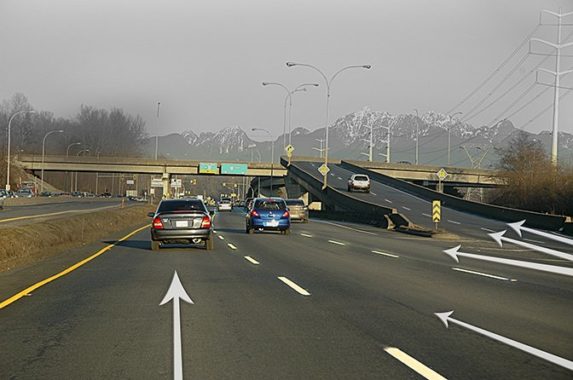
    Solid yellow line: a solid yellow line between two lanes means essentially the same thing as a solid white line. A solid yellow line along the curb means that parking at the side of the road is disallowed.
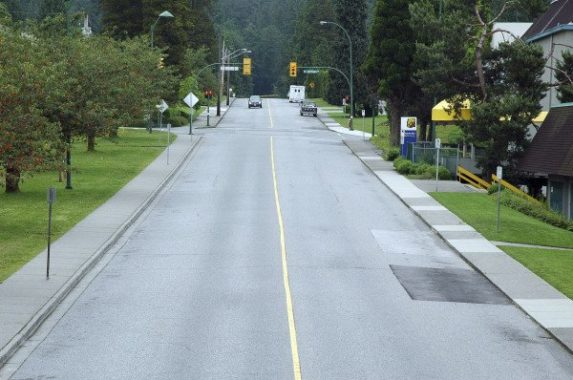
    Double solid yellow line: a double solid yellow line down the middle or between two lanes means that overtaking or switching lanes is dangerous and is not advisable although not disallowed. A double solid yellow line along the curb means that a specific waiting time by the side of the road is allowed, but parking and leaving is not allowed.
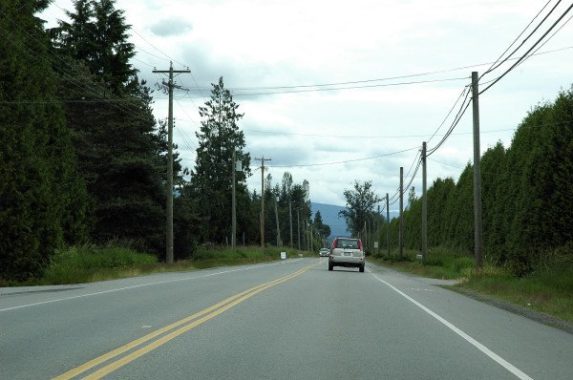
    Double yellow solid and broken line: This is a kind of double meridian line found in the middle between two lanes with one line solid and one broken. It means that drivers on the side of the solid line are disallowed from changing lanes or overtaking, but drivers on the side of the broken line are allowed switching lanes and overtaking.


    See less
    • 2
    • Share
      Share
      • Share on Facebook
      • Share on Twitter
      • Share on LinkedIn
      • Share on WhatsApp
  • 1
  • 1 1 Answer
  • 5,097 Views
  • 0 Followers
Asked: July 20, 2020In: Transportation

Which are the best method for traffic survey according to verious location?

Vivek Patel
Vivek Patel

Vivek Patel

  • 39 Questions
  • 80 Answers
  • 1 Best Answer
  • 6 Points
View Profile
Vivek Patel User

Which are the best method for traffic survey according to verious location?

  1. aviratdhodare

    aviratdhodare

    • 37 Questions
    • 252 Answers
    • 0 Best Answers
    • 480 Points
    View Profile
    aviratdhodare
    Added an answer on July 31, 2020 at 11:00 pm

    Traffic Survey Precise surveys, studies, and scientific analysis of traffic is necessary for traffic engineering and find wide applications in anticipating future requirements of roads, the advancement of existing facilities, design aspects, pavement design, and traffic guidelines and control. TraffRead more

    Traffic Survey

    Precise surveys, studies, and scientific analysis of traffic is necessary for traffic engineering and find wide applications in anticipating future requirements of roads, the advancement of existing facilities, design aspects, pavement design, and traffic guidelines and control.
    Traffic surveys, better-called traffic census, covers all kinds of traffic, size, and weight, traffic flow, traffic volume per hour, and per day, including seasonal variations/annual variations, distribution in different parts of a road network, and distribution in different directions at intersections.

    Traffic volume counts can be obtained by the following methods:

    Manual Method

    Automatic Counters

    • Pneumatic Counters
    • Electrical Counters
    • Photo-Electric Cell Counters

    Moving Observer Method

    Presentation of Traffic Volume Study Data

    The information acquired from traffic volume are introduced in various structures for coming to suitable end results relying upon the reason for examines:

    (a) Hourly, daily, weekly, seasonal, and annual variations of traffic in the form of charts or graphs.

    (b) Annual average daily traffic (AADT) of the total traffic as well as classified traffic is determined.

    • Concept of PCU.
    • If measured for a short period, not for an entire year, is known as Average Daily Traffic (ADT).

    (c) Design hourly volume of traffic

    (d) Traffic flow-lines are drawn through the route with the thickness of lines being proportional to the traffic volumes.

    (e) Traffic flow distribution at road intersections


    See less
    • 33
    • Share
      Share
      • Share on Facebook
      • Share on Twitter
      • Share on LinkedIn
      • Share on WhatsApp
  • 1
  • 3 3 Answers
  • 3,891 Views
  • 0 Followers
Asked: November 21, 2017In: Transportation

What are different techniques to improve CBR value of an existing road?

Gopal Mishra
Gopal Mishra

Gopal Mishra

  • 75 Questions
  • 44 Answers
  • 7 Best Answers
  • 577 Points
View Profile
Gopal Mishra

What are different techniques other than soil stabilization methods that can be used to improve CBR value of an existing road?

  • 0
  • 0 0 Answers
  • 1,217 Views
  • 0 Followers
Asked: December 6, 2017In: Transportation

What is the function of cross beam at the box girders and the bearing plates?

Gopal Mishra
Gopal Mishra

Gopal Mishra

  • 75 Questions
  • 44 Answers
  • 7 Best Answers
  • 577 Points
View Profile
Gopal Mishra

What is the function of cross beam at the box girders and the bearing plates?

  • 0
  • 0 0 Answers
  • 1,261 Views
  • 0 Followers
Asked: August 15, 2020In: Transportation

What are the factors responsible for the deform of RCC road?

Muhammad Ariful Islam

Muhammad Ariful Islam

  • 2 Questions
  • 0 Answers
  • 0 Best Answers
  • 16 Points
View Profile
Muhammad Ariful Islam User

What are the factors responsible for the deform of RCC road?

  1. nikeetasharma

    nikeetasharma

    • 23 Questions
    • 303 Answers
    • 0 Best Answers
    • 2,680 Points
    View Profile
    nikeetasharma Guru
    Added an answer on November 28, 2020 at 1:36 pm

    There are many factors which are responsible for the deformation of RCC roads ; -Shrinkage cracks - Damaged portion of rigid pavements - Durability cracks - Effect of pumping - Faults in rigid pavements - Uneven curing - Delaying in pavements

    There are many factors which are responsible for the deformation of RCC roads ;
    -Shrinkage cracks
    – Damaged portion of rigid pavements
    – Durability cracks
    – Effect of pumping
    – Faults in rigid pavements
    – Uneven curing
    – Delaying in pavements

    See less
    • 0
    • Share
      Share
      • Share on Facebook
      • Share on Twitter
      • Share on LinkedIn
      • Share on WhatsApp
  • 0
  • 2 2 Answers
  • 2,350 Views
  • 0 Followers
Load More Questions

Sidebar

Explore

  • Questions
  • Ask Questions
  • Write for us
  • Artificial Intelligence
  • Sustainability
  • Building
    • Brick Masonry
    • Building Materials
    • Building Tips
    • Formwork/Shuttering
  • Concrete
    • Concrete Admixtures
    • Cement
    • Concrete Cracks
    • Concrete Properties
  • Construction
    • Construction Equipments
    • Construction Management
    • Construction Project
    • Estimating & Costing
  • How To Guide
    • Material Estimation
    • Repair/Protection Guide
    • Material Testing Guide
    • Mix Design Guide
    • Rate Analysis
  • Geotechnical
    • Foundation Engineering
    • Ground Improvement
  • Structural Engineering
    • Strengthening of Structure
    • Structual Inspection
    • Structural Detailing
  • Surveying
  • Tips

Footer

  • Ask Questions
  • Write for us
  • Popular Questions
  • Facebook
  • Instagram
  • Twitter
  • Telegram

© 2009-2021 The Constructor. All Rights Reserved.