
Sign Up

Join TheConstructor to ask questions, answer questions, write articles, and connect with other people. When you join you get additional benefits.

Have an account? Sign In


Have an account? Sign In Now

Sign In

Log in to TheConstructor to ask questions, answer people’s questions, write articles & connect with other people. When you join you get additional benefits.

Sign Up Here

Join for free or log in to continue reading...


Forgot Password?

Don't have account, Sign Up Here

Forgot Password

Lost your password? Please enter your email address. You will receive a link and will create a new password via email.

Have an account? Sign In Now

Sorry, you do not have a permission to ask a question, You must login to ask question. Get the paid membership

Join for free or log in to continue reading...


Forgot Password?

Don't have account, Sign Up Here
Get the paid membership
theconstructor.org Logo theconstructor.org Logo
Log inJoin

theconstructor.org

theconstructor.org Navigation

  • Articles
    • Recent Articles
    • Popular Articles
    • Write for us
  • Community
  • Categories
    • How To Guide
      • Material Testing Guide
    • Concrete
    • Building
      • Brick Masonry
      • Building Materials
      • Building Tips
    • Construction
      • Equipments
      • Management
    • Digital Construction
    • Geotechnical
      • Foundation
  • Case Studies
Search
Ask A Question

Mobile menu

Close
Ask a Question
  • Questions
  • Ask Questions
  • Write for us
  • Artificial Intelligence
  • Sustainability
  • Building
    • Brick Masonry
    • Building Materials
    • Building Tips
    • Formwork/Shuttering
  • Concrete
    • Concrete Admixtures
    • Cement
    • Concrete Cracks
    • Concrete Properties
  • Construction
    • Construction Equipments
    • Construction Management
    • Construction Project
    • Estimating & Costing
  • How To Guide
    • Material Estimation
    • Repair/Protection Guide
    • Material Testing Guide
    • Mix Design Guide
    • Rate Analysis
  • Geotechnical
    • Foundation Engineering
    • Ground Improvement
  • Structural Engineering
    • Strengthening of Structure
    • Structual Inspection
    • Structural Detailing
  • Surveying
  • Tips

Foundation

Home/Foundation/Page 2

Do you need to remove the ads? Get the paid membership

  • Recent Questions
  • Most Answered
  • Answers
  • No Answers
  • Most Visited
  • Most Voted
  • Random

Discy Latest Questions

Asked: July 16, 2020In: Foundation

What is diffrent between strap footing and wall footing?


Vivek Patel
Vivek Patel

Vivek Patel

  • 39 Questions
  • 80 Answers
  • 1 Best Answer
  • 6 Points
View Profile
Vivek Patel User

What is diffrent between strap footing and wall footing?
  1. nikeetasharma

    nikeetasharma

    • 23 Questions
    • 303 Answers
    • 0 Best Answers
    • 2,680 Points
    View Profile
    nikeetasharma Guru
    Added an answer on November 22, 2020 at 3:17 pm

    Strip Footing :- Strip footing is also known for the continuous longitudinal strip of concrete that serves as foundation for a wall. Strip footing spreads the load carried by a load-bearing wall across width wise area of soil. Hence, it is also known as shallow foundation. Strap Footing :- Strap fooRead more

    Strip Footing :- Strip footing is also known for the continuous longitudinal strip of concrete that serves as foundation for a wall. Strip footing spreads the load carried by a load-bearing wall across width wise area of soil. Hence, it is also known as shallow foundation.

    Strap Footing :- Strap footing is necessitated when a certain column footing has to be restricted in width due to unavoidable interference or boundary limitation. Basically, it is a type of combined footing, consisting of one additional, or more full width column footings connected by a concrete beam.

    See less
    • 0
    • Share
      Share
      • Share on Facebook
      • Share on Twitter
      • Share on LinkedIn
      • Share on WhatsApp
  • 2
  • 5 5 Answers
  • 7,749 Views
  • 0 Followers
Asked: May 27, 2020In: Foundation

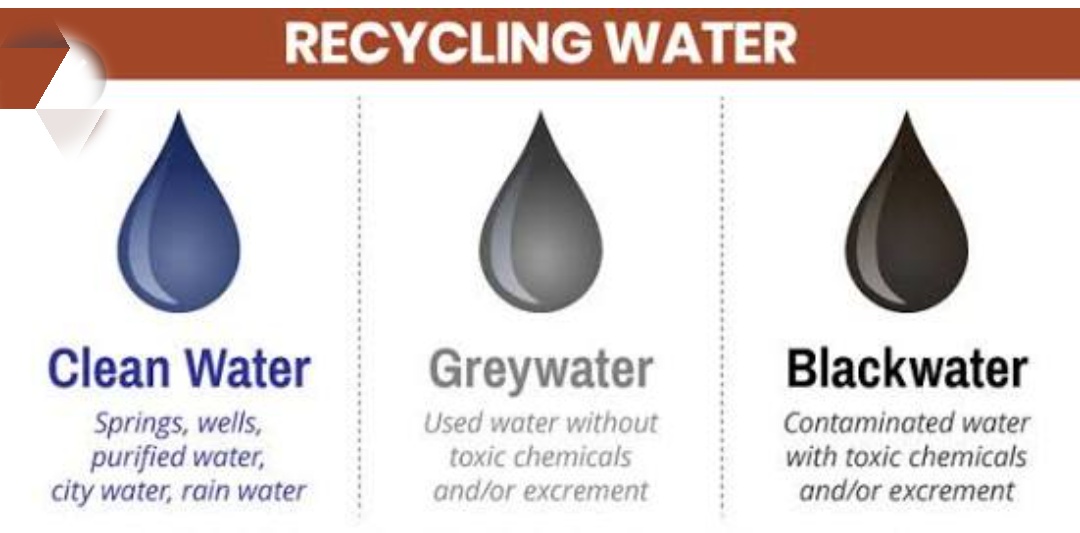
What is the difference between Gray Water and Black Water in Sewers?

Abbas Khan Civil Engineer

Abbas Khan Civil Engineer

  • 11 Questions
  • 29 Answers
  • 1 Best Answer
  • 925 Points
View Profile
Abbas Khan Civil Engineer Learner

What is the difference between gray water and black water in sewage? How can we differentiate between them in a sewer?

  1. Komal Bhandakkar

    Komal Bhandakkar

    • 49 Questions
    • 255 Answers
    • 0 Best Answers
    • 2,050 Points
    View Profile
    Komal Bhandakkar AUTHOR
    Added an answer on October 19, 2020 at 10:53 pm
    This answer was edited.
    What is the difference between Gray Water and Black Water in Sewers?

    Difference between Black Water and greywater: Black Water: Blackwater is the best water from bathrooms and toilets that contains faecal matter and urine. Waterproof kitchens and dishwashers are also considered Black Water due to the contamination of pathogens. It is also referred to as she waits forRead more

    Difference between Black Water and greywater:


    Black Water:

    • Blackwater is the best water from bathrooms and toilets that contains faecal matter and urine.

    • Waterproof kitchens and dishwashers are also considered Black Water due to the contamination of pathogens.

    • It is also referred to as she waits for groundwater and can carry diseases and bacteria both of which could be harmful.

    Treatment of blackwater:

    • The biological or chemical treatment and infection are required for treating Black Water.

    Greywater:

    • Greywater is the best water that comes from sinks, washing machines, bathtubs and showers.

    • Greywater contains a very low level of contamination and making it easier to treat and process.

    • Recycled greywater is commonly used in irrigation and constructed wetlands as long as no harmful chemicals are present.

    Treatment of Greywater

    • Greywater can be reused in cartoons with little or no treatment subsurface irrigation system to evenly spread water around in the garden.

    • This method is very safe for treated greywater.

    Thank you.

    See less
    • 20
    • Share
      Share
      • Share on Facebook
      • Share on Twitter
      • Share on LinkedIn
      • Share on WhatsApp
  • 1
  • 7 7 Answers
  • 7,463 Views
  • 0 Followers
Asked: May 14, 2020In: Foundation

When should we opt for continuous footing?

kheiro brahim
kheiro brahim

kheiro brahim

  • 1 Question
  • 0 Answers
  • 0 Best Answers
  • 5 Points
View Profile
kheiro brahim User

When should we opt for continuous footing?

  1. nikeetasharma

    nikeetasharma

    • 23 Questions
    • 303 Answers
    • 0 Best Answers
    • 2,680 Points
    View Profile
    nikeetasharma Guru
    Added an answer on October 29, 2020 at 5:57 pm

    A continuous footing is the one which supports more than two columns. This footing is also called as strip footing and is analogous to the strip footing for wall. The loads from the individual columns are transferred either directly to the footing slab, or through a longitudinal beam running longituRead more

    A continuous footing is the one which supports more than two columns. This footing is also called as strip footing and is analogous to the strip footing for wall. The loads from the individual columns are transferred either directly to the footing slab, or through a longitudinal beam running longitudinally when the loads are heavy.

    See less
    • 17
    • Share
      Share
      • Share on Facebook
      • Share on Twitter
      • Share on LinkedIn
      • Share on WhatsApp
  • 0
  • 5 5 Answers
  • 7,347 Views
  • 0 Followers
Asked: July 16, 2020In: Foundation

Which type of foundation are used for G+5 building?

Vivek Patel
Vivek Patel

Vivek Patel

  • 39 Questions
  • 80 Answers
  • 1 Best Answer
  • 6 Points
View Profile
Vivek Patel User

Which type of foundation are used for G+5 building?

  1. Komal Bhandakkar

    Komal Bhandakkar

    • 49 Questions
    • 255 Answers
    • 0 Best Answers
    • 2,050 Points
    View Profile
    Komal Bhandakkar AUTHOR
    Added an answer on November 21, 2020 at 6:00 pm
    This answer was edited.

    Pile foundation and raft foundation is used for a high rise structure. Pile foundations are more capable of taking higher loads than spread footings.   When allowable bearing pressure is low, the heavy structure is present & the site is with a highly compressible layer; then raft foundationRead more

    Pile foundation and raft foundation is used for a high rise structure.

    Pile foundations are more capable of taking higher loads than spread footings.


    When allowable bearing pressure is low, the heavy structure is present & the site is with a highly compressible layer; then raft foundation is applicable.


    Thank You.

    See less
    • -1
    • Share
      Share
      • Share on Facebook
      • Share on Twitter
      • Share on LinkedIn
      • Share on WhatsApp
  • 2
  • 3 3 Answers
  • 6,970 Views
  • 0 Followers
Asked: July 24, 2020In: Foundation

What is punching shear failure of foundation?

Vivek Patel
Vivek Patel

Vivek Patel

  • 39 Questions
  • 80 Answers
  • 1 Best Answer
  • 6 Points
View Profile
Vivek Patel User

What is punching shear failure of foundation?

  1. nikeetasharma

    nikeetasharma

    • 23 Questions
    • 303 Answers
    • 0 Best Answers
    • 2,680 Points
    View Profile
    nikeetasharma Guru
    Added an answer on December 21, 2020 at 7:06 pm

    The causes of punching shear failure are as follows :- - Poor drainage. Some examples of poor drainage include short downspouts clogged gutters , or lack of waterproofing. - Weather conditions - Poor soil conditions - Transpiration - Poor building site and ground preparation

    The causes of punching shear failure are as follows :-

    – Poor drainage. Some examples of poor drainage include short downspouts clogged gutters , or lack of waterproofing.

    – Weather conditions

    – Poor soil conditions

    – Transpiration

    – Poor building site and ground preparation

    See less
    • 0
    • Share
      Share
      • Share on Facebook
      • Share on Twitter
      • Share on LinkedIn
      • Share on WhatsApp
  • 2
  • 4 4 Answers
  • 5,784 Views
  • 0 Followers
Asked: January 29, 2020In: Foundation

How to set out foundation on steep slope?

Anonymous
Anonymous

The floor plan designed by architect for flat area but my site has steep slope what should I do and structural drawings doesn’t shows details clear!

  1. nikeetasharma

    nikeetasharma

    • 23 Questions
    • 303 Answers
    • 0 Best Answers
    • 2,680 Points
    View Profile
    nikeetasharma Guru
    Added an answer on November 25, 2020 at 2:29 pm

    There are two ways to set out foundation on a steep slope :- 1. Cut and fill refers to the process of leveling out the ground for the foundation by adding soil, removing it, or both. Soil may be brought in to fill the plot and make it level, or it can be dug (cut) from the slope and either trucked oRead more

    There are two ways to set out foundation on a steep slope :-

    1. Cut and fill refers to the process of leveling out the ground for the foundation by adding soil, removing it, or both. Soil may be brought in to fill the plot and make it level, or it can be dug (cut) from the slope and either trucked out or used to shore up retaining walls for the home. Depending on the grade, soil conditions, and other factors, cutting and filling can make construction multiple time more expensive than that for a home on a flat site.

    2. Using stilts is an alternative to cutting into the slope that involves using a crane to lift the home onto supporting wood or steel columns. This can be a much more cost-effective method than cut and fill and can also open up the realm of possibilities for home replacement such as building out water over trees or water.

    See less
    • -1
    • Share
      Share
      • Share on Facebook
      • Share on Twitter
      • Share on LinkedIn
      • Share on WhatsApp
  • 0
  • 4 4 Answers
  • 4,766 Views
  • 1 Follower
Asked: April 28, 2019In: Foundation

Settlement of spread footing foundation under loads

AKM59
AKM59

AKM59

  • 3 Questions
  • 0 Answers
  • 0 Best Answers
  • 30 Points
View Profile
AKM59 User

If we have two spread footing foundation (Isolated Pads) of square sizes (1m x 1m) and (2m x 2m),with axial loads ; (10t) and (40t) respectively, by assuming the soil features and specification for the two pads ,is the same , So ...

  1. aviratdhodare

    aviratdhodare

    • 37 Questions
    • 252 Answers
    • 0 Best Answers
    • 480 Points
    View Profile
    aviratdhodare
    Added an answer on August 13, 2020 at 1:11 pm

    Since the dimentions and magnitude of the 2nd is more than the first one, the settlement would not be same roughly. Bcoz the dimension are twice the 1st one, Magnitude is 4 times the 1st one. So bcoz of this, obviously the 2nd footing will be settled more.

    Since the dimentions and magnitude of the 2nd is more than the first one, the settlement would not be same roughly.

    Bcoz the dimension are twice the 1st one, Magnitude is 4 times the 1st one.

    So bcoz of this, obviously the 2nd footing will be settled more.

    See less
    • 34
    • Share
      Share
      • Share on Facebook
      • Share on Twitter
      • Share on LinkedIn
      • Share on WhatsApp
  • 6
  • 4 4 Answers
  • 4,439 Views
  • 0 Followers
Asked: September 28, 2020In: Foundation

What are the construction practices which are used to avoid differential settlement in foundation?

nikeetasharma
nikeetasharma

nikeetasharma

  • 23 Questions
  • 303 Answers
  • 0 Best Answers
  • 2,680 Points
View Profile
nikeetasharma Guru

What are the construction practices used to avoid differential settlement in foundation?

  1. Komal Bhandakkar

    Komal Bhandakkar

    • 49 Questions
    • 255 Answers
    • 0 Best Answers
    • 2,050 Points
    View Profile
    Komal Bhandakkar AUTHOR
    Added an answer on November 20, 2020 at 1:42 pm
    This answer was edited.

    Differential settlement in foundation: Usually, due to poor compaction, lower bearing capacity of the soil, high depth of hard strata, various changes in water content in soil are the basic reason behind the differential settlement of soil. Apart from that, trees & vegetation is not good for fouRead more

    Differential settlement in foundation:

    Usually, due to poor compaction, lower bearing capacity of the soil, high depth of hard strata, various changes in water content in soil are the basic reason behind the differential settlement of soil.

    Apart from that, trees & vegetation is not good for foundation safety.

    Soil consolidation is the main reason for differential settlement of the foundation.

    Foundation push piers & foundation underpinning also harms the foundation, which leads to a differential settlement.

    Thank you.

    See less
    • 0
    • Share
      Share
      • Share on Facebook
      • Share on Twitter
      • Share on LinkedIn
      • Share on WhatsApp
  • 32
  • 2 2 Answers
  • 2,787 Views
  • 0 Followers
Load More Questions

Sidebar

Explore

  • Questions
  • Ask Questions
  • Write for us
  • Artificial Intelligence
  • Sustainability
  • Building
    • Brick Masonry
    • Building Materials
    • Building Tips
    • Formwork/Shuttering
  • Concrete
    • Concrete Admixtures
    • Cement
    • Concrete Cracks
    • Concrete Properties
  • Construction
    • Construction Equipments
    • Construction Management
    • Construction Project
    • Estimating & Costing
  • How To Guide
    • Material Estimation
    • Repair/Protection Guide
    • Material Testing Guide
    • Mix Design Guide
    • Rate Analysis
  • Geotechnical
    • Foundation Engineering
    • Ground Improvement
  • Structural Engineering
    • Strengthening of Structure
    • Structual Inspection
    • Structural Detailing
  • Surveying
  • Tips

Footer

  • Ask Questions
  • Write for us
  • Popular Questions
  • Facebook
  • Instagram
  • Twitter
  • Telegram

© 2009-2021 The Constructor. All Rights Reserved.