Sign Up

Join TheConstructor to ask questions, answer questions, write articles, and connect with other people. When you join you get additional benefits.

Have an account? Sign In


Have an account? Sign In Now

Sign In

Log in to TheConstructor to ask questions, answer people’s questions, write articles & connect with other people. When you join you get additional benefits.

Sign Up Here

Join for free or log in to continue reading...


Forgot Password?

Don't have account, Sign Up Here

Forgot Password

Lost your password? Please enter your email address. You will receive a link and will create a new password via email.

Have an account? Sign In Now

Sorry, you do not have a permission to ask a question, You must login to ask question. Get the paid membership

Join for free or log in to continue reading...


Forgot Password?

Don't have account, Sign Up Here
Get the paid membership
theconstructor.org Logo theconstructor.org Logo
Log inJoin

theconstructor.org

theconstructor.org Navigation

  • Articles
    • Recent Articles
    • Popular Articles
    • Write for us
  • Community
  • Categories
    • How To Guide
      • Material Testing Guide
    • Concrete
    • Building
      • Brick Masonry
      • Building Materials
      • Building Tips
    • Construction
      • Equipments
      • Management
    • Digital Construction
    • Geotechnical
      • Foundation
  • Case Studies
Search
Ask A Question

Mobile menu

Close
Ask a Question
  • Questions
  • Ask Questions
  • Write for us
  • Artificial Intelligence
  • Sustainability
  • Building
    • Brick Masonry
    • Building Materials
    • Building Tips
    • Formwork/Shuttering
  • Concrete
    • Concrete Admixtures
    • Cement
    • Concrete Cracks
    • Concrete Properties
  • Construction
    • Construction Equipments
    • Construction Management
    • Construction Project
    • Estimating & Costing
  • How To Guide
    • Material Estimation
    • Repair/Protection Guide
    • Material Testing Guide
    • Mix Design Guide
    • Rate Analysis
  • Geotechnical
    • Foundation Engineering
    • Ground Improvement
  • Structural Engineering
    • Strengthening of Structure
    • Structual Inspection
    • Structural Detailing
  • Surveying
  • Tips

Construction

Home/Construction/Page 4

Do you need to remove the ads? Get the paid membership

  • Recent Questions
  • Most Answered
  • Answers
  • No Answers
  • Most Visited
  • Most Voted
  • Random

Discy Latest Questions

Asked: July 27, 2020In: Construction

What is China mosaic? What is benefit of China mosaic?

Vivek Patel
Vivek Patel

Vivek Patel

  • 39 Questions
  • 80 Answers
  • 1 Best Answer
  • 6 Points
View Profile
Vivek Patel User

What is China mosaic? What is benefit of China mosaic?

  1. Komal Bhandakkar

    Komal Bhandakkar

    • 49 Questions
    • 255 Answers
    • 0 Best Answers
    • 2,050 Points
    View Profile
    Komal Bhandakkar AUTHOR
    Added an answer on September 10, 2020 at 11:59 pm
    What is China mosaic? What is benefit of China mosaic?

    Let's discuss the definition of China mosaic. Definition of China mosaic : China mosaic tile is waterproofing material in which China chips inserted in it in some proportion. Important : China mosaic is a type of TERAZZO FLOORING. Cost : 58 rupees per box of thickness 6-8 mm (Cost will vary place toRead more

    Let’s discuss the definition of China mosaic.


    Definition of China mosaic :

    China mosaic tile is waterproofing material in which China chips inserted in it in some proportion.


    Important : China mosaic is a type of TERAZZO FLOORING.


    Cost :

    58 rupees per box of thickness 6-8 mm

    (Cost will vary place to place )


    Uses of China Mosaic

    It is used in floor as well as roof.


    Advantages :

    • It can’t be easy break
    • Higher strength and durability
    • Waterproofing Building Construction Material used in a floor and roof
    • Low permeability property.
    • Highly fire resistive preperty.


    See less
    • 48
    • Share
      Share
      • Share on Facebook
      • Share on Twitter
      • Share on LinkedIn
      • Share on WhatsApp
  • 1
  • 3 3 Answers
  • 12,506 Views
  • 0 Followers
Asked: October 18, 2017In: Construction

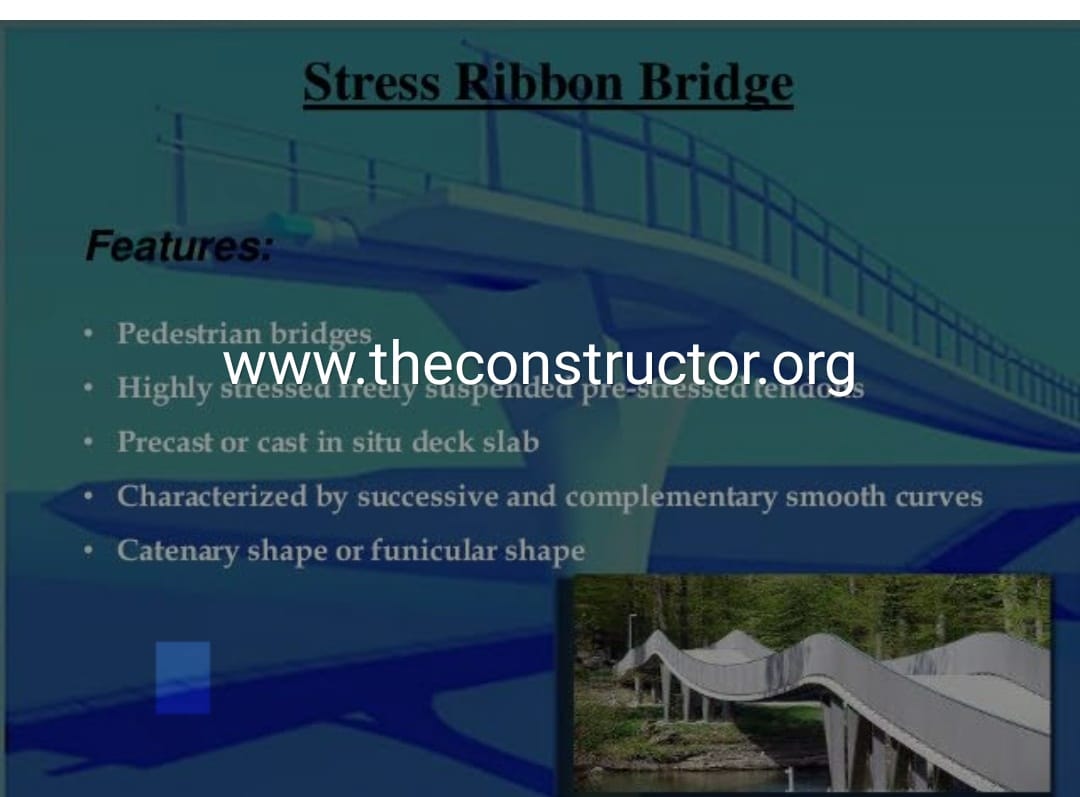
What is Stress Ribbon Bridge?

Gopal Mishra
Gopal Mishra

Gopal Mishra

  • 75 Questions
  • 44 Answers
  • 7 Best Answers
  • 577 Points
View Profile
Gopal Mishra

What is a stressed ribbon bridge? Please provide details about it.

  1. Komal Bhandakkar

    Komal Bhandakkar

    • 49 Questions
    • 255 Answers
    • 0 Best Answers
    • 2,050 Points
    View Profile
    Komal Bhandakkar AUTHOR
    Added an answer on September 13, 2020 at 9:19 pm
    What is Stress Ribbon Bridge?

    Stressed Ribbon Bridge : In a very simple way, I am discussing stress Ribbon Bridge. Have a look! Meaning of stressed Ribbon Bridge : Stress simply related to tension and hence stressed Ribbon Bridge is tension structure Suspension cables are present in stressed Ribbon Bridge.  Due to ribbon stiffneRead more

    Stressed Ribbon Bridge :

    In a very simple way, I am discussing stress Ribbon Bridge. Have a look!


    Meaning of stressed Ribbon Bridge :

    • Stress simply related to tension and hence stressed Ribbon Bridge is tension structure
    • Suspension cables are present in stressed Ribbon Bridge.
    •  Due to ribbon stiffness gives to the structure.

    Examples of stress Ribbon Bridge :

    here I am discussing actual examples of stressed Ribbon Bridge, they are as follows;

    • Lake Hodges Pedestrian Bridge
    • Leonel Viera Bridge
    • Phyllis J. Tilley Memorial Bridge
    • Rogue river pedestrian Bridge
    • Terwilliger Park foot Bridge


    See less
    • 49
    • Share
      Share
      • Share on Facebook
      • Share on Twitter
      • Share on LinkedIn
      • Share on WhatsApp
  • 5
  • 4 4 Answers
  • 12,156 Views
  • 1 Follower
Asked: July 24, 2020In: Construction

What is the difference between Tender and Quotation?

vivek gami
vivek gami

vivek gami

  • 54 Questions
  • 16 Answers
  • 5 Best Answers
  • 93 Points
View Profile
vivek gami User

What is the difference between Tender and Quotation?

  1. nikeetasharma

    nikeetasharma

    • 23 Questions
    • 303 Answers
    • 0 Best Answers
    • 2,680 Points
    View Profile
    nikeetasharma Guru
    Added an answer on November 29, 2020 at 4:03 pm

    Quotations are requested where the value of goods and/or services is less than $150,000. Tenders, as a rule are called for contracts in excess of $150,000. Every business has to give its customers prices for its products or services.

    Quotations are requested where the value of goods and/or services is less than $150,000. Tenders, as a rule are called for contracts in excess of $150,000. Every business has to give its customers prices for its products or services.

    See less
    • 0
    • Share
      Share
      • Share on Facebook
      • Share on Twitter
      • Share on LinkedIn
      • Share on WhatsApp
  • 0
  • 4 4 Answers
  • 12,005 Views
  • 0 Followers
Asked: February 12, 2020In: Construction

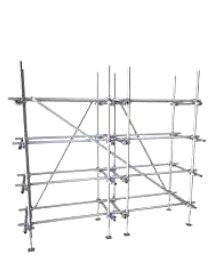
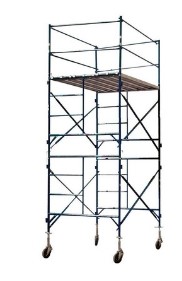
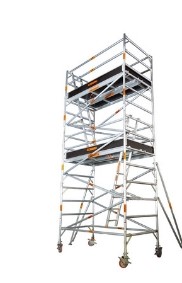
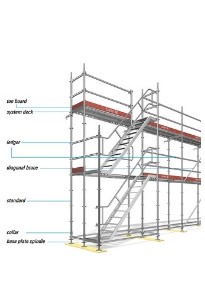
Sketches of types of scaffolding used in building construction

jeremih
jeremih

jeremih

  • 2 Questions
  • 1 Answer
  • 0 Best Answers
  • 1 Point
View Profile
jeremih User

Can i get sketches of types of scaffolding?

  1. nikeetasharma

    nikeetasharma

    • 23 Questions
    • 303 Answers
    • 0 Best Answers
    • 2,680 Points
    View Profile
    nikeetasharma Guru
    Added an answer on November 26, 2020 at 1:59 pm
    This answer was edited.

    The sketches of scaffoldings are : Trestle scaffolding   2.Steel scaffolding 3.Patented scaffolding 4. Suspended scaffolding 5. Cantilever scaffolding 6. Single scaffolding 7. Double scaffolding 8. Kwikstage scaffolding  

    The sketches of scaffoldings are :

    1. Trestle scaffolding


    2.Steel scaffolding

    3.Patented scaffolding

    4. Suspended scaffolding

    5. Cantilever scaffolding

    6. Single scaffolding

    7. Double scaffolding

    8. Kwikstage scaffolding


    See less
    • 0
    • Share
      Share
      • Share on Facebook
      • Share on Twitter
      • Share on LinkedIn
      • Share on WhatsApp
  • 1
  • 6 6 Answers
  • 11,490 Views
  • 0 Followers
Asked: July 17, 2020In: Construction

What is the purpose of soil sample soaked in water 7days in CBR Test?

fathima
fathima

fathima

  • 26 Questions
  • 10 Answers
  • 0 Best Answers
  • 377 Points
View Profile
fathima Beginner

What is the purpose of soil sample soaked in water 7days in the CBR Test?

  1. nikeetasharma

    nikeetasharma

    • 23 Questions
    • 303 Answers
    • 0 Best Answers
    • 2,680 Points
    View Profile
    nikeetasharma Guru
    Added an answer on November 25, 2020 at 3:26 pm

    CBR test is done in construction materials laboratories to evaluate the strength of soil subgrades and base course materials. The purpose of soil sample soaked in water for 7days is to find out the strength of the sample after soaking continuously in water. The effective CBR should be 75% .

    CBR test is done in construction materials laboratories to evaluate the strength of soil subgrades and base course materials.

    The purpose of soil sample soaked in water for 7days is to find out the strength of the sample after soaking continuously in water. The effective CBR should be 75% .

    See less
    • 3
    • Share
      Share
      • Share on Facebook
      • Share on Twitter
      • Share on LinkedIn
      • Share on WhatsApp
  • 1
  • 5 5 Answers
  • 11,174 Views
  • 0 Followers
Asked: July 10, 2020In: Construction

What are Refractory Bricks and mention it’s types?

Shivan
Shivan

Shivan

  • 9 Questions
  • 0 Answers
  • 0 Best Answers
  • 56 Points
View Profile
Shivan User

What are refractory bricks and mention it’s types?

  1. nikeetasharma

    nikeetasharma

    • 23 Questions
    • 303 Answers
    • 0 Best Answers
    • 2,680 Points
    View Profile
    nikeetasharma Guru
    Added an answer on October 8, 2020 at 9:40 pm

    A fire brick, firebrick, or refractory is a block of ceramic material used in lining furnaces, kilns, fireboxes, and fireplaces. A refractory brick is built primarily to withstand high temperature, but will also usually have a low thermal conductivity for greater energy efficiency. There are mainlyRead more

    A fire brick, firebrick, or refractory is a block of ceramic material used in lining furnaces, kilns, fireboxes, and fireplaces. A refractory brick is built primarily to withstand high temperature, but will also usually have a low thermal conductivity for greater energy efficiency.

    There are mainly three varieties of refractory bricks;

    a) Acid Refractories
    i. Ordinary Fire Bricks
    ii. Silica Bricks
    iii. Ganister Bricks

    b) Basic Refractories
    i. Magnesite Bricks
    ii. Dolomite Bricks
    iii. Bauxite Bricks

    c) Neutral Refractories
    i. Chromite Bricks
    ii. Carborundum
    iii. Chrome Magnesite Bricks
    iv. Spinal Bricks
    v. Forsterite Bricks

    See less
    • 31
    • Share
      Share
      • Share on Facebook
      • Share on Twitter
      • Share on LinkedIn
      • Share on WhatsApp
  • 5
  • 6 6 Answers
  • 10,877 Views
  • 0 Followers
Asked: November 30, 2017In: Construction

What are the types of slabs and how to design them?

Gopal Mishra
Gopal Mishra

Gopal Mishra

  • 75 Questions
  • 44 Answers
  • 7 Best Answers
  • 577 Points
View Profile
Gopal Mishra

Can you tell me types of slabs? And how can we design them?

  1. aviratdhodare

    aviratdhodare

    • 37 Questions
    • 252 Answers
    • 0 Best Answers
    • 480 Points
    View Profile
    aviratdhodare
    Added an answer on August 17, 2020 at 8:40 am

    Flat slab - Flat slab is minimum 8″ or 0.2m. Slab without drop and column without column head(capital). Slab with drop and column without column head. Slab without drop and column with column head. Slab with drop and column with column head. Conventional slab - conventional slab is 4″ or 10cm. 5″ toRead more

    Flat slab – Flat slab is minimum 8″ or 0.2m.

    1. Slab without drop and column without column head(capital).
    2. Slab with drop and column without column head.
    3. Slab without drop and column with column head.
    4. Slab with drop and column with column head.


    Conventional slab – conventional slab is 4″ or 10cm. 5″ to 6″ inches

    1. One-Way Slab
    2. Two-Way Slab

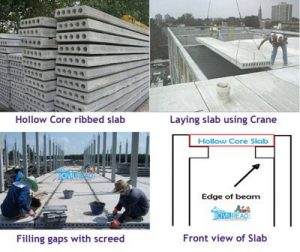
    Hollow core ribbed slab

    hollow core ribbed slab

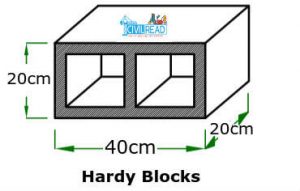
    Hardy slab

    1. One way Hardy Slab
    2. Two way Hardy slab

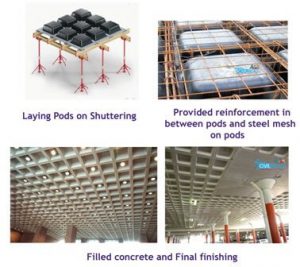
    Waffle slab

    1. Triangular pod system
    2. Square pod system

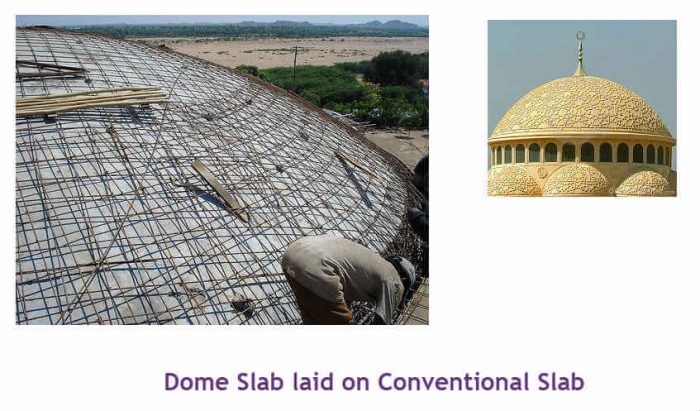
    Dome slab

    dome slab

    Pitch roof slab

    Pitch roof slab

    Slab with arches

    arch slab

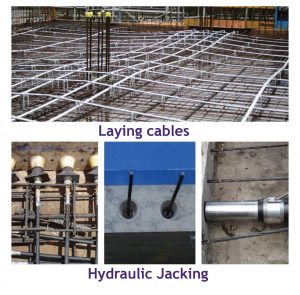
    Post tension slab

    post tension slab

    Pre tension Slab

    Low roof slab

    Projected slab

    projected slab

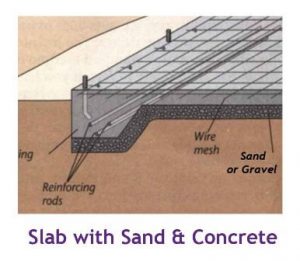
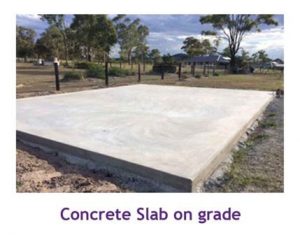
    Grads Slab/ Slab on grade

    slab with sand and concreteconcrete slab

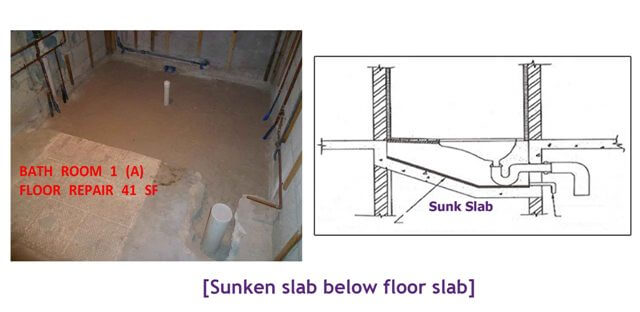
    Sunken Slab

    sunken slab below ground level


    a) Effective span of slab:

    Effective span of slab shall be lesser of the two

    1. L = clear span + d (effective depth )

    2. L = Center to center distance between the support

    b) Depth of slab:

    The depth of slab depends on bending moment and deflection criterion. the trail depth can be obtained using:

    • Effective depth d= Span /((L/d)Basic x modification factor)
    • For obtaining modification factor, the percentage of steel for slab can be assumed from 0.2 to 0.5%.
    • The effective depth d of two way slabs can also be assumed using cl.24.1,IS 456 provided short span is 3.5m and loading class is <3.5KN/m2

    Type of support

    Simply supported

    Fe-250 – L/35

    Fe-415 – L/28

    Continuous support

    Fe-250 – L/40

    Fe-415 – L/32

    Or, the following thumb rules can be used:

    • One way slab d=(L/22) to (L/28).
    • Two way simply supported slab d=(L/20) to (L/30)
    • Two way restrained slab d=(L/30) to (L/32)

    c) Load on slab:

    The load on slab comprises of Dead load, floor finish and live load. The loads are calculated per unit area (load/m2).

    Dead load = D x 25 kN/m2 ( Where D is thickness of slab in m)

    Floor finish (Assumed as)= 1 to 2 kN/m2

    Live load (Assumed as) = 3 to 5 kN/m2 (depending on the occupancy of the building)

    Detailing Requirements of RCC Slab as per IS456: 2000

    a) Nominal Cover:

    For Mild exposure – 20 mm

    For Moderate exposure – 30 mm

    However, if the diameter of bar do not exceed 12 mm, or cover may be reduced by 5 mm. Thus for main reinforcement up to 12 mm diameter bar and for mild exposure, the nominal cover is 15 mm.

    b) Minimum reinforcement: The reinforcement in either direction in slab shall not be less than

    • 0.15% of the total cross sectional area for Fe-250 steel
    • 0.12% of the total cross-sectional area for Fe-415 & Fe-500 steel.

    c) Spacing of bars: The maximum spacing of bars shall not exceed

    • Main Steel – 3d or 300 mm whichever is smaller
    • Distribution steel –5d or 450 mm whichever is smaller Where, ‘d’ is the effective depth of slab. Note: The minimum clear spacing of bars is not kept less than 75 mm (Preferably 100 mm) though code do not recommend any value.

    d) Maximum diameter of bar: The maximum diameter of bar in slab, shall not exceed D/8, where D is the total thickness of slab.


    See less
    • 33
    • Share
      Share
      • Share on Facebook
      • Share on Twitter
      • Share on LinkedIn
      • Share on WhatsApp
  • 2
  • 3 3 Answers
  • 10,613 Views
  • 0 Followers
Asked: July 24, 2020In: Construction

What is membrane curing of concrete?

Vivek Patel
Vivek Patel

Vivek Patel

  • 39 Questions
  • 80 Answers
  • 1 Best Answer
  • 6 Points
View Profile
Vivek Patel User

What is membrane curing of concrete?

  1. nikeetasharma

    nikeetasharma

    • 23 Questions
    • 303 Answers
    • 0 Best Answers
    • 2,680 Points
    View Profile
    nikeetasharma Guru
    Added an answer on October 1, 2020 at 10:43 am

    Membrane curing of concrete is a method of curing a concrete usually in pavements by which a material in liquid form is sprayed over the exposed surface shortly after the concrete is finished after which the material solidifies and becomes essentially impervious and thus hold the mixing water in theRead more

    Membrane curing of concrete is a method of curing a concrete usually in pavements by which a material in liquid form is sprayed over the exposed surface shortly after the concrete is finished after which the material solidifies and becomes essentially impervious and thus hold the mixing water in the concrete so that it can hydrate the cement over a period of time.

    See less
    • 36
    • Share
      Share
      • Share on Facebook
      • Share on Twitter
      • Share on LinkedIn
      • Share on WhatsApp
  • 1
  • 7 7 Answers
  • 10,483 Views
  • 0 Followers
Load More Questions

Sidebar

Explore

  • Questions
  • Ask Questions
  • Write for us
  • Artificial Intelligence
  • Sustainability
  • Building
    • Brick Masonry
    • Building Materials
    • Building Tips
    • Formwork/Shuttering
  • Concrete
    • Concrete Admixtures
    • Cement
    • Concrete Cracks
    • Concrete Properties
  • Construction
    • Construction Equipments
    • Construction Management
    • Construction Project
    • Estimating & Costing
  • How To Guide
    • Material Estimation
    • Repair/Protection Guide
    • Material Testing Guide
    • Mix Design Guide
    • Rate Analysis
  • Geotechnical
    • Foundation Engineering
    • Ground Improvement
  • Structural Engineering
    • Strengthening of Structure
    • Structual Inspection
    • Structural Detailing
  • Surveying
  • Tips

Footer

  • Ask Questions
  • Write for us
  • Popular Questions
  • Facebook
  • Instagram
  • Twitter
  • Telegram

© 2009-2021 The Constructor. All Rights Reserved.