Sign Up

Join TheConstructor to ask questions, answer questions, write articles, and connect with other people. When you join you get additional benefits.

Have an account? Sign In


Have an account? Sign In Now

Sign In

Log in to TheConstructor to ask questions, answer people’s questions, write articles & connect with other people. When you join you get additional benefits.

Sign Up Here

Join for free or log in to continue reading...


Forgot Password?

Don't have account, Sign Up Here

Forgot Password

Lost your password? Please enter your email address. You will receive a link and will create a new password via email.

Have an account? Sign In Now

Sorry, you do not have a permission to ask a question, You must login to ask question. Get the paid membership

Join for free or log in to continue reading...


Forgot Password?

Don't have account, Sign Up Here
Get the paid membership
theconstructor.org Logo theconstructor.org Logo
Log inJoin

theconstructor.org

theconstructor.org Navigation

  • Articles
    • Recent Articles
    • Popular Articles
    • Write for us
  • Community
  • Categories
    • How To Guide
      • Material Testing Guide
    • Concrete
    • Building
      • Brick Masonry
      • Building Materials
      • Building Tips
    • Construction
      • Equipments
      • Management
    • Digital Construction
    • Geotechnical
      • Foundation
  • Case Studies
Search
Ask A Question

Mobile menu

Close
Ask a Question
  • Questions
  • Ask Questions
  • Write for us
  • Artificial Intelligence
  • Sustainability
  • Building
    • Brick Masonry
    • Building Materials
    • Building Tips
    • Formwork/Shuttering
  • Concrete
    • Concrete Admixtures
    • Cement
    • Concrete Cracks
    • Concrete Properties
  • Construction
    • Construction Equipments
    • Construction Management
    • Construction Project
    • Estimating & Costing
  • How To Guide
    • Material Estimation
    • Repair/Protection Guide
    • Material Testing Guide
    • Mix Design Guide
    • Rate Analysis
  • Geotechnical
    • Foundation Engineering
    • Ground Improvement
  • Structural Engineering
    • Strengthening of Structure
    • Structual Inspection
    • Structural Detailing
  • Surveying
  • Tips

Foundation

Home/Foundation/Page 2

Do you need to remove the ads? Get the paid membership

  • Recent Questions
  • Most Answered
  • Answers
  • No Answers
  • Most Visited
  • Most Voted
  • Random

Discy Latest Questions

Asked: July 24, 2020In: Foundation

What is punching shear failure of foundation?

Vivek Patel
Vivek Patel

Vivek Patel

  • 39 Questions
  • 80 Answers
  • 1 Best Answer
  • 6 Points
View Profile
Vivek Patel User

What is punching shear failure of foundation?

  1. nikeetasharma

    nikeetasharma

    • 23 Questions
    • 303 Answers
    • 0 Best Answers
    • 2,680 Points
    View Profile
    nikeetasharma Guru
    Added an answer on December 21, 2020 at 7:06 pm

    The causes of punching shear failure are as follows :- - Poor drainage. Some examples of poor drainage include short downspouts clogged gutters , or lack of waterproofing. - Weather conditions - Poor soil conditions - Transpiration - Poor building site and ground preparation

    The causes of punching shear failure are as follows :-

    – Poor drainage. Some examples of poor drainage include short downspouts clogged gutters , or lack of waterproofing.

    – Weather conditions

    – Poor soil conditions

    – Transpiration

    – Poor building site and ground preparation

    See less
    • 0
    • Share
      Share
      • Share on Facebook
      • Share on Twitter
      • Share on LinkedIn
      • Share on WhatsApp
  • 2
  • 4 4 Answers
  • 5,739 Views
  • 0 Followers
Asked: August 17, 2020In: Foundation

Why is the main reinforcement provided on the longer side of raft footing?

Vivek Srinivasan
Vivek Srinivasan

Vivek Srinivasan

  • 1 Question
  • 0 Answers
  • 0 Best Answers
  • 11 Points
View Profile
Vivek Srinivasan User

Why is the main reinforcement provided on the longer side of raft footing?

  1. nikeetasharma

    nikeetasharma

    • 23 Questions
    • 303 Answers
    • 0 Best Answers
    • 2,680 Points
    View Profile
    nikeetasharma Guru
    Added an answer on November 25, 2020 at 10:47 am

    The longest span is in more critical section due to which main reinforcement is provided on the longer span. The longest span has to bear a higher bending moment. This is because the uplift pressure from the soil below will be equal in all locations, but the moment developed at the longer span willRead more

    The longest span is in more critical section due to which main reinforcement is provided on the longer span. The longest span has to bear a higher bending moment. This is because the uplift pressure from the soil below will be equal in all locations, but the moment developed at the longer span will be higher because of a long arm. Its a uniformly distributed load and so it produces a larger moment on a longer beam. Thus, the main reinforcement is provided in longer span.

    See less
    • 0
    • Share
      Share
      • Share on Facebook
      • Share on Twitter
      • Share on LinkedIn
      • Share on WhatsApp
  • 3
  • 4 4 Answers
  • 8,055 Views
  • 0 Followers
Asked: April 28, 2019In: Foundation

Settlement of spread footing foundation under loads

AKM59
AKM59

AKM59

  • 3 Questions
  • 0 Answers
  • 0 Best Answers
  • 30 Points
View Profile
AKM59 User

If we have two spread footing foundation (Isolated Pads) of square sizes (1m x 1m) and (2m x 2m),with axial loads ; (10t) and (40t) respectively, by assuming the soil features and specification for the two pads ,is the same , So ...

  1. aviratdhodare

    aviratdhodare

    • 37 Questions
    • 252 Answers
    • 0 Best Answers
    • 480 Points
    View Profile
    aviratdhodare
    Added an answer on August 13, 2020 at 1:11 pm

    Since the dimentions and magnitude of the 2nd is more than the first one, the settlement would not be same roughly. Bcoz the dimension are twice the 1st one, Magnitude is 4 times the 1st one. So bcoz of this, obviously the 2nd footing will be settled more.

    Since the dimentions and magnitude of the 2nd is more than the first one, the settlement would not be same roughly.

    Bcoz the dimension are twice the 1st one, Magnitude is 4 times the 1st one.

    So bcoz of this, obviously the 2nd footing will be settled more.

    See less


    • 34
    • Share
      Share
      • Share on Facebook
      • Share on Twitter
      • Share on LinkedIn
      • Share on WhatsApp
  • 6
  • 4 4 Answers
  • 4,397 Views
  • 0 Followers
Asked: July 22, 2020In: Foundation

What is Pedestal in Column?

vivek gami
vivek gami

vivek gami

  • 54 Questions
  • 16 Answers
  • 5 Best Answers
  • 93 Points
View Profile
vivek gami User

What is Pedestal in Column? What is the minimum steel criteria of it?

  1. nikeetasharma

    nikeetasharma

    • 23 Questions
    • 303 Answers
    • 0 Best Answers
    • 2,680 Points
    View Profile
    nikeetasharma Guru
    Added an answer on November 22, 2020 at 3:44 pm

    When the height of member is less than 3times the least lateral dimensions of column it is termed as pedestal whereas when the value is greater than 3times least lateral dimension it is termed as column. For Pedestals (whose effective length is less than three times the least lateral dimension) theRead more

    When the height of member is less than 3times the least lateral dimensions of column it is termed as pedestal whereas when the value is greater than 3times least lateral dimension it is termed as column.

    For Pedestals (whose effective length is less than three times the least lateral dimension) the minimum reinforcement is specified as 0.15 percent cross sectional area of concrete.

    See less
    • 2
    • Share
      Share
      • Share on Facebook
      • Share on Twitter
      • Share on LinkedIn
      • Share on WhatsApp
  • 4
  • 3 3 Answers
  • 10,889 Views
  • 0 Followers
Asked: May 15, 2020In: Foundation

What is the Possibility of Footing Failure with Reduced Cement Content?

Stranger tides
Stranger tides

Stranger tides

  • 1 Question
  • 0 Answers
  • 0 Best Answers
  • 0 Points
View Profile
Stranger tides User

During manual concreting of a raft footing which was designed for M25 grade concrete, the estimated cement required was 240 bags, while the laborers due to sheer negligence have added only 140 bags. The Soil conditions are good. There was ...

  1. Komal Bhandakkar

    Komal Bhandakkar

    • 49 Questions
    • 255 Answers
    • 0 Best Answers
    • 2,050 Points
    View Profile
    Komal Bhandakkar AUTHOR
    Added an answer on October 19, 2020 at 10:41 pm
    This answer was edited.
    What is the Possibility of Footing Failure with Reduced Cement Content?

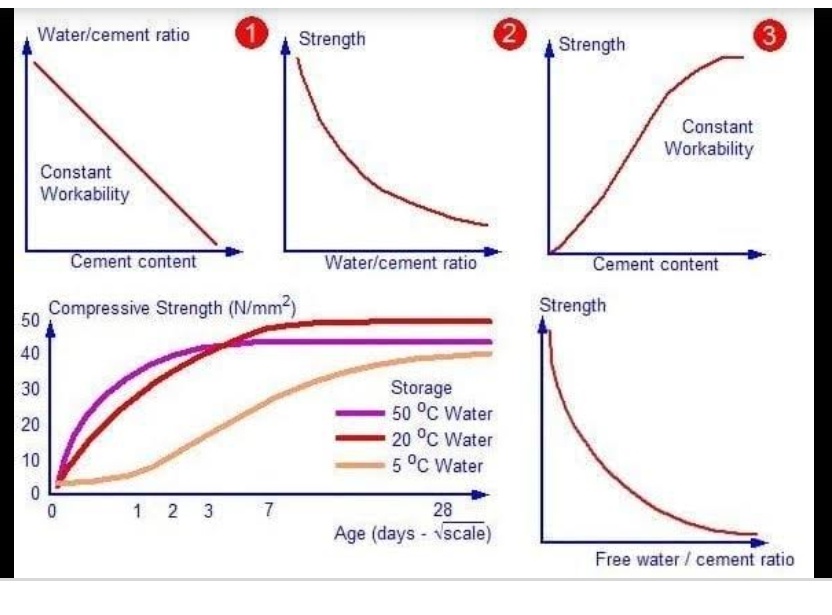
    Effect of cement content on strength of footing: The result reveals that the strength of concrete Foundation increases with increasing cement content in it. However, for concrete with cement content more than 150 kg per metre cube then the strength increases with the increase in the size of coarse aRead more

    Effect of cement content on strength of footing:

    The result reveals that the strength of concrete Foundation increases with increasing cement content in it.


    However, for concrete with cement content more than 150 kg per metre cube then the strength increases with the increase in the size of coarse aggregate up to 25 mm and decreases as the aggregate size increases beyond 25mm.


    Without a proper range of cement in the mixture then low strength development or excessive shrinkage may occur leading to premature deterioration.


    Thank you.  

    See less
    • 21
    • Share
      Share
      • Share on Facebook
      • Share on Twitter
      • Share on LinkedIn
      • Share on WhatsApp
  • 1
  • 3 3 Answers
  • 628 Views
  • 0 Followers
Asked: July 16, 2020In: Foundation

Which type of foundation are used for G+5 building?

Vivek Patel
Vivek Patel

Vivek Patel

  • 39 Questions
  • 80 Answers
  • 1 Best Answer
  • 6 Points
View Profile
Vivek Patel User

Which type of foundation are used for G+5 building?

  1. Komal Bhandakkar

    Komal Bhandakkar

    • 49 Questions
    • 255 Answers
    • 0 Best Answers
    • 2,050 Points
    View Profile
    Komal Bhandakkar AUTHOR
    Added an answer on November 21, 2020 at 6:00 pm
    This answer was edited.

    Pile foundation and raft foundation is used for a high rise structure. Pile foundations are more capable of taking higher loads than spread footings.   When allowable bearing pressure is low, the heavy structure is present & the site is with a highly compressible layer; then raft foundationRead more

    Pile foundation and raft foundation is used for a high rise structure.

    Pile foundations are more capable of taking higher loads than spread footings.


    When allowable bearing pressure is low, the heavy structure is present & the site is with a highly compressible layer; then raft foundation is applicable.


    Thank You.

    See less
    • -1
    • Share
      Share
      • Share on Facebook
      • Share on Twitter
      • Share on LinkedIn
      • Share on WhatsApp
  • 2
  • 3 3 Answers
  • 6,926 Views
  • 0 Followers
Asked: April 27, 2019In: Foundation

What is the Procedure for Foundation Construction of a Building?

Ezekiel 23
Ezekiel 23

Ezekiel 23

  • 1 Question
  • 0 Answers
  • 0 Best Answers
  • 20 Points
View Profile
Ezekiel 23 User

What is the step by step procedure for construction of foundation for a building? How the foundation construction is carried out at site?

  1. dbnalawade

    dbnalawade

    • 15 Questions
    • 24 Answers
    • 2 Best Answers
    • 1,086 Points
    View Profile
    Best Answer
    dbnalawade Expert
    Added an answer on July 30, 2020 at 2:18 pm

    Step by Step procedure for construction of building foundation on an organised construction site can be as below: First step is to write a method statement involving scope of work, references, count and type equipments and labour required and requirements . Ensure you have  approved drawings good foRead more

    Step by Step procedure for construction of building foundation on an organised construction site can be as below:

    1. First step is to write a method statement involving scope of work, references, count and type equipments and labour required and requirements .
    2. Ensure you have  approved drawings good for construction
    3. Prepare BBS for foundations and order reinforcement and ensure materials are on site and correctly stored.
    4. Request survey department to mark foundation centrelines and sizes including working space.
    5. Perform excavation manually or using machines depending on depth, nature of soil and water table. Some time you may to resort to dewatring to keep the water well below the foundation level.
    6. Do not over excavate . Any over excavation should be made top by lean concrete.
    7. Do not expose the foundation level for long time time. Ensure lean concrete is poured as soon as foundation level is reached .
    8. Inspect the foundation level for loose material or soft patches.
    9. Lean concrete is normally 75mm in thickness
    10. Following PCC or lean concrete, install reinforcement including column reinforcement or dowels and shutter the foundation. Use concrete covers of required size at the bottom and sides of reinforcement.
    11. In Middle East they introduce waterproof membranes ( refer: Grace Products)on lean concrete which raps the entire foundation as protection ( also known as tanking)
    12. Once the rebar is in place , with cover you need dust off and get the foundation inspected.
    13. Concrete Pour Card provides you all the checks you need to perform before casting foundations.
    14. You order correct grade concrete + check slump+temperature before concrete is allowed to be poured.
    15. Compact the concrete in layers using vibrators without leading to segregation.
    16. Cast the cubes to test at 7 and 28 days
    17. Cure the cast concrete for minimum of 10 days if it is wet curing
    18. Deshuttering of vertical faces is normally 24 hour to 48 hours.
    19. Once deshuttered and cured foundation is provided with coating or membrane protection.
    20. Finally foundations are backfilled by selected approved fill material in layers of 200mm or less to 95% degree.

    Hope this helps.


    See less
    • -3
    • Share
      Share
      • Share on Facebook
      • Share on Twitter
      • Share on LinkedIn
      • Share on WhatsApp
  • 3
  • 3 3 Answers
  • 10,588 Views
  • 0 Followers
Asked: July 16, 2020In: Foundation

What is Universal Foundation?

Vivek Patel
Vivek Patel

Vivek Patel

  • 39 Questions
  • 80 Answers
  • 1 Best Answer
  • 6 Points
View Profile
Vivek Patel User

What is Universal Foundation? Where it is use?

  1. vivek gami

    vivek gami

    • 54 Questions
    • 16 Answers
    • 5 Best Answers
    • 93 Points
    View Profile
    Best Answer
    vivek gami User
    Added an answer on July 16, 2020 at 4:40 pm

    universal foundation is pile foundation. it is used at all location, so we call it universal foundation in simple way basically pile foundation use at where bearing capacity of soil is low where chances of differential settlement of foundation where structural load is very high like bridge or skyskiRead more

    universal foundation is pile foundation.

    it is used at all location, so we call it universal foundation in simple way

    basically pile foundation use at

    • where bearing capacity of soil is low
    • where chances of differential settlement of foundation
    • where structural load is very high like bridge or skyskiper building
    • where black cotton soil is present
    • where bearing strata depth is very high
    • where structure need to resist excessive vibration (wind mill)
    • pile foundation we can use every where.
    See less
    • 1
    • Share
      Share
      • Share on Facebook
      • Share on Twitter
      • Share on LinkedIn
      • Share on WhatsApp
  • 1
  • 3 3 Answers
  • 1,105 Views
  • 0 Followers
Load More Questions

Sidebar

Explore

  • Questions
  • Ask Questions
  • Write for us
  • Artificial Intelligence
  • Sustainability
  • Building
    • Brick Masonry
    • Building Materials
    • Building Tips
    • Formwork/Shuttering
  • Concrete
    • Concrete Admixtures
    • Cement
    • Concrete Cracks
    • Concrete Properties
  • Construction
    • Construction Equipments
    • Construction Management
    • Construction Project
    • Estimating & Costing
  • How To Guide
    • Material Estimation
    • Repair/Protection Guide
    • Material Testing Guide
    • Mix Design Guide
    • Rate Analysis
  • Geotechnical
    • Foundation Engineering
    • Ground Improvement
  • Structural Engineering
    • Strengthening of Structure
    • Structual Inspection
    • Structural Detailing
  • Surveying
  • Tips

Footer

  • Ask Questions
  • Write for us
  • Popular Questions
  • Facebook
  • Instagram
  • Twitter
  • Telegram

© 2009-2021 The Constructor. All Rights Reserved.